Published Date : 2015-11-23 08:01:01
Author : admin
By Felicity Landon from London
No chance of walking on Dartmoor one wet morning in Devon last week… but the weather did provide the opportunity for a bit of ‘maritime research’ and a small excuse for a ‘what I did on my holidays’ report.
The location: Buckland Abbey, once the home of Sir Francis Drake and now looked after by the National Trust, whose displays gave a vivid and dismal picture of life at sea in Tudor times.
Never mind the bravery of those sailors setting out across unknown oceans searching out unknown territories – it was how they endured the grim realities of life on the ocean waves that impressed me most. Crammed into small ships; quarters infested with rats and lice; living on ship’s biscuits infested with beetles and weavils; drinking ale, which was clearly a safer option than what passed for drinking water. And, in the case of Drake’s circumnavigation, only a one in five chance of your ship making it home at all.
How those seafarers would have rejoiced at the contents of the Maritime Labour Convention, I thought! I’ve had quite a few conversations recently about the perceived impact of the MLC on welfare provision for seafarers, and this visit brought to mind the comments of Roger Stone, Southampton port chaplain with the Apostleship of the Sea.
He was on a panel of speakers at the Maritime Welfare Debate during London International Shipping Week, and his take on the situation seemed pretty depressing. He had specifically asked seafarers on every ship he visited recently about their understanding of the MLC and what it’s for. He found ‘large-scale ignorance of MLC provisions and that there is a very long way to go’.
“At least 80% had to stop and think for some time. Some of them replied – errm, the Labour Convention,” he said. “When I said that a copy of the MLC should be on the ship, one Filipino seafarer went to look for it and failed to find it. Not one seafarer I spoke to had read it. Some said it was for officers only. And some officers commented it was actually an additional burden on them because they had to attend training for two or three days in their holidays, and they had to pay for that training.”
It was even said that masters and senior officers ‘prefer to close their ears to its [the MLC’s] existence’, said Rev. Stone.
Some seafarers had no idea what the MLC was about and others only had a vague idea that it was about rest hours or hours of work, while a few understood it was about accommodation and food. Hardly anyone knew it was about welfare, access to welfare facilities, or shore leave, he said.
As ever, he said, the good companies will be doing good things and doing as much as they can to maintain the welfare of their crew on the ship, and they no doubt enjoy high retention rates as a result and high morale.
“At the other end of the spectrum – but that doesn’t mean the bottom 5%,because I think it is much higher than 5%– I meet seafarers where conditions on board don’t go anywhere near meeting their cultural requirements – for example, in terms of food.”
Rev. Stone said he had come across cases where leftover food from the officers’ mess was sent to the crew mess; where seafarers had to go ashore to buy supplies; where crew were still sharing cabins, against the MLC provisions; and where recreation facilities were ‘woefully inadequate’.
“For example, TV viewing; on many ships where the officers are of one nationality and the crew another, the same TV programmes are being broadcast in both messes in a language the crew don’t understand at all.”
Does the MLC have teeth? It was a straight ‘no’ from Bruce Hailey, maritime lawyer with Salvus Law, also on the discussion panel. In a recent case of an arrested ship, the P&I club was approached to repatriate the crew of 17 – and the club’s initial response was ‘that is not our responsibility,’ he said. “That is a shocking example of someone who really should have known better trying to evade the responsibilities of the MLC.’
Rev. Stone told of seafarers’ despair when limited or a complete lack of internet access meant they were unable to keep in touch with their families, with many marriages disintegrating as a result. But having painted ‘scenes of doom and gloom’, he finished on a more positive note.
“When a tanker berthed in Rotterdam, the master arranged for ten of the crew to go ashore to a local sports facility to enjoy three games of five-a-side basketball. “They saw that as a positive effect of MLC. The master – clearly a switched-on individual – added that things are changing, because Port State Control is now asking questions of the crew about accommodation, shore leave, etc.”
Let’s hope he’s right.
Published Date : 2015-11-16 07:41:46
Author : admin
Rice Smuggling has reached frightening levels, with hundreds of trailers ferrying tonnes of the staple food from neighbouring countries.
The nation’s supply gap was estimated at around 3 million tonnes by United States Department of Agriculture (USDA) and half that number by the Federal Government earlier this year.
However, legal importers paying full tariff of 70 per cent have not been able to compete with smugglers who enjoy a free ride into the market, aided by negligible tariffs in neighbouring countries of Cameroon and Republic of Benin, taking advantage of porous borders.
Another pertinent problem hamstringing rice investors is the Central Bank of Nigeria (CBN) ban of foreign exchange for rice imports, among other products, choking the importation supply chain.
The resultant shortage in the market is now being exploited by smugglers, who prospered significantly in 2013 when they were able to move in around 2.5 million tonnes through the borders, without paying a single kobo as import duty.
That year, the Federal Government increased import tariff to 110 per cent as against zero duty regime administered in Benin and Cameroon.
As Nigeria Customs Service (NCS) struggles to check the smugglers, the market is flooded with cheap quality rice. Besides, commercial agriculture by key investors in the rice value chain is frustrated.
Multinationals, including Olam, Stallion Group and Dangote, have announced large scale investments in the value chain that are crucial in Nigeria’s quest to meeting a growing annual demand of 6.5 million tonnes. Stallion Group is expanding its capacities to produce 1.5 million tonnes in Nigeria. Dangote plans to farm 100,000 hectares. Effective curbing of rice smuggling is essential to get these projects to fruition and encourage millions of farmers to get back intensively to rice farming.
The National Rice Millers Association of Nigeria (NRMAN) said this week that the NCS erred in its decision to lift the ban on importation of rice through the land borders. Its Chairman, Mohammed Abubakar, said the NCS overreached its statutory mandate as an enforcement agency in taking such a policy decision. Besides, Mr. Abubakar said, if the NCS succeeded in its decision, it would destroy Nigeria’s rice value chain attained by the previous administration.
Reports emerge that the huge rice influx has been noticed in the market from last Saturday, the worst affected being Lagos and Southwest. Rice arrives in big trailers with between 1200 and 1500 50KG bags from Cotonou. There is substantial under-declaration and non-payment aspects in these shipments, making it non-viable for legal importers and local producers to compete with these shipments.
Several long trailers are noticed during the night directly plying from Cotonou bearing Benin number plates (RB) into Daleko and G Cappa markets. Apart from these big trailers, smaller J5 Buses which carry 200 bags each are also used by these unscrupulous smugglers to ship products during the day time.
The affected states are Lagos, Ogun, Osun, Oyo, Kwarra, Ondo and Ekiti. Other states adversely impacted are Sokoto, Katsina, Kaduna, Kano, Abuja, Niger and Plateau – all coming in from Cotonou, Niger.
Rice from Cameroon through Northern Nigeria is flooding Adamawa, Borno, Yobe, Taraba, Benue and Enugu. Affected states from the Southeast and Southsouth are Cross River, Akwa Ibom, Abia and Enugu.
Published Date : 2015-11-09 06:20:54
Author : admin
Although, largely a produce of the Sahel savanna crop that spreads across several West African countries and beyond, shea butter, pressed out of shea nut, is commanding as much as three billion dollars (N600bn) per annum in foreign markets, where it has found use in a variety of manufacturing processes.
A document of the Federal Ministry of Agriculture shows that the plant grows in states such as Kwara, Katsina, Plateau, Kogi, Oyo, Benue, Edo, Zamfara, Taraba, Borno, Niger, Nasarawa, Kebbi, Sokoto, and Adamawa.
Women at Ilora, Oyo State and shea producing communities in Sabon Gidan, Niger State are committed to processing of the commodity. The same can be said of the other states of the federation. However, processing in several rural communities is still rudimentary resulting in low output, though there are a few others that have upgraded the processing methods.
The Shea industry in Nigeria is on the path of growth, with potentials to mechanically process 6,000 SETs per year and export 50,000 tons per year. It points to the fact that the economy around shea is huge and growing, especially because food and cosmetics manufacturing plants in Asia, Europe and United States depend solely on export from Nigeria and other African countries.
President of Global Shea Alliance, GSA, Eugenia Akuete said more than 15 million women across West Africa are involved in the production and processing of the shea nut. Due to the foreign exchange generated from the export of the butter and its value-added variants, even rural women and their communities receive an additional 50 per cent of the income for every dollar of Shea exported.
Shea nut collection is particularly female gender-friendly, as women are largely responsible for the huge aggregation of nuts that go into processing. This is responsible for the production of handcrafted shea butter in the villages, thereby bringing direct gains for a large number of women.
To show the place of shea trade globally, GSA is a network of association of stakeholders made up of about 170 members from 35 countries with mandate of expanding markets for the commodity and promoting its attributes as quality ingredient for relevant industries. To this end, key points of the value chain such as shea butter producers and exporters, wholesalers, retailers and brands are continually being strengthened to further advance the interest of the trade.
GSA executive, Akuete believes that there would be great impact on the livelihood of the rural communities in Nigeria and the rest of the continent.
“The shea butter industry is huge. Taking steps to develop the capacity for large-scale production of shea in Nigeria will put the country on the right path to diversifying the economy, considering the large market that exists for shea butter and its derivatives in Nigeria and other parts of the world. We can reap the maximum benefit of the international trade of the produce,” a shea trade stakeholder said at the 2013 conference.
The agribusiness activity covering Shea nut and butter has been on for some time according to Dr. Victor Iyama, National President, Federation of Agricultural Commodity Associations of Nigeria (FACAN). He recalled that between 1989 and 1992, there was significant activity until a downturn caused by improperly organised market at the time.
However, Iyama said the commodity is commanding an increasingly larger market locally and internationally. Along with 15 other commodities, he revealed that these non-oil items have the capability of turning around the nation’s economy by as much as $52billion or more per annum if fully exploited. Prior to the coming of the Obasanjo administration, the nation was barely making $570million per year, but when fine-tuned the policies for these commodities, the income flow reached $3billion per year.
On how retrogressive he thinks the recent CBN’s policy to have exporters sell their forex income to the banks at official rate, Iyama said it is inconceivable how an exporter that sourced funds at exchange rate of N225 to the dollar would sell the dollar income at N199 to the bank, when there is an alternative and more profitable window of N230 – N235.
If the CBN insists on the present policy, Iyama fears people may stop doing proper documentation because they would not want to be losing money; not only that, smuggling goods out of the country through other ports in Togo, Benin and Ghana is a possibility, while some may explore even the hinterland countries like Niger to ship their goods.
He called on the President to forestall moves that are capable of destroying the non-oil economy of the country.
The local extraction, mainly done by women, is quite laborious, sometimes requiring as much as 25 hours extracting barely a kilogram of butter.
A study published in the British Journal of Clinical Pharmacology by the Department of Pharmacology at the College of Medicine, of the University of Lagos, revealed that shea butter is an effective nasal decongestant.
In the cosmetic industries, it has been found to retain its natural nutritional and medicinal attributes well cherished in skincare product lines.
The chemical compounds in the class of phenols have anti-aging benefits. Some female users say they apply it directly or in mixture of other jellies to achieve the purpose of reducing wrinkles, removal of black spots and maintaining a generally smooth skin. Another female user on a national radio programme in Lagos revealed its ability to reduce stretch marks (off colour lines on the skin).
Another female user, who is in the fifties claimed to have used the raw product as skin moisturizer with the effect that the wrinkle around her mouth and under the chin eased off considerably, making her look younger.
According to chemists, the higher the quantity of the liquid part of the butter called olein, the softer and more fragrant. This is known to help better absorption into the skin. It has found use as hair conditioners for dry and brittle hair, while it is also employed by soap makers that put small quantities of about seven per cent of the oils in the recipe.
World conferences have held in different places, including Nigeria, where issues on the economic, social and environmental aspects of shea, particularly on sourcing logistics, quality regulation, processing innovations, business modeling, social accountability, sustainable marketing, cosmetics formulation, soap-making, and biodiversity are discussed.
Published Date : 2015-11-02 08:33:13
Author : admin
By Charlie Bartlett from London
Until relatively recently, Somali pirates were the scourge of East-West trade, operating in a huge swathe of the Indian Ocean and hijacking vessels with fearsome, and often drug-induced, zeal. Looking back to March 2009 when there were near-daily attacks, the pirate threat was eventually driven back in 2013 by the assembled brawn of heavily armed private security personnel, onshore security forces, and Combined Naval Task Forces 150 and 151.
Last week, a foray by the BBC into Eyl, the now de-throned global piracy capital, highlighted serious challenges for the country, including widespread poverty and joblessness, and a nascent legal system.
Various documentaries, news coverage and the big-budget Captain Phillips have shown the world that these men are not hardened criminals but indeed something far more dangerous – out-of-work teachers and fishermen, faced with a chance at leaving behind a lifetime of abject poverty for riches beyond their wildest dreams.
The International Chamber of Shipping (ICS) theorises that there are four mitigating “pillars” currently staving off successful hijackings, explains secretary general Peter Hinchliffe. These include compliance with Best Management Practices 4 (BMP4) for vessels transiting the Gulf of Aden and beyond; the presence of warships in the area; and armed security on board vessels.
But everyone agrees that the most important of the four pillars is capacity-building on shore. This takes time, and Somalia is not there yet. With the current mandate for NATO and EUNAVFOR intervention set to expire in 2016, shipping is getting understandably nervous.
“The military tell us that there are still probing attacks on a fairly regular basis,” says Hinchliffe. “The potential and capacity for pirate attacks is still there. Our belief is that if you take away those pillars without thinking of the consequences, piracy can re-emerge. The ICS advice to its members hasn’t changed.”
ICS, along with a number of other organisations like the International Maritime Bureau (IMB), specialist branch of the International Chamber of Commerce, is lobbying to secure a new and equally tough mandate from 2017 onward. “Only a handful of the pirates have been caught and tried,” assistant director at IMB Cyrus Mody explains. “There appears to be a reduction, but we have to put that down to the naval deterrents, to the BMPs, to the armed guards. There is definitely a possibility that the business model from 2008-2010 can be revived if there is complacency, or if the presence of the navies and armed teams is reduced. This has always been a concern in the industry.”
Indeed interviews with individual Somalis confirm that shipowners are not the only ones with piracy on their minds. “It’s just now coming from the other [Somali] side, which is giving it a bit more momentum,” says Mody.
Morten Glamsø, senior adviser at the Danish Shipowners’ Association (DSA), is measured in his responses. “From the very beginning we have said that a holistic approach needs to be taken,” he explains. “Ships need to be prepared and protected, but we also need to address the root causes. It is important that there are alternatives for the Somalis than fishing, because a lot of fishing resources in these waters have been depleted.
“[The DSA] are monitoring the situation and our members are conducting a full risk assessment every time they are navigating these waters. We are also emphasising the importance of maintaining the naval presence under operation ATALANTA and the NATO-led operation. And of course all the independent nations in the area have been doing good work.”
The fact that not enough naval support is currently available for the still-growing migration crisis in the Mediterranean will not help matters, but Glamsø remains optimistic. “We are aware that defence budgets are stressed, and we have other crises, like in the Mediterranean. Our impression is that the EU-led operation is under pressure but they have a reasonable force – it’s more concerning the development of the NATO led operation.”
Some progress has been made. In 2012, Seatrade reported on a number of proposals put forward by the IMB and ICC to create jobs and bolster Somalia’s economy, including the establishment of an exclusive economic zone (EEZ) to protect the country’s fishing from illegal foreign trawlers. Speaking at IMO in May of that year, Jean-Guy Carrier, secretary general of the ICC, along with Potengal Mukundan, director of IMB, said: “Before the civil war there were successful fish processing businesses on this coast producing fish products which were exported. It is a natural, sustainable resource which can be easily exploited for economic growth. If this can be revived, it would give local employment to the youngsters in this area. Local communities and fishing villages would not then need to depend upon the pirates for sustenance and would turn away from them. Without the support of the local community the pirates would not be able to bring hijacked vessels to this area. Without the space and impunity to hold the vessels, the Somali pirate model simply could not work.”
Later that year democratic elections were held in the Somaliland and Puntland regions, from where many of the pirates embark, and some are hailing these as the beginning of the end for a period of civil unrest which has blighted the country since 1991.
“After the elections in 2012, Somalia has literally been reborn,” says Mody. “Now, that governance structure has to be supported so they can develop the judicial system and law enforcement – and bring Somalia together, a very large and complex task. It is going to take a lot of time, and a lot of international investment, and a lot of patience.”
“Capacity building is not just about building prisons,” Hinchliffe continues. “It’s about trying to establish some kind of job-creation infrastructure, whether it’s re-establishing the local fishing industry or turning the local fishing into more of a revenue-earning structure. Those are things that are hopefully going on because a lot of money is being poured into Somalia.
“The pirates do their own risk assessment. They will balance the profit from a successful pirate attack against the stability of regular employment.”
As long as that balance continues to tip in favour of piracy, then neither shipping, nor Somalia itself, can be safe from the scourge. As is almost always the case with international politics, the right thing to do is also going to be the hardest.
Published Date : 2015-10-26 08:11:48
Author : admin
Unmanned aerial vehicles (UAV), or drones, as they are better known, are gaining in popularity in various industries, including shipbuilding.
Having in mind that time is money, shipbuilders are starting to adopt this type of technology to facilitate and speed up various construction stages, including inspection.
The latest example of putting a drone to a good use has been provided by Poland’s Remontowa Shipbuilding, which has introduced a flying robot to inspect internal spaces of a ship following their overhaul, a pioneering move in Polish shipyards.
The inspection was carried out in the UK-flagged chemical and product tanker CPO Japan, which arrived at Remontowa on June 15 for its first five year class renewal overhaul. The overhaul included maintenance of 12 ballast tanks and three slop tanks, hull cleaning and painting and engine repairs among others.
The drone, equipped with high definition camera (with own lighting), capable of recording HD video and still pictures, was dispatched inside one of the CPO Japan’s cargo tanks and after a test flight it was determined that the drone was able to access all parts of the tank.
According to Remontowa, the drone was even able to rest against the bulkhead, while hovering.
“The contact with the tank wall is possible due to propellers being protected by special frames. The drone demonstrated excellent stability in confined space allowing for good quality visual inspection material recording,” the shipyard said.
The vehicle is intended to be used for providing a surveyor with an overall impression of the state of the hull and bulkheads of a vessel under inspection. The technology may be also applied to inspection of external structures, such as masts or deck crane jibs.
The drone serves as means of visual inspection, mainly for surface (protective coating) condition assessment, i.e. corrosion and cracks detection. In many cases visual inspection results may rule out the necessity of conducting more detailed “hands-on” inspection such as ultrasound thickness measurements, etc., thus allowing to refrain from time-consuming setting up the scaffoldings, which in turn saves time.
“The experiments performed provided a promising outcome,” Remontowa said, adding that since tests proved successful, the yard is willing to proceed with introducing this technology in commercial operations in selected, appropriate applications.
Remontowa has been preceded by Japanese shipbuilder Tsuneishi Holdings Corporation, which started testing a V-cube to verify whether it would be possible to inspect equipment and gather information using live visual feedback acquired from drones (multicopters).
Tsuneishi hopes that this latest technology will help the yard increase efficiency at its factories and facilities, and also enable for a faster gathering of information in times of disaster.
In addition, Turkish Besiktas Shipyard has also been posting footage on its social media from its drone featuring vessels at the yard undergoing repairs.
Whether the technology is set to become a standard across the board remains to be seen, however; the latest examples show that it has the potential to save both time and money.
Published Date : 2015-10-19 05:24:22
Author : admin
In northern Somalia, government officials are warning of a revival of piracy, unless foreign nations – and the naval armada patrolling the coast – do more to help create jobs and security ashore, and to combat illegal fishing at sea.
At first glance, the ramshackle fishing port of Eyl looked much like it did in 2009, when I first drove down a narrow canyon from the surrounding plateau, accompanied by armed security guards, and walked across the white sands towards the sea.
But this time, the hijacked vessels moored offshore were gone – so too were the conspicuously expensive 4 x 4 vehicles with tinted windows that we had seen racing past us.
“We knew it was wrong. But we did it anyway,” said Farah, a man in his 30s, who walked across the beach to show me his fishing boat.
He admitted he had been a shore-based pirate leader in Eyl, running a crew of 23 men who had hijacked a Turkish fishing boat and a South Korean cargo vessel in 2008.
“They dropped the ransoms from a small plane into the sea,” he explained – $1.8m and $2m (£1.3m) in turn.
“We spent it, or gave it away. The religious leaders and the government persuaded us to stop. I would never become a pirate again. I am just an ordinary fisherman now,” he said, although that seemed at odds with his noticeably expensive clothes.
A handout photograph taken taken on March 16, 2013 and released on March 18 by the African Union-United Nations Information Support Team showsa a trader waiting to sell fish inside the fish market in the Xamar Weyne district of Mogadishu.
As we spoke, local officials at the edge of the village were marshalling a crowd.
They started to chant slogans – mostly aimed at foreign fishing trawlers, which they said were plundering Somalia’s coastal resources, and making it impossible for them to make a living from fishing.
If the protest seemed a little contrived, the frustrations in Eyl are certainly not. I joined a group of men in the local teashop, who bitterly condemned the lack of development, and employment.
“If I don’t get a job soon, then yeah, sure, maybe I can go back to piracy. Anything can happen. All these people can be pirates,” said unemployed teacher Daoud Ali Mohamed, 28, gesturing around the room.
For years it has been an accepted truth that in the long term, Somali piracy can only be conclusively dealt with onshore.
The foreign warships patrolling off the coast – and the armed guards now present on many vessels – have been effective, but the pirates “are not dead, but dormant now, so they will come definitely… straight away, no question about it [as soon as the warships leave],” said Puntland’s Counter-Piracy Minister Abdalla Jama Saleh.
Four hours drive away from Eyl, in Puntland’s capital, Garowe, a brand new prison is the most visible sign of the outside world’s attempt to fight piracy ashore.
The UK is among a group of European nations that paid for its construction.
“It’s already reduced piracy. It helped young people to see that other colleagues are in prison… for long, long sentences. It’s a warning signal. And it is to rehabilitate inmates,” said Abdirizak Jama, from the United Nation’s Office on Drugs and Crime.
But although the prison looks clean and impressively secure – a particularly important advantage in a region where prisons raids and escapes are commonplace – the 17 convicted pirates I saw all appeared to be “foot soldiers” rather than pirate leaders.
“I do not deserve to be here,” said 20-year-old Yusuf Galgal, who’d been caught at sea and put on trial in the Seychelles. “I was underage when I was sentenced.”
The cells also contained a number of convicted members of the militant group al-Shabab, including Aweil Ali Farah, 27, who was sentenced to death.
“I was a school teacher. Someone had a grudge against me and told the police. I’m not in al-Shabab. They’re terrorists, fundamentalists, Islamists. I’m waiting for the death penalty. I’m worried,” he said, showing where he’d written: “There is no justice here,” on his red prison uniform.
In his heavily guarded compound on a nearby hilltop, Puntland’s President Abdiweli Ali Gaas urged the international community to do much more, both onshore and at sea.
Accusing the west of “double standards,” the president said foreign navies were only concerned about stopping Somali piracy – which more or less halted in 2012 – and were doing nothing to tackle the “highway robbery” of foreign fishing trawlers [largely Iranian] plundering Somalia’s natural resources.
“This may rekindle the issue of piracy,” President Abdiweli warned.
Image caption
A lack of jobs in Somalia could entice young men to resort to piracy once again
But the issue is complicated. After decades of internal conflict, Somalia is still struggling to negotiate the terms of its reintegration as a nation-state.
Different administrations have been issuing fishing licenses, and while Puntland believes it is currently being cheated of hundreds of millions of dollars in revenues, there are deep concerns about corruption.
“There’s uncertainty between the federal government [of Somalia] and regions [like Puntland] for fishing companies regarding the validity of licenses and who to buy from,” said Alan Cole, who heads the UNODC’s anti-piracy programme in East Africa.
Puntland now has its own well-trained Maritime Police Force, funded by the UAE. But it is far too small to patrol even a portion of Somalia’s coastline – the longest on the continent.
Source: BBC
Published Date : 2015-10-12 05:42:02
Author : admin
By Barry Parker from New York
With Chinese growth slowing, a “Death Cross” – a chart formation portending downward movements for major stock averages – appearing, and oil prices plunging: what are investors in shipping shares to do?
As major stock indices were erasing their gains of the past year, pundits and analysts were using the “C”-word, for “correction”, meaning that the equity markets were off more than 10% from their highs.
Wilbur Ross, a celebrated investor in distressed assets, well known to Seatrade Maritime News readers because of his investments in the product and crude oil tanker sectors, used a sports metaphor to offer his view. In a media interview, on the day following a 500 + point drop in the Dow Jones Industrial index, he said that “we are in the 6th inning” of a correction. A translation for non baseball enthusiasts- this means that most of the action has already occurred.
Ross explained to a CNBC audience: “I don’t think it’s going to have a very serious downward direction from here,” and was quick to add: “But I think there will be lots and lots of volatility around whatever is the midpoint.”
For investors in shipping equities, analysts were pointing to opportunities to acquire shares cheaply. Shipping shares had already begun to sell off prior to the major down days of Friday (24th) and Monday (27th), as talk of a weakening China, and softening of commodity prices was already spooking investors. Morgan Stanley shipping analyst Fotis Giannakoulis told investors, in a report to clients, to be “Looking for bargain stocks with solid balance sheets and high profits.”
In a buying opportunity heavily tinged with irony, tanker shares were battered along with the rest of the market. As pointed out by Giannakoulis in his report, “Even companies in the product tankers such as ASC (Ardmore), STNG (Scorpio Tankers), and TNP (Tsakos Energy) that are among the direct beneficiaries of the lower oil price environment due to the boost in refinery margins and stimulus on oil demand were among the largest losers of the week.”
Crude oil tanker stocks, where investors had noted a softening in hires throughout August, will also benefit from the plunge in the nearby oil prices. Though not specifically referring to what another analyst famously called “The Contango thing” (where low oil prices encourage storage of oil on tankers) commentators on CNBC and other networks were opining that excess amounts of oil being produced presently will need to be stored.
In the crude tankers group, the newest member, Gener8 (GNRT)- which had IPO’d in late June at just above $13 per share and then rallied up above $14 on July’s VLCC market strength, gave back some ground in the stock sell-off, though it remained above $12.00 per share. Euronav (EURN), something of a darling among tanker investors through late July, as it reached above $16 per share – well above its IPO price around $12/share in late January – had slumped back during the stock market’s turmoil to levels at or slightly above its IPO price. Even in late August, investment bank Wells Fargo initiated coverage on the shares, with a “Outperform” rating.
Double Hull Tankers (DHT), which had reached $9.00 per share in July’s VLCC fervour, had backed down to just below $7.00 a share. And Teekay Tankers (TNK), which had reached $7.62 a share five weeks earlier, had dropped to an important support level around $5.50/share as the overall market “corrected”.
But the latter has been a standout in the sector. The shares of TNK, in spite of being wrongly included in the “commodities” basket, have performed far better than the broader equity indices during the year. Where the S & P 500 Index was down approximately 6% during the past 12 months, TNK which made news with its announcement of a 12 vessel purchase from PE backed Principal Maritime (sponsored by Apollo), was up 44% during the same period.
Published Date : 2015-10-05 08:22:29
Author : admin
The International Monetary Fund expects global growth to remain moderate for the rest of the year. This means that even with the dip in oil prices since last year, the shipping industry will not see a quick recovery anytime soon, even with the substantial savings from low bunker prices.
Hence, to ensure that they remain competitive, ship owners and operators will need to continue looking for all ways to reduce operational costs and ensure that they are getting the right quantity and quality of fuel that they have paid for.
Proper collection and documentation of fuel quality
Collecting representative fuel samples from each bunkering and good routine record-keeping onboard the vessel are important not only for statutory compliance but also for bunker dispute resolution.
Point of custody transfer and sampling method
Reviewing the supplier’s terms and conditions, charter party agreements and local requirements to establish the location of legal and binding commercial samples is of utmost importance because bunkering sampling practices may vary according to supplier, country or even port.
The sale and purchase agreement between the fuel buyer and seller should state clearly that the sample taken at the agreed point of custody transfer and using the specified sampling method, is the representative and binding sample for the delivery. The point of custody transfer, which refers to the physical position where the supplier passes over custody of the bunker to the receiving vessel, must be defined and mutually agreed.
A well-recognised sampling method is to collect a continuous drip sample taken – throughout the bunkering period – from a line sampler installed at the receiving vessel’s manifold.
Joint witnessing
The sale and purchase agreement should have instructions on the joint witnessing of the onboard sampling procedures, which includes counter-sealing the sampler and the sample container by the supplier, ship’s crew and quantity surveyor.
However, the chief engineer who acts on behalf of the ship operator, must fully understand the documentation process and the liability of signing a sample label. A fuel specimen might be pivotal to a claim amounting to hundreds of thousands of dollars, especially where extensive engine repairs, parts replacements, downtime and off-hire are involved.
The witnessing form can serve as contemporaneous evidence should a fuel quality dispute arise later. A jointly witnessed, correctly drawn and representative sample facilitates dispute resolution through factual, statistical and logic evidence.
Proper documentation with Bunker Delivery Note
Clause 18 of MARPOL annex VI states that all fuel oil taken by a ship must be accompanied by a Bunker Delivery Note (BDN) and a specified format of mandatory information, The BDN, which includes a signed declaration by the supplier that his fuel conforms with MARPOL Annex VI regulations 14 and 18, must be kept onboard for inspection and retained for a period of three years after the fuel has been delivered.
Bunker surveys for ironclad quantity protection
Since bunkers are sold by weight but delivered in volume, the presence of a professional bunker surveyor is needed to ensure that the correct quantity is delivered. A thorough and experienced surveyor prevents the supplier from employing “tricks of the trade” to cheat buyers because an investigative remaining-on-board survey entails finding hidden bunkers as well as the investigation of shortages or alleged “cappuccino” during bunkering operations.
To ensure impartiality, quantity measurement and inspection services, Veritas Petroleum Services (VPS) surveyors are not offered incentives for finding hidden bunkers. Detailed reports and findings by bunker surveyors have been pivotal in helping customers make claims during a dispute.
Mass Flow Meter
With Mass Flow Meter (MFM) technology gaining traction worldwide, there is a need for a qualified surveyor to verify that what is reflected on computer screens corresponds accurately to the actual results. He must ensure that a MFM is operationally ready by cross-checking the seals and all measurement needs because once the delivery starts, it cannot be undone.
Surveyors will look at the entire job holistically and spot any inconsistences or errors and advise the vessel’s staff accordingly, and assist in quantity dispute resolution using MFM deliveries.
There are ship owners who still insist on taking manual measurement onboard the bunker tanker before and after the deliveries although the MFM figures are binding This is not surprising as the receiving vessel seeks to verify what it has received.
Testing to determine fuel quality
During a bunkering dispute, the buyer and seller will test the jointly witnessed binding sample from the original source to determine the actual fuel quality. Veritas Petroleum Services recommends the full testing of the binding sample at an independent IS0-accredited laboratory.
A complete and accurate analysis report issued by an ISO 17025 accredited laboratory using correctly calibrated test equipment for each fuel parameter will provide verification for purchase specifications.
As an industry best practice, proper documentation also increases the credibility of any claim.
Staying ahead of the curve with regular reviews and prudence
Shipowners and operators should regularly review their sales and purchase contracts or charter party agreements to ensure adherence to stipulated fuel purchasing specifications and statutory requirements, and the selection of fuel grades suitable for the vessel’s fuel treatment plant and machinery installation.
But they should exercise prudence pursuing fuel quality disputes. In cases where the off-specification does not pose an operational risk – for instance, when viscosity marginally exceeds the ISO 8217 maximum limit – debunkering could be counter-productive and costly.
Though the main concern of a ship’s crew when refuelling is to ensure safe and efficient bunkering, when in doubt, ship operators should always consult fuel management service providers to consider the best possible solutions.
Contributed by Theo Heil, BQS Process and Quality Manager at Veritas Petroleum.
Published Date : 2015-09-21 05:34:15
Author : admin
Shippers, forwarders, shipping lines and container terminals “urgently” need to begin discussions over the practicalities of implementing the International Maritime Organization’s (IMO) new regulation on container weights.
That was one of the chief conclusions of Friday’s International Cargo Handling Coordination Association (ICHCA) seminar on container weighing in London, with some delegates warning that the legislation, due on 1 July 2016, could lead to chaos.
The new requirements, formally an amendment to the IMO’s existing Safety of Life at Sea (Solas) regulations, have been designed to reduce the number of accidents globally caused by containers whose weights have been misdeclared by shippers and their agents.
The new law says they must verify the weight declared on the bill of lading. It has been criticised as difficult to enforce, while many sea freight buyers are said to be completely unaware of the legislation.
From next summer, shippers will have to prove the weight of their containers through one of two methods: weighing the loaded container (Method 1); or weighing the cargo and adding the tare weight of the container (Method 2).
Richard Brough, ICHCA technical advisor, said: “There is no exemption from weighing in some form – if you are a Method 2 shipper, you will still have to weigh the cargo, the calculation aspect comes from adding the cargo weight with the tare weight of the container.”
Washington-based liner shipping lobby group the World Shipping Council (WSC) was one of the proponents of the new legislation. It initially insisted on Method 1, but later acquiesced to shipper arguments, led by the Global Shippers Forum, that Method 2 would provide the same level of assurance to ships’ masters, ultimately be responsible for accepting or rejecting containers waiting to be loaded.
However, it will remain up to national jurisdictions to decide if they will accept both methods, and WSC senior vice president Lars Kjaer said the US had already decided it will only accept Method 1 as proof of the verified gross mass (VGM) of a container.
“But, come 1 July next year, there will be containers showing up at the gate without signed verification forms – so how do we manage that? What do we do with those boxes? The whole operational side needs to be discussed and sorted out,” he said.
In contrast, the UK’s enforcement body, the Maritime & Coastguard Agency (MCA), has said it will accept Method 2, and has begun developing an accreditation scheme for UK shippers in concert with the Freight Transport Association (FTA).
MCA hazardous cargo advisor Keith Bradley said it was “essential that we make Method 2 work”, as with the right process it could be much more efficient.
“Many members involved in the UK’s maritime trade are already operating to a variety of standards, such as AEO or ISO9000, and many companies have enterprise resource systems (ERPs) such as SAP that means they will know the weight of their cargo.
“We have also had a very clear message from the port industry that it does not have the weighing equipment, nor does it want to invest in it. But ports have to consider what they are going to do if a box arrives at the port without a VGM,” he said.
UK shippers will need to apply for accreditation to Method 2, with the MCA set to audit applications. FTA director of global and European Policy Chris Welsh said the organisation would be launching a service to help its members with applying for accreditation.
However, John Foord, president designate of the Federation of National Associations of Ship Brokers and Agents, questioned the viability of this approach, given the increasingly tight timeframe.
“It will be interesting to know if the 14,000 FTA members will all be accredited by 1 July 2016… I suspect that simply can’t happen, which means lots of UK exporters will have to use weighbridges. But there isn’t a weighbridge near Felixstowe, for example, and there could be a significant deviations on road journeys to go via a weighbridge on the way to a port.
“There really could be a lot of deviation,” Mr Foord added, “and some of the shipping lines charge shippers £2 per mile. I can see shipper easily having to an extra £50-60 per container just because of this issue.”
Source: Loadstar
Published Date : 2015-09-14 08:04:32
Author : admin
By Ahmed Feteha
The Suez Canal took 10 years to build and cost thousands of workers their lives. When planners suggested three years for a second one, Egypt’s president balked.
“Not three years, just one,” he ordered.
Twelve months later, Abdel-Fattah El-Sisi is hosting a party to celebrate the biggest expansion of the canal since it first opened in 1869. For the former army chief seeking to bolster his rule, the symbolism is impossible to miss.
Less clear are the economic benefits of what billboards in Cairo and New York’s Times Square dub “Egypt’s gift to the world,” which will raise capacity and shorten the time it takes to sail the 193-kilometer (120-mile) link between the Red Sea and the Mediterranean. Thursday’s ceremony, to be attended by dignitaries from French President Francois Hollande to North Korea’s deputy leader Kim Yong Nam, comes amid sluggish global trade growth to which the canal’s fortunes are linked.
“From a shipping industry point of view, this initiative to expand the Suez canal was a bit of a surprise,” said Ralph Leszczynski, Singapore-based head of research at Genoese shipbroker Banchero Costa & Co. “There was no pressing need or requests for this as far as I’m aware.”
Suez has yet to fully recover since the global financial crisis caused shipping to plummet in 2009. Though total tonnage has increased, the number of vessels using the canal remains 20 percent below its 2008 level and just 2 percent higher than a decade ago, data compiled by Bloomberg show.
Rather than a bottleneck, analysts say those statistics reflect slower global trade growth, which the International Monetary Fund expects to average 3.4 percent in the period 2007-2016, compared with 7 percent over the previous decade.
The Baltic Dry Index, which measures rates for shipping iron ore, coal and grain and is viewed as a bellwether for the global economy, slumped to a record low 509 points in February. It remains about 90 percent below its all-time high of 11,793 reached in 2008.
“At the moment, speed is not a key factor for container shipping, the shipping sector which most utilizes the canal,” said Michelle Berman, the head of operational risk at BMI Research, a unit of Fitch Group. A bigger issue is a “surplus of ships” relative to demand, with ever-larger vessels built for the Asia-Europe route compounding the problem, she said.
The government hasn’t made public viability studies to show how it will gain a return on its 64 billion Egyptian pound ($8.2 billion) investment. The expansion will meet future demand, with traffic expected to double to 97 vessels a day by 2023, said Mohab Mameesh, head of the Suez Canal Authority.
“By creating a second lane of the canal we are able to reduce waiting times, which reduces fuel expenditures and costs, with no increase in our toll fees,” he said in an e-mailed response to questions.
Global trade volume would need to rise by around 9 percent a year for Suez to reach its traffic goal, Capital Economics said in a report on Monday, describing the target as “unlikely to say the least.”
That hasn’t stopped El-Sisi and his government from talking up the new canal amid political challenges to its rule.
Hundreds of Egyptians, most of them supporters of the deposed Muslim Brotherhood, have been killed and thousands imprisoned since El-Sisi, as army chief, pushed his Islamist predecessor from office in 2013 after mass protests. El-Sisi was elected president last year.
The political turmoil has polarized Egyptians. El-Sisi supporters say it saved the country from the deadly strife affecting much of the Middle East, while opponents criticize the government’s human rights record and what they regard as brutality used to restore stability.
Thursday’s party, with an estimated price tag of $30 million, is a chance for the government to send a more positive message by harking back to the events marking the canal’s 1869 completion. French empress Eugenie attended — her husband Napoleon III was deposed a year later — and a performance of Giuseppe Verdi’s ‘Rigoletto’ opened Cairo’s new opera house.
The canal has since transformed global trade.
About 8 percent of the world’s cargo now passes through the canal, according to the Suez Canal Authority. Traveling from Singapore to New York through Suez reduces the distance by 19 percent compared with the route via the Pacific and the Panama Canal. From the Persian Gulf to Rotterdam, Suez saves 42 percent by removing the detour around the Cape of Good Hope.
“Even without any improvements, the canal would always be attractive,” said Neil Atkinson, head of analysis at Lloyd’s List Intelligence.
The second canal — actually a new 35-kilometer channel and 37 kilometers of widening and deepening of the original — allows two-way traffic and reduces transit time to 11 hours from 18, according to the canal operator. The expansion won’t allow larger vessels to use the route.
New ports and logistical services are expected to follow, and the project includes six tunnels under the canal. The authority expects revenue to grow to more than $13 billion by 2023, up from $5.5 billion in 2014.
“‘Build it and they will come’ is not enough,” said Simon Kitchen, a strategist with Cairo-Based investment bank EFG- Hermes, adding that companies will require incentives to build factories and other facilities. “The government needs to give ships a reason to sail through the canal,” he said.
Others are more positive. Egypt’s economy grew at over four percent in the nine months to March for the first time since 2010, mainly due to infrastructure spending related to the canal upgrade, according to investment bank Pharos Holding for Financial Investments.
A shorter transit may save up to 4 percent of journey costs depending on the length, the Napoli-based economic research center SRM estimates.
The project “was a necessity to maintain the attractiveness of the Suez Canal,” said Michael Storgaard, a spokesman for Maersk Line, the world’s biggest container shipping company. Even so, it’s too early to say whether Maersk will route more vessels through Suez, he said.
Still, any future economic payoff is trumped by the political implications for the government from building confidence in El-Sisi’s leadership, according to Amr Adly, a scholar with the Carnegie Middle East Center in Beirut.
“El-Sisi is trying to gain legitimacy through his government’s achievements,” Adly said. His thinking is that Suez “shows the government can deliver, it can commit to something and get it done,” he said.
Published Date : 2015-09-07 05:50:34
Author : admin
The Indian government’s ambitious plans to develop 101 rivers into an integrated Inland Water Transport (IWT) system have triggered fierce debate.
Transport and shipping minister, Nitin Gadkari, recently introduced a new National Waterways Bill 2015 in the Lok Sabha, the lower house of parliament, in an attempt to gain legislative sanction for the initiative.
According to the government, India’s waterways are underdeveloped. Its share of overall cargo transport remains abysmally low: 0.4% compared to 42% in Netherlands, 8.7% in China and 8% in the US.
The country has over 14,500 kilometres of inland waterways — comprising rivers, lakes, canals, creeks and backwaters.
Promoting waterways will reduce pressure on other already congested and more expensive modes of transport, the government says. Developing an integrated network of rail, road and waterways could also significantly boost India’s economy.
The initiative will open up business opportunities and generate employment in the area of dredging, barge construction and operation and terminal construction.
Five stretches of river have already been declared as national waterways, including the Ganga-Bhagirathi-Hooghly river system (Allahabad-Haldia-1620 km); the Brahmaputra River (Dhubri-Sadiya-891 km).
President of the Federation of Indian Export Organisations (FIEO), M. Rafeeque Ahmed, says rivers are a vital form of transport even in the most advanced economies and using inland waterways reduces pollution and is cheaper than other modes of transport. “This can in turn reduce the cost of products by 4-6% enabling Indian products to be competitive in the global market while bringing down domestic prices,” he says.
However, experts warn that river infrastructure will need a major overhaul. India’s rivers are currently too shallow for large scale cargo transport. Such navigation, they add, requires a water depth of at least three metres while most Indian rivers, including large stretches of the Ganga, designated National Waterway No. 1, are no more than two metres deep.
“In such a scenario, processes like dredging and construction of waterways can be ruinous for the health of rivers,” explained water conservationist Himanshu Thakkar of the South Asia Network on Dams, Rivers and People.
According to Thakkar, none of the existing five national waterways are working as planned, so the government should proceed with caution.
What also augurs ill for the IWT project is that it is intrinsically tied up with the government’s controversial river-linking project which will lay the groundwork for the former.
The river-linking plan involves a large-scale engineering intervention to shift water from the Brahmaputra and lower Ganga basins in eastern India to water scarce regions of western and central India through the construction of reservoirs, dams and over 14,000 kilometres of canals. The project aims to balance uneven water flow in different river basins. The project has invited the wrath of environmentalists who fear that linking rivers would lead to an irreversible ecological disaster.
The large scale movement of cargo, ships and barges can only happen once inter-river connectivity and routes are in place.
Conservationists point to the government’s nonchalant attitude towards river dynamics while planning such projects. “Every river has its own character which needs to be respected. To give just one example, mixing of water from one polluted river with another less polluted river can have serious consequences corrupting the entire system,” warned Rajendra Singh, known as India’s ‘waterman’ for his water conservation efforts.
Singh fears that extensive dredging of rivers to make them navigable will exacerbate existing pollution. “A fully integrated water transport with the inter-modal transport system requires addressing complex technical as well as infrastructural challenges in order to improve the inland waterway system and to integrate it with land based transportation. Are we prepared for this?”
Religious heads have already expressed their unease over the country’s holiest river Ganga being used as a waterway for goods and people. Their concerns centre around the need to build more barrages to maintain water levels, which they say adversely affects water quality and flow. Dams and barrages have already turned the Ganga into a stagnant pond, they say.
India’s water situation is already precarious. With the twin pressures of a growing population and unregulated urbanisation wreaking havoc on river systems, groundwater levels are also plummeting at an alarming rate. Even bore wells in rural areas are drying up affecting the livelihoods of millions of farmers.
“The IWT vision is dependent on the availability of sufficient water in the canals perennially to maintain a waterway. In drier months, this can be a challenge as it can pressurise the water grid skewing river flow and indeed the entire river system,” explained Shashank Shekhar, assistant professor at Delhi University’s department of geology.
River flow, added Shekhar, is vital for maintaining the river regime. It sustains aquatic life and vegetation, recharges groundwater, controls salinity and facilitates navigation.
There are also concerns about the project’s wider ecological footprint. According to Shekhar, the transfer of enormous amounts of water will inundate forests and land for reservoirs and the weight of billions of litres of water has the potential to cause earthquakes in the Himalayan region.
In his opinion, it would be more prudent for the government to carry out the experiment on a smaller scale first to test its feasibility and viability. “This big bang development approach is fraught with risks,” said Shekhar.
There is also a high risk of water logging and soil turning saline in regions where the river water is diverted to according to the expert.
Linking water basins which lie at different elevations can lead to flooding. Besides, new constructions canalize the river altering its natural flow. River Gandak in Bihar is a perfect example of where canal-linked irrigation systems have lead to huge silt deposits which exacerbate floods during the monsoon.
The IWT project can also potentially create interstate rancour say campaigners. River linkages and water sharing arrangementswill have to be worked out between states.
There is already simmering tension between Punjab, Haryana and Rajasthan over sharing the water from the Ravi-Beas rivers; in the south, Kerala, Karnataka, Tamil Nadu and Puducherry are locked in an acrimonious battle over the Cauvery’s waters.
Nor can the global ramifications of the plan be overlooked. India shares the water of the Indus River with Pakistan, the Teesta with Bangladesh, the Brahmaputra with China and the Mahakali River with Nepal.
These countries are likely to view India’s plans to transfer river waters with suspicion and as a potential violation of their own water rights. Over 20 million Bangladeshi farmers rely on water from the Brahmaputra and the Ganga for their daily sustenance. So the stakes are high.
Published Date : 2015-08-31 15:41:43
Author : admin
The deep-ocean strategy is coming back to bite South Korean shipyards.
Hyundai Heavy Industries Co., Daewoo Shipbuilding & Marine Engineering Co. and Samsung Heavy Industries Co. — South Korea’s Big Three shipbuilders — ventured into offshore oil rigs starting around 2010. The goal was to avoid direct competition with China, where inexpensive labor could churn out low-profit tankers at cheaper rates. With oil prices climbing toward $100 a barrel, offshore rigs seemed like a savvy bet.
Today the strategy seems to have backfired. Struggling with technology and a plunge in oil prices that has discouraged exploration, Korean vessel makers are racking up debt and could show billions of dollars in losses when they report earnings starting Monday. It’s the latest example of difficulties for the global shipbuilding industry, after a glut of vessels and low freight rates have spelled financial trouble for Chinese yards in recent years, prompting them to seek government aid.
The Big Three “excessively competed to win offshore plants to make up the gap caused by falling demand for ships,” Yang Jong Seo, a research fellow at the Korea Eximbank Overseas Economic Research Institute, a government think-tank, said by telephone. “That excessive competition was their biggest mistake.”
Shares of Samsung Heavy rose 3 percent Monday to 13,900 won in Seoul, while Hyundai Heavy gained 1 percent to 100,500 won. Daewoo Shipbuilding shares fell 1.6 percent to 7,520 won.
Shipbuilding has been central to South Korea’s economy since the 1970s. Ships accounted for 8.5 percent of the country’s total exports through June 20 of this year, up from 7 percent for all of 2014, according to the trade ministry.
Worldwide, the shipbuilding industry is seeing fewer orders as a sluggish global economy and low freight rates discourage ship owners from buying new vessels. Last year, China Rongsheng Heavy Industries Group Holdings Ltd., once the nation’s biggest shipyard outside government control, was forced to seek financial aid.
This week is a test for the Big Three as they report second-quarter earnings. Analysts forecast the companies will post profits, but shares of the three companies have been plunging on media reports of a challenging quarter.
Samsung Heavy may show a 1 trillion won ($856 million) loss Wednesday, according to EToday. Hyundai Heavy earnings also are due out Wednesday. The two companies declined to comment on their earnings and the impact offshore rigs have had on margins.
Daewoo Shipbuilding, which moved up its release to Wednesday from Aug. 14, may report a loss as large as 3 trillion won, according to local newsprovider Yonhap Infomax. CEO Jung Sung Leep told employees Daewoo Shipbuilding can probably avoid a debt restructuring but will need to sell assets, cut costs and relocate staff, the company said in a July 20 statement.
In an e-mailed response to Bloomberg on July 24, Daewoo Shipbuilding said it expects a second-quarter loss in large part because of the offshore rig projects, where a lack of experience led to errors of design and process that greatly inflated costs. The company said it would reflect the entire loss in the second quarter.
Daewoo Shipbuilding shares are down 60 percent this year, Samsung Heavy shares have fallen 30 percent and Hyundai Heavy shares are down 13 percent. Korea’s benchmark Kospi index is up 6.5 percent since the start of the year.
The move into offshore drilling rigs began in earnest around 2010, as the global slowdown and competition from cheaper Chinese companies challenged the Big Three’s traditional business. With oil prices rising and Chinese shipyards unable to build sophisticated rigs, the offshore business seemed to promise higher profits and less competition.
It didn’t work out that way. Crude oil prices collapsed 60 percent from June 2014 to March 2015, damping demand for drilling rigs. What’s more, Korean companies used to working on rig projects at depths of 1,000 meters or less found deep-sea construction more complicated and costly.
“It took more effort than they expected,” KERI’s Yang said. “It turned out to be a bit of a challenge.”
The timeframe to build a rig — about 40 months, compared to 18 months for a tanker ship — and the common practice of backloading most payment until delivery has left the companies burning through cash.
At Daewoo Shipbuilding, available cash fell to 87.9 billion won in the first quarter of 2015 from 238 billion won a year earlier. Samsung Heavy’s cash position fell to 152.2 billion won in the first quarter from 1.1 trillion just six months earlier.
“I think the current situation is the bottom for the shipbuilders,” Yang said. “South Korean shipbuilders will be able to recover from this slump. They should learn from their mistakes and focus on increasing their technical competitiveness.”
Published Date : 2015-08-17 15:28:26
Author : admin
The initial impact of the first six months of the 0.1% sulphur limit for marine fuels has not been as drastic as some predicted. Most concerns were understandably focused on the cost of compliance; however, the steep and sustained drop in global oil prices offered relief at just the right time.
While the incremental cost of compliance remains high with low sulphur marine gas oil (MGO) selling at around 70 to 80% premiums to high sulphur fuel oil (HFO), the absolute cost of low sulphur MGO is almost the same as what ship owners were paying for high sulphur fuel oil last year.
There have been some challenges with fuel oil change over operation in the first few months of the North American Emission Control Area’s (ECA’s) 0.1% sulphur cap, with some vessels not having properly prepared and planned for the switch over process which led to equipment problems and in some cases, loss of propulsion. However, these incidents have been described as transitory or learning issues that have mostly been resolved. Transport Canada has the responsibility of enforcing safety and environmental regulations on shipping in Canadian waters. They issued a safety bulletin in late April advising ship operators of the need to properly prepare for the potential operational challenges.
There were also some issues with vessels not having adequate supplies of compliant fuel onboard and thus needing to file a Fuel Oil Non Availability Request (FONAR) earlier in the year. However, according to the US Coast Guard (USCG) these were mostly due to either vessels or suppliers not being ready on 1 January , and they have now largely disappeared. According to information maintained by the US Environmental Protection Agency (US EPA), the number of submissions to the EPA related to fuel non availability peaked in January at 88, but the rate has dropped to 7 – 10 submissions a month in the past four months. It was also noted that lately the reasons have been related to technical issues like scheduling, weather delays, etc. and not that complaint fuel was not available in the ports.
In the United States, the USCG is the lead enforcement agency for Marpol Annex VI. Lt. Alfred Giordano of the USCG informed the attendees at the annual Platts Bunker & Residual Fuel Oil conference last month that they remain vigilant, but cooperative in enforcing the requirements of the North American ECA. Vessels should expect to be asked to show proof of compliance with the ECA regulations during their routine Port State control audits. While the nature of the audits may vary from port to port, the primary focus will be on reviewing log books, bunker delivery notes, switch over procedures and times. This appears to be a “by the book” approach to enforcement of the requirements of Marpol Annex VI with the USCG actively enforcing the requirements of the regulations without implementing their own methods of compliance verification such as the spot sampling that is occurring in European countries enforcing the Baltic and North Sea ECAS.
The USCG categorizes non-compliance as “non-criminal deficiencies” when the vessel’s officers can demonstrate a good faith effort to comply and a valid reason for non-compliance. These cases are documented, logged, and reported to the US EPA for further action. As long as there is not a safety related issue associated with the violation, the USCG is not likely to take further action other than informing the US EPA. The US EPA then studies these deficiencies for trends rather than acting on each occurrence individually. In the past, when they have found patterns that suggest a vessel or owner is not acting in good faith they have initiated enforcement action and sought civil penalties. The penalties can accumulate quickly given that they are calculated on per deficiency, per day basis and include a “gravity” component that increases the fine with the degree of wilfulness, negligence, frequency, and non-cooperation. The US EPA has a number of ongoing cases that they are not able to discuss; however, they have not issued any fines to date.
By contrast, intentional acts of non-compliance including falsifying records are classified as “criminal deficiencies”. Criminal deficiencies are handled directly by the USCG and have led to immediate vessel detention, extended investigations, fines and probation for the vessel owners. In one case a vessel was detained for about three weeks while the investigation was conducted, and then subjected to fines and probation.
From Veritas Petroleum Services’ unique position as the global leader in the marine fuel testing market, we can see a high degree of compliance from the shipping community based on the drastic shift in the mix of fuel that vessels are using around the world. Prior to the 0.1% cap, marine distillates made up roughly 25% of the bunker samples that our laboratories around the world would receive. That ratio jumped to about 40% virtually overnight. This shift shows that on the whole ship owners are complying with the regulations and that distillate fuel is currently the most popular option. We are also testing an increasing number of Ultra Low Sulphur Fuel Oils (ULSFO) products that are being blended to meet the regulations and expect to see this trend continue to grow.
So six months into the new sulphur cap, it is fair to say that the regulators and the vessel operators deserve passing marks for enforcement and compliance respectively. There are differences in the approach to enforcement of the ECAs in the Americas versus the ECAs in Europe, but they seem to be working.
That said, how well enforcement and compliance will perform with a 0.5% global cap has many unanswered questions like: who is going to have authority to investigate compliance in waters outside of regulators’ territories? How much compliance will there be in areas without enforcement? Will the shipping industry be able to absorb the added cost? And how will the changing demand impact global refining and marine fuel supply?
Published Date : 2015-08-10 08:59:35
Author : admin
By Libby George and Julia Payne
The Nigerian president’s sudden, unexpected and seemingly unilateral decision to ban nearly 100 oil tankers from the country’s waters has sown confusion in the operations of Africa’s largest crude exporter.
The edict directly from President Muhammadu Buhari’s office appeared to be part of a campaign pledge to crack down on oil industry corruption and theft.
But the disarray it has caused, even three weeks on, underscores the problems Buhari faces in trying, as an oil industry outsider, to tackle problems in the sector head on.
“It’s a mess,” one trader said of the ban. “Nobody knows anything concrete.”
Buhari has kept the oil portfolio for himself for now, and said that he would not appoint ministers until September. Last month, he announced plans to cleave state oil firm NNPC in two, though details are vague, and sacked the chiefs of the Navy and the Nigerian Maritime Administration and Safety Agency (NIMASA) – agencies that would help enforce the ban.
Some warn the ban could hurt the country’s near-term oil revenue more than the thieves it aims to stop.
“In the end, it’s going to make a much bigger problem for Nigeria than tanker owners,” said Ehsan Ul-Haq, senior market consultant with KBC Energy.
Traders are still struggling to get to grips with the list of tankers, which sources said is haphazard and confusing; while the headline number is 113 vessels, at least nine are listed twice, and shipping sources said one was scrapped in 2012.
Of the others, many have not called at Nigerian ports in years, if at all.
“The whole list stinks if a lot haven’t been to Nigeria for a long time,” one Nigeria-based oil industry executive said.
An NNPC spokesman and the head of crude marketing did not respond to several requests for comment. The presidency confirmed it had sent the list to NNPC but declined to elaborate on the rationale for vessels included.
Inside and outside Nigeria the origin of the list seemed to be in a locked box inside the president’s inner circle, and NNPC itself appeared only to have limited information. Oil traders who asked NNPC officials directly for answers said their attempts had borne little fruit.
Oil theft is rampant in Nigeria; the country has estimated losses at as much as $35 million per day – roughly a quarter of its gross domestic product.
Buhari has vowed to recover the “mind-boggling” amounts of stolen oil money, enlisting help from the United States.
The theft comes at various points – siphoned from pipelines, diverted from loaded vessels and via paper accounting fraud.
Much of the stolen physical oil, country observers say, ends up on very large crude carriers (VLCCs) like those now banned.
Some said the ban could be a shot across the bow at those engaged in illegal activities or who look the other way when it happens involving their ships.
“What NNPC appears to be doing is attempting to get vessel owners to be more proactive in ensuring their vessels are used only for legal business,” one trader said, noting this is an important goal for the country.
The source added, however: “It’s a fairly blunt instrument.”
The confusion has sparked concerns that more tankers could be added to the list. As a result, some could avoid Nigerian ports altogether, while others could demand higher rates to call there.
Some traders are also pressing for lower official selling prices from NNPC to compensate for any difficulty the ban creates; if successful, this would hit Nigeria’s already battered revenue even harder.
“Nigerian grades have already been suffering … this will increase their pain,” Ul Haq said, noting the global excess of crude. “They will soon realise this is not the right way of dealing with oil theft.”
Published Date : 2015-08-03 11:17:14
Author : admin
“The efficiency of the ports is in multiples of what it was prior to the concession.
“There is no waiting time for ships as they come into Apapa; every one docks immediately and begins the discharge.
“I remember when I was working in Lagos, as you are driving on the Marina, you used to have a large flotilla of ships waiting to berth. Now it looks as if there is not enough business in the ports, but it is really because of the work that all these companies are doing.
“With all the improvements in the investments that are taking place, we are heading towards a situation of a significant impact.” These were the bright words uttered by Dr. Samsudeen Usman, then Minister of National Planning, when he as the Chairman of the Monitoring and Implementation Committee of the National Council on Privatization, paid a visit to the port facilities around Apapa in 2013.
This view is widely held by Nigerians who remember the extremely poor state of the nation’s seaports prior to concessioning. When that past is juxtaposed with the present, it becomes clear that port concessioning is one of the best policies to have been formulated and implemented in Nigeria since the year 2000 AD; nay, since independence.
In it lies the kernel that is unlocking the maritime potentials of this country. Today our ports are ever increasing inproductivity and efficiency, and are only encumbered by outside circumstances that the government is fighting to fix. Today, port operations can be said to be of very high quality, but it was not always like that for our country.
In the beginning
Prior to the concessioning of ports to private operators in 2006, doing business in the nation’s ports was a hellish experience laced with a myriad of problems, some of which were;
So it happened that as the clocks chimed and welcomed humanity into a new century, Nigeria’s maritime sector which, accounted for 70% of all seaborne trade in West Africa, and catered for the trading needs of one fifth of the black race, was still steeped in backwardness; and her ports were ranked as some of the most inefficient on earth.
To be fair to the Federal Government, it was not for want of trying that the maritime system laidreposed in a hopelessly shambolic and inefficient state. The government had long made sincere efforts to pull the ports sector together, but something was missing. In 1955, the earlier situation where there was multiplicity of port administration and massive duplication of functions gave way as the Nigerian Ports Authority (NPA) was streamlined. But this reform brought its own problem – that of over-concentration and unaccountable government control. The result was increased inefficiency and corruption.
The 1970’s oil boom brought positive economic dilemmas to the government, as even a high government official is reported to have at that time ‘lamented’ that Nigeria’s problem was not money but how to spend it. The twin sibling of this dilemma was unprecedented port congestion, as the economy, suddenly awash with affluence, began to expand massively, but without the support of an efficient port structure to underpin it.
The so called ‘Cement Armada’ of the 1970s shows how a booming economy missed a golden chance to rise to the next level because there was no coherent policy guiding the strategic maritime sector. In that period when money ‘flowed like water’, there arose a building boom as the government and people sought to build better houses and other edifices. So the government decided to increase the supply of construction inputs in the country (which in itself is a good thing). One of the component parts of this policy – boosting the importation of cement – was ordinarily a very good one as it had the potential to crash the price of cement, significantly reducing construction costs. But because the port administration was in a state of economic anomie and dysfunction, reverse became the result. The ports became congested with ships loaded with cement that were unable to berth in a severe case of maritime constipation, making it extremely difficult for goods to transit in or out of the economic apertures of the country. That multi-year port congestion became a calamitous malady that gripped the nation and arrested development for much of the oil boom years of the 70s. (It is not a coincidence that Nigeria only became Africa’s largest economy in 2014 during the time of private concessioning of the ports.)
Reeling from the painful experiences of congestion in the 70’s; in the 1980s the Government made new efforts to reform the Nigerian Ports Authority.
NPA Management was restructured into 4 zones: Western, Central, Eastern and Headquarters and Nigerian Ports PLC was created. But the policy failed abysmally due to rear-guard action from the diehard culture of centralization. Government interference was rife and patronage and self-enrichment by some government officials overseeing chunks of the maritime sector went to a whole new level. Hard currency earnings of Nigerian Ports PLC, instead of being used to improve port infrastructure disappeared into private pockets.
The birth of the port concession policy
It was in this situation that the Government in 2001 struck maritime gold when it hit upon the idea of concessioning the ports to qualified private operators.
Dutch firm Royal Haskoning BV was commissioned to study Nigerian ports preparatory to the reform. The resulting report, called Haskoning Study was submitted to the Federal Government and was accepted as a cogent x-ray of the Nigerian seaport system. It called for critical innovations.
It criticized the over-centralisation of administration that saw NPA function as both regulator and operator; the overlap of authority in the system and the duplication of efforts. It recommended a “Landlord” port administration model where Government’s role would be restricted to policy formulation while private operators undertake the day to day running of terminal operations, stevedoring, warehousing; and investments in port equipment and infrastructure, among other activities. The report called for NPA to be unbundled into three zones and for concessions by open bidding.
The National Council on Privatisation (NCP) soon endorsed the “landlord” model, and under a new transport policy NPA was given the role technical regulator to manage the ports for which there were no bids. The National Transport Commission (NTC) was to become commercial regulator while National Ports Commission would become overall coordinating agency for the ports sector. Five landlord port authorities were slated for Lagos; the Niger Delta; PH; Calabar; and the inland ports.
A total of 25 concessions were identified in 11 ports and there were bids from 110 companies to manage 8 ports: Bonny, Calabar, Koko, Port Harcourt, Sapele, Apapa, Tin Can & RORO.
With bids submitted by March 2005, concession commenced in 2006 with 20 concessions concluded. In March 2006 the concessionaires commenced operations.
The flagship concession, Apapa Container Terminal was signed in March 2006 with APM Terminals, which had taken over P&O Nedlloyd earlier in the year. The Danish shipping firm, A.P. Moller (APM Terminals’ parent company beat 25 other bidders to the 25-year concession.
Impact of port concession policy on the industry (a report card)
In a goodwill message delivered at a compliance and monitoring workshop organised by the Nigerian Ports Authority (NPA) recently, Chairman, Seaport Terminal Operators Association of Nigeria (STOAN) Princess (Dr.) Vicky Haastrup, listed several positive developments that have taken place in the country’s ports in the last nine years due to the policy of port concession;-
Infrastructure
On security she said, “In addressing the security challenges of the ports, the concessionaires apart from constructing standardized perimeter fencing, made the following provisions;-
A well trained security outfit, that is compliant with the (NIMASA) certification in compliance to ISPS Code
Installation of Security gadgets such as CCTV, and improved communication system
Construction of security posts and watchtowers at designated areas in the terminal
Waterfront security to an extent has improved in some ports. In order to forestall fraud and other corrupt vices associated with bureaucratic processes, concessionaires have expended huge capital in the establishment of I.T compliant processes which also are connected to the Nigeria Customs Service system, thereby reducing terminal service-time and unnecessary procedures.”
On the impact of statutory agencies in the concession regime, she said; “It must be noted that relevant statutory agencies such as Nigeria Customs Service, NPA, NIMASA etc., have contributed to the present port development and trade facilitation by
Channel expansion and draught increase which have enhanced larger vessels reception
Creation of ships’ lane according to trade for effective traffic control
Concept of Build Operate And Transfer (BOT) on Green Field Port development which has increased capacity expansion and service choice.”
“The effects of these well-deserved huge capital investment are the improvement in the Cargo Throughput and Vessel Traffic generation,” she added.
Prospects for the future
Speaking on future prospects of the policy, the STOAN boss said; “Let me assure you that the Terminal Operators WILL CONTINUE to add value to the port system in Nigeria to be able to compete favourably with other ports of the world. The operators here in the last eight years have done comprehensive economic and infrastructural developments in our various terminals. We have created jobs, and promoted industrial harmony with the hope of making the Nigerian ports the hub of Africa.
“The figures of revenue accruing to the Nigeria Customs Service, NIMASA, NPA which are all government agencies are testimonies to this statement. In the face of dwindling revenue, a good place to start the repositioning of Nigeria’s economy is to swiftly re-energize the port concession by passing the Port and Harbours Bill currently before the National Assembly.”
Speaking on factors that still pose significant threats to smooth port operations and maritime development in Nigeria, she listed some issues that the next Minister of Transport will do well to look into
Conclusion
With the myriad of failed or struggling policies littering the economic sphere of the country, the Port Concession Policy is a clear winner. It is one policy that should never be permitted to somersault if this country is to achieve its full economic potential. The current port operators have discharged themselves creditably well and are a star economic team that should not be permitted to disband. The Government should assiduously listen to their views on how the ports can be further developed, and the 8th National Assembly should re-energize port concession by passing the Port and Harbours Bill into law.
The last word goes to no other than the Executive Secretary of Nigerian Shippers’ Council, Barrister Hassan Bello. Recently, he said of the concessioned terminals; “If you look at turnaround time for ships, it used to be 21 days but now three to four days and ships have discharged their cargo and they are gone. This is because appropriate technology has been introduced at the terminals.”
Port concession has indeed given our economy the wings of an eagle.
Published Date : 2015-08-03 11:10:25
Author : admin
In Greek mythology, Poseidon was the god of the waters and oceans, and bearing a trident, he was riding imperially in a sea-chariot or playfully accosted by dolphins about his realm. He was the one to grant calm seas and safe passage to ships, but his menace could also bring turbulent seas and shipwrecks; when the ancient city of Athens was looking for a guardian god, Poseidon thrusted his trident against the sun-baked rock of the Acropolis and water sprang from the rock; the Athenians opted for the more intellectual and diplomatic olive branch of goddess Athena to take them to the future. Given the events in Greece the last few years, and especially the recent developments, one is justified to wonder whether goddess Athena has been expending any of her divine powers at all at guiding her name-sake and capital city of Greece. Most of the news coming out of Greece have been turbulent for some time now, as if Poseidon’s nasty moods produce choppy waters that can shake even a supertanker.
Since shipping is one of the handful of strategic industries in Greece, many people in shipping wonder how the industry will react, act or even evolve going forward. According to a 2013 study by The Boston Consulting Group, the Greek shipping cluster contributed €13.5 billion to the Greek economy and generated approximately 165,000 jobs in 2010; it is estimated that shipping represents more than 7% of the Greek economy nowadays. The statistics are a bit disheartening since, according to the same study, Greek shipowners control close to 4,000 commercial ships worldwide, representing close to 20% of the world’s commercial fleet; one would been tempted to think that 20% of the world’s fleet would have a greater output than €13.5 billion and 165,000 jobs.
However, shipping is an international industry, taking place well beyond national borders; inputs, outputs and repercussions can barely be contained or isolated.
Several Greek shipping companies are traded in the US, and more than an occasion, there is the perceived association that sovereign developments in Greece are impacting the business model and operations of the Greek owners; given that major functions of shipping take place internationally (i.e. international charterers, international banks and financing, etc) and all those transactions are priced in US$, frankly, any direct association between sovereign risk and company stock price should be rather loose. One cannot ignore the fact that many of these companies have become penny-stocks today and that they have shown dramatic drops in share pricing, but again, the BDI has been struggling to pull ahead from a three-decade low. One could also add ‘irrational exuberance’ in previous deal making, concerns for corporate governance and transparency, etc for poor stock performance, but again, any link with the present events in Greece is weak.
The Greek banks have been closed since June 29th and ‘agw, ucae’ as we say in shipping (‘all going well, unforeseen circumstances always excepted’) are scheduled to open again on July 20th; the direct impact to the Greek economy has been devastating in terms of economic activity, in terms of curtailing growth points from the GDP given peak tourist season, in terms of social stability and insecurity (many old people made recall their painful youth experiences of WWI, WWII and the junta), but mostly, the closing of the banks and capital controls will affect Greece’s sovereign credit and ability to borrow competitively in the international markets for many decades to come; closing of banks and capital controls is one of those events when the mirror breaks and cannot be returned to the previous condition, no matter of how much glue and good will and effort and remorse one is prepared to expense. Again, the direct and immediate impact from the Greek banks and their closing to shipping is small, as many people (especially the wealthy, mobile and educated, etc) had seen the writing on the wall and had moved deposits and operating accounts with international banks, and mostly, with international banks and the accounts based abroad. Local ashore personnel has been affected as they cannot withdraw full amounts of their paycheck from local ATMs, but otherwise, the operating accounts and deposits are safely abroad, in US$, and mostly, immune to any haircut that may be imposed to local deposits. Most of mortgages of Greek owners are primarily with international banks, thus no direct lending or FX impact. There are four systemic local banks in Greece at present (Piraeus Bank, Alpha Bank, National Bank of Greece (‘NBG’) and Eurobank Ergasias) and it’s estimated that they hold approximately $15 billion shipping loans (out of a total international market of $420 billion). All in all, a small share of the total pie that can have minimal effect on the overall shipping market; likely local banking to be of greater impact for shipowners operating in the cabotage ferry industry serving the Greek Islands, but nothing to worry about for the international investors in the Greek shipping companies.
However, going forward, the Greek shipping bank market will never be the same; most importantly there will be no market since the banks are and will be unable to raise capital, attract deposits and lend. One step further, in the current spiral of negotiations between Greece and their international creditors, Greek bank recapitalization will be the next big battleground; this recapitalization likely will not be limited to a new round of capital injection from international investors, but it may very well be the experimental first step of European banking integration; Greece’s creditors allowed €25 billion for Greek banks this past week, which will be provided through the European Stability Mechanism, and as such, it would have to arrange for a ‘bad bank’ to absorb toxic assets, recapitalize and inject capital to the good portion of the banks, but with shifting control of the banks to Europe. Thus, for any owners who were betting on Greek banks and ‘relationship banking’ to obtain shipping loans, the probability would be thinner that sails will be back in fashion for commercial ships. For the owners with mortgages with Greek banks, they better be current and in full compliance with all covenants.
Under the current negotiations with international creditors, the Greek government have been pushed to reconsider taxation for Greek shipowners; this is clearly a heavily politically charged and sensitive topic with good arguments from both sides of the aisle, creation of jobs and all. The Law 89/67 which exempts all income derived from shipping activities in Greece has been the red flag (or a ‘red line’ as the present Greece government with its curiously curvaceous appetite for lines might had wished to say). On the other hand, as stated earlier, 20% of the world’s commercial fleet contributing €13.5 billion to the Greek economy flags that something is fanky with the numbers. Most of shipping internationally is taxed based on the ‘tonnage tax’ (how big is a ship) and not on income (how much money the ship makes), and the Greek tonnage tax system, despite the Law 89/67, is nothing exorbitantly unusual. Shipping is one of the few industries that internationally has managed to outsmart the taxman, and the Greeks are not better than any other nations at that. However, given that a crisis is a terrible thing to waste, as they say, and that Greece is under the pressure of the creditors to act, probably it may be high time to develop a well-thought-out strategy on how Piraeus and the Greek shipping can become the tip of Poseidon’s trident to lead Greece out of the present shipping crisis. There is tremendous know-how and skilled force in shipping in Greece, the weather and the sea are evocatively alluring for the industry, cost is relatively manageable, and likely no many Greek shipowners really mean to leave Greece for tax purposes alone. It’s not nationalism that keeps them anchored in Greece and neither the desire to pay fewer taxes will prompt them to set sails for other jurisdictions. Probably that ‘vision thing’ maybe a good point to start when dealing with the present situation.
Fleet Street is associated with publishing, Fifth Avenue with high-end shipping, Madison Avenue with marketing, and Akti Miaouli (literally, Miaouli’s coastal road, Miaoulis being an admiral and hero in the Greek war of Independence against the Ottoman Empire) is associated with shipping. It’s a street where many shipping fortunes were created, a cluster where each floor of every building had housed another shipping company, and I have met seafarers internationally imagining Akti Miaouli as a gold-plated road…. For those who have been recently to Akti Miaouli, reality could not have been any further from inspiration (as the City of Piraeus has failed to keep up with technology and infrastructure, most shipping companies have left from Akti Miaouli which presently resembles a typical downtown street in America in the last decade). It’s not a tax issue, it’s a sovereign crisis.
Maybe this crisis will not go to waste…maybe Athena with her intellectual and diplomatic skill and Poseidon with his skill to tame unruly waves and steer ships to long voyages can bring the shipping industry to be what it deserves with its standing in the world and with its standing in the Greek society and economy.
Maybe. Or, maybe not.
Published Date : 2015-07-27 07:45:03
Author : admin
In recent years, the international community has successfully come together to address the threat of criminal gangs operating from Somalia’s ungoverned coastline to target commercial vessels along one of the world’s busiest shipping corridors, the Gulf of Aden. Today, there has not been a successful pirate seizure against a commercial ship off the eastern African coast in more than three years, thanks to this concerted international counter-piracy effort. But nobody is declaring victory yet: our shared counter piracy success is the result of prompt, comprehensive, and ongoing efforts by a unique international coalition of nations and organizations.
One has seen how this unique international partnership continues working toward a long-term solution building the maritime capabilities of Somalia and other countries in East Africa to better counter the piracy threat.
The 2008 rise in piracy spurred the creation and passage of UN Security Council Resolution 1851, providing states the ability to work more closely together in the fight against piracy off its Somalia. Following this resolution, the United States was instrumental in forming the Contact Group, whose founding mission was to bring coherence to the many efforts then ongoing to counter the emerging piracy crisis.
The Contact Group has helped galvanize action and coordinate the counterpiracy efforts of states as well as regional and international organizations. A number of specialized working groups were established within the Contact Group to address a variety of subjects, including: naval coordination at sea, judicial and legal issues related to counter piracy efforts, disposition of captured pirates, disruption of pirates’ land-based networks and financing, self-protection measures by commercial ships, and public diplomacy programs in Somalia to discourage piracy.
By contributing to the effort of ending piracy in these waters, the United States is helping uphold safe navigation of the seas, which not only allows a world economy so reliant on maritime transport to continue to trade and prosper but also permits shipping of humanitarian aid to the people of Somalia.
The Department of State coordinates U.S. participation in the Contact Group, which has tripled in size and grown into an open, voluntary, and vital architecture of 80 nations and organizations, including the entire spectrum of stakeholders – different ministries, international and nongovernmental organizations, many sectors of the maritime industry, and representatives of civil society. There is no naval country, and no major shipping country that has not contributed actively to the Contact Group.
Combined Task Force 151 (CTF-151) was also created in 2009 consistent with United Nations Security Council Resolutions, and stands today as a 30-nation partnership focused on counter piracy in the Gulf of Aden and off the eastern coast of Somalia. The U.S. Navy and U.S. Coast Guard have contributed ships and aircraft to CTF-151 and NATO’s counterpiracy operations. The U.S. Navy and CTF-151 actively coordinate with and support the counter piracy operations of NATO’s Operation Ocean Shield naval forces in the region.
At the same time, we worked with industry and foreign port states to enable on-board privately contracted armed security teams to protect vessels in dangerous waters. No ship with a privately contracted armed security team embarked has ever been hijacked.
At its peak, piracy was costing the world economy an estimated $7 billion a year. By 2011, the number of attacks reached an annual peak of 237, with 28 of these attacks resulting in vessel hijackings and sailors held hostage for ransom. In 2013 there were only 15 incidents reported, down from 75 in 2012. No ships today are currently held by Somali pirates, although about 25 merchant mariners remain in the custody of pirate gangs as hostages, whom the international community is working tirelessly to free.
The reasons for our shared success are improved coordination, shipping self-protection, and regional judicial action. The remarkable drop in piracy is due primarily to two things: first, proactive counterpiracy operations by the many national navies to prevent and disrupt pirate attacks off the coast of Somalia and in the eastern Indian Ocean, and better self-protection by commercial ships, including the use of embarked armed security teams. But also it is important to note that there is better prosecution of this crime. Over 1,400 pirates and suspected pirates are in courts or in prisons in 21 countries. Effective prosecution of piracy in the courts of affected states, especially of flag states, is a very important priority.
Today, we are all working with the Federal Government of Somali as they grapple to rebuild their state, but in the meantime we cannot afford to be complacent regarding piracy. We will continue to pursue action against pirates, but also assist in building institutional and security capacities and bolster economic and development opportunities. We will continue to focus on disrupting the shore-based criminal organizations that fund and facilitate piracy. Additionally, we need to capture the lessons learned in the fight against piracy by the international community and make them widely available to apply to future security challenges. We should remember that ultimately, the solution to piracy that once emanated from Somalia’s coast will be on land, with continued international engagement and effort to continue supporting Somalia’s government. We remain vigilant.
Source: US Department of State.
Published Date : 2015-07-15 07:57:20
Author : admin
People from impoverished and war-torn countries in Africa, the Middle East, and Central and South Asia continue to flee their homes in huge numbers, making perilous journeys to Europe in search of security, opportunity, and a new home. The United Nations estimates that 60,000 migrants have already made the journey across the Mediterranean Sea this year, landing in Southern Europe, while another 1,800 attempted the crossing but did not survive. After making deals with traffickers and traveling overland to Turkey or the near-anarchy of Libya, suffering at the hands of smugglers, and dodging war zones and government checkpoints, these people are crammed onto tiny or antiquated vessels and launched into the Mediterranean. Often, distress calls are sounded soon after they depart, and they then must rely on European rescue vessels to pick them up, gambling that they will be reached before their boats capsize. The European Commission is now proposing EU member nations take in the rising wave of migrants based on a quota scheme, while the European Union has proposed conducting search-and-destroy operations against empty Libyan smuggling boats.
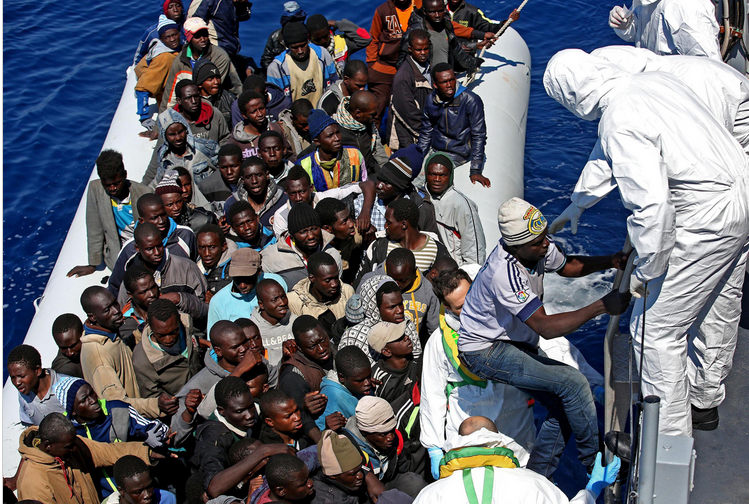

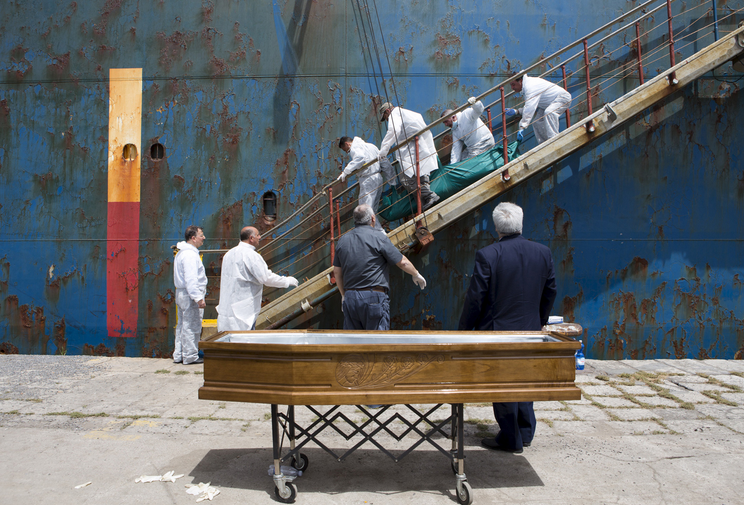
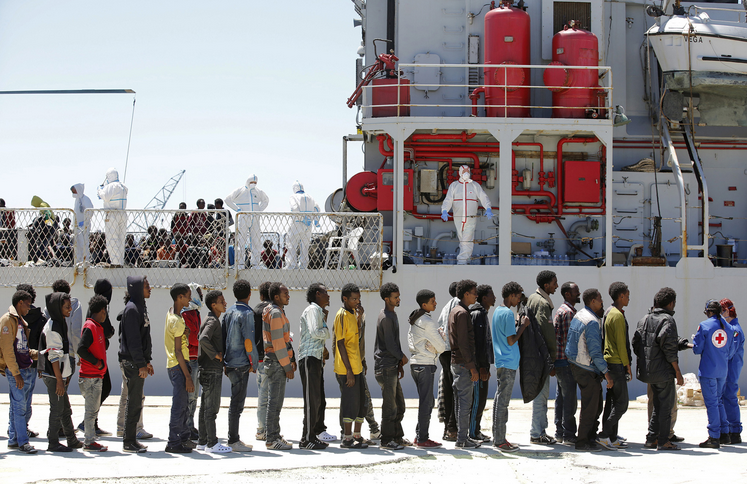
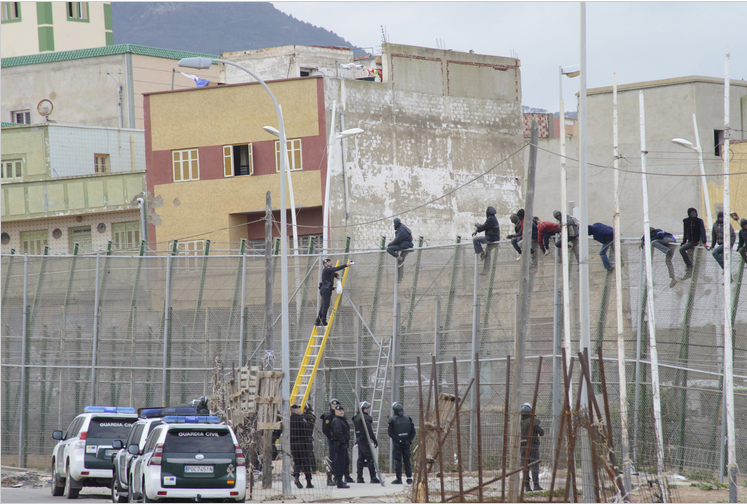
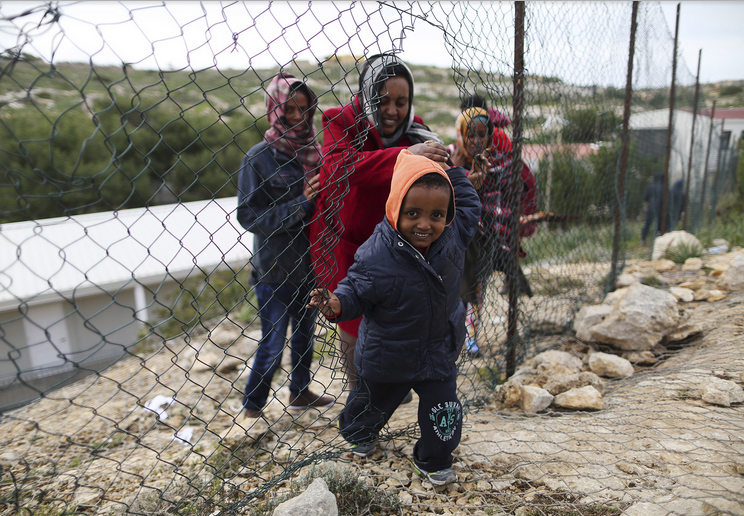

Published Date : 2015-07-15 07:51:59
Author : admin
When we think of piracy, Somalia and the 2013 Hollywood movie Captain Phillips comes to mind. It’s the story about the hijacking of the Maersk Alabama in 2009 and the capture of its American Captain. What many fail to know is that the West Indian Ocean is not the world’s most dangerous seas. In 2014, the United Nations declared Southeast Asia seas as perilous. Piracy has always been endemic in Southeast Asia and it is showing no sign of abating.
Southeast Asia is home to vital shipping lanes such as the South China Sea and the Malacca Straits and in fact approximately one third of the global trade passes through one of the world’s “most important and strategic choke point”. With its complex coastlines, it is one of the world’s busiest trade routes. The waterways between Indonesia, Singapore and Malaysia have long been prone to piracy and piracy is now in the ascendant in Southeast Asia.
Whilst global piracy incidents have decreased from 445 pirate attacks in 2010 to 245 in 2014, the seas of Southeast Asia has emerged as a new spot for pirate attacks. According to One Earth Future Foundation study in 2010, it was estimated that piracy drains up to USD 7 billion to USD 12 billion from the international economy each year. Piracy is responsible not only for the rising economic and financial damage to countries and the international shipping industry. Fraud, stolen cargoes, delayed trips and increase insurance premiums are consequences of piracy.
The International Maritime Bureau (IMB) has adopted a broad definition of piracy.
“Piracy is an act of boarding any vessel with the intent to commit theft or any other crime and with the intent or capability to use force in the furtherance of that act”.
The IMB which collects and collates information on piracy attacks around the world, reported that small tanker hijacks by armed gangs were escalating in the waters of Indonesia, Malaysia and Singapore. IMB reported that Asia accounted for 75 percent of the world maritime piracy and robbery in 2014.
Majority of maritime crime in Southeast Asia continues to occur at anchorage against crew members and ships. Southeast Asia waters are now deemed to be the most pirate infested waters in the world. In fact in the first nine months of 2014, the worst affected area was the Indonesian Island of Bintan. Southeast Asia was the location for 41 percent of the world’s pirate attacks between 1995 and 2013. With increased traffic outside port limits along the Straits, this has resulted in the worrying rise in piracy in Southeast Asia. Regional Cooperation Agreement on Anti-Piracy (ReCAAP) reported 38 incidents of piracy or armed robbery in Southeast Asian waters in the first quarter of 2015, up from 29 in the same quarter last year.
Pirates active in the Southeast Asian region can be divided into two categories: (1) opportunistic sea robbers who are involved in small scale attacks and (2) sophisticated organised pirate gangs, responsible for hijackings and other major pirate attacks. With the increase in sea borne trade and shipbuilding tonnage worldwide, the amount of commercial traffic traversing the region’s waterways has increased substantially and resulted in the piracy in the region.
According to the ReCAAP, over half of the incidents lodged were petty thefts and resulted only in minor economic damage and did not lead to any crew injuries. These were purely opportunistic attacks with the intent of stealing cash, scrap metal, crew’s personal effects and were targeted at tug boats, barges, cargo ships and other vessels. More serious attacks involve illegal syphoning of fuel in the Straits of Malacca and the South China Sea and occur at night outside Singapore’s port limits in less-policed waters.
ReCAAP is the first regional government to agree to promote and enhance cooperation against piracy and armed robbery in Asia. It facilitates communication and information exchanges between member countries and was launched in 2006. Singapore, Japan, Laos and Cambodia were the first four states to formally adhere to ReCAAP.
To date 20 countries have become contracting parties to ReCAAP, with the United States of America (USA) joining Southeast Asia’s war on piracy in September 2014. USA’s membership in ReCAAP will enable them to support multilateral cooperation in addressing the common threat of piracy and robbery against ships in Southeast Asia. With multinational naval patrol efforts launched off East Africa and improved on-boardsecurity, USA and its allies have been successful in their fight against piracy in the Horn of Africa. IMB reported that waters off Somalia saw just 3 incidents in 2014, down from 160 in 2011. USA brings wealth of knowledge and expertise to fight piracy in Southeast Asia. What is surprising however is that Indonesia and Malaysia are not members of ReCAAP despite their geographic proximity to these attacks. However according to First Admiral Dato Zulkifli bin Abu Bakar, Director of the Maritime Criminal Investigations department of the Malaysian Enforcement Agency, Malaysia is approaching Indonesia and Singapore to enhance the network between law enforcement authorities in the 3 countries.
It is likely that piracy in Southeast Asia will continue for years to come and will likely remain a security concern for the shipping industry and governments. To combat piracy in Southeast Asia, steps in the right direction must be taken and it requires more cooperation between countries. The plan for Malaysia, Indonesia and Singapore to launch more joint investigations on piracy crimes in the region is a step in the right direction. Intelligence sharing mechanisms should be implemented and users of the region’s waterways must take on a greater responsibility for enhancing maritime security. Southeast Asian countries should work together and contribute to improve safety and security. Another point of consideration is that ReCAAP should be signed by regional states in Southeast Asia that have not yet done so.
Published Date : 2015-07-06 09:00:53
Author : admin
“Josephine danced well during a party to send off our JSS3 pupils. One of us asked her to stop, but she said, ‘Please let me dance well. I don’t know when I will have the chance to dance another one,'” one of her classmates said.
Could Josephine, who was one of the victims of last week’s boat mishap in Lagos, have had premonition of her death?
The motorised boat which crushed the canoe conveying her and other pupils in Irewe, Ojo, Lagos State, killing six of them, was carrying stolen fuel, according to reports.
The traditional ruler of the area, Osolo of Irewe, Oba Abduldeen Durosimi, told journalists at his palace on Thursday that the school children were victims of illegal oil bunkering going on at the Takwa Bay area.

One of the survivors of the tragedy, Evelyn Mensah
On Wednesday, some 14 schoolchildren who were in a canoe en route to their schools in Irewe fell into a river after the motorised boat crashed into their canoe.
While eight of the children were rescued alive, six of them drowned.
The victims were identified as Jonathan Fiankyu, Nelson Fiankyu, Josephine Ajigbo, Patience Ajigbo, Imonina Briget and Kayode Nathaniel.
It was learnt that while three of the victims attended Osolo High School, the remaining three attended LA Primary School, Irewe.

Mrs. Veronica Friday, mother of one of the victims, Jonathan Fiankyu.
Durosimi said, “There are 37 villages surrounding me. There are eight primary schools, but there is only one secondary school. There are about three islands that surround us here.
“The incident happened yesterday (Wednesday) when the schoolchildren were going to their schools. We have been warning the villagers against illegal oil bunkering. But some of them will not hear.
“It was one of them that was carrying fuel from Takwa Bay that crushed the children’s canoe, damaging the hull. But we thank God that not all of them died. Some survived.”

Chief Salam Mati-miloju, Baale of igira village; the village where the victims board the canoe
The traditional ruler appealed to the government to build boarding schools in the community to reduce the risks of children taking canoes everyday to get to school.
In the course of investigations, the suspected vandal was identified as one Folly.
It was learnt from residents that the person that paddled the children’s canoe also had his ears blocked with an earpiece. He was said to be listening to music.
A resident said the children saw the fibre boat approaching and raised the alarm, but the man was distracted.
He said, “The man that paddled that canoe had his ears blocked. He was listening to music and that was why he didn’t see the boat.
The canoe that conveyed the pupils
“By the time he knew, it was already too late. The boat broke the side. The children fell into the water, while the canoe sank.”
A classmate of Patience and Josephine who were both children of the same parents, Mojeed Rokibat, said their teachers did not initially believe the news.
She said, “One of those that survived, Michael, came into the class and told our teachers their canoe had capsized.
“But they did not believe him. Then another person came and said the same thing and that was when everybody started to run helter-skelter.”
Another classmate, Lamidi Shukura, explained that one of the victims, Josephine, had danced during a recent event.
“Josephine danced well during a party to send off our JSS3 pupils. One of us asked her to stop, but she said, ‘Please let me dance well. I don’t know when I will have the chance to dance another one.'”
While one of the children came from Egira village, four were from Okunfeiyiku village. Another came from Olomometa village.
However, villagers in Irewe community, where all the victims attended their schools, were stranded on Thursday as they could not connect to the three villages because there was no canoe to take them.
A resident said, “The man that usually paddles the canoe was the one that was involved in the accident.”
Meanwhile, the Lagos State Government has said that the bodies of six children who drowned in the boat accident have been recovered.
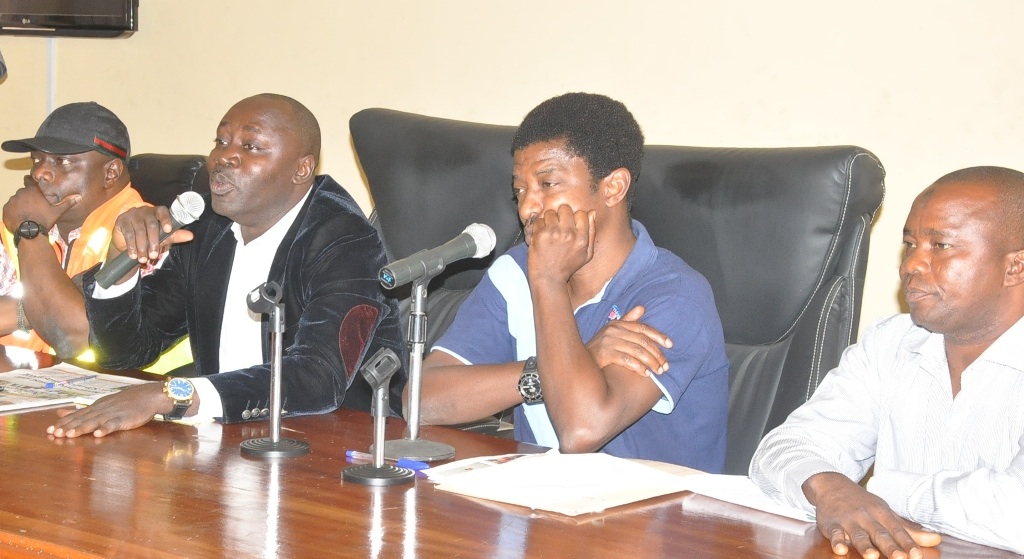
Press Centre at the Secretariat, Alausa, Ikeja
At a news conference in Alausa, Ikeja, on Thursday, the Managing Director, Lagos State Waterways Authority, Yinka Marinho, said three of the bodies were recovered on Wednesday, while three were recovered on Thursday.
He said, “Eight of the 14 children survived the tragedy, but six died. What happened was that a motorised boat rammed into a canoe carrying the children to school.
“The captain of the motorised boat had been arrested and detained at the Railway Police Station.
“It was observed that the passengers in the boat were not wearing life jackets despite the fact that the government had distributed 3,500 life jackets to boat operators.”
The LASWA boss stated that in the next few weeks, 2,400 new life jackets would be distributed to boat operators.
He added that there were plans to distribute another set of 1,800 for the use of schoolchildren in riverine areas.
He said, “We are going to comb the nooks and crannies of our riverine areas to take a census of schoolchildren to know the number of life jackets to be provided for them.”
The General Manager, Lagos State Emergency Management Agency, Dr. Femi Oke-Osanyintolu appealed to those using the waterways to always put on life jackets.
Director General, Lagos Safety Commission, Odebunmi Dominga, said the government would enforce the law and ensure that people using the waterways always wore life jackets.
The Lagos House of Assembly, at its sitting on Thursday also called on the state government to ensuring strict enforcement of safety regulations on the waterways. They passed a resolution calling on those behind the accidents to be punished to serve as deterrent to others.