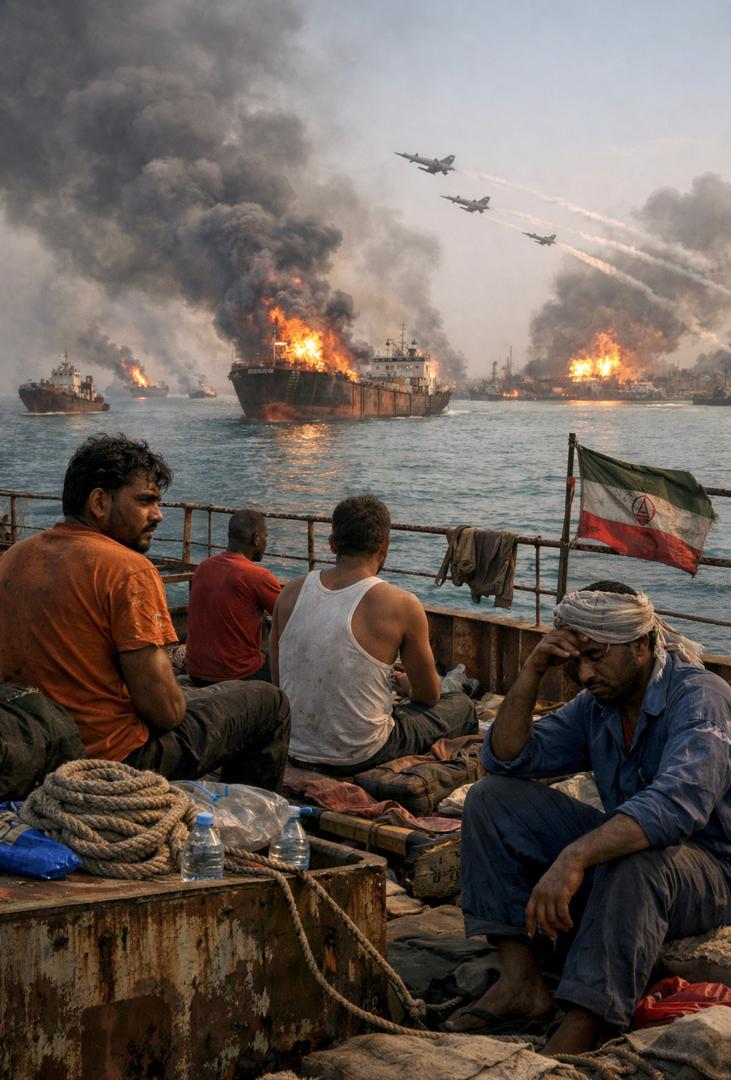
About 20,000 seafarers have been left stranded aboard vessels in the Arabian Gulf as escalating tensions between the United States, Israel and Iran make it unsafe for ships to navigate the Strait of Hormuz, according to the Secretary-General of the International Maritime Organization (IMO), Arsenio Dominguez.
In a video interview seen by SHIPS & PORTS on Thursday, Dominguez said the strategic waterway linking the Arabian Gulf to the Gulf of Oman remains legally open but has effectively become too dangerous for vessels to use.
“The Strait of Hormuz is actually open. The Strait is not closed. It’s just that it’s not safe for ships to navigate and operate in the region right now,” he said.
The deteriorating security situation has left hundreds of vessels trapped in the Gulf since the conflict erupted. Estimates suggest that nearly 150 container ships, 450 oil and gas tankers and about 200 bulk carriers that trade internationally were already in the area when hostilities intensified, leaving thousands of crew members unable to leave.
Dominguez said seafarers are the most immediately affected by the situation, noting that around 20,000 crew members are currently stranded on board ships in the region. He added that another 15,000 people on passenger vessels are also affected, with reports indicating that six cruise ships remain in the Gulf with passengers still on board.
Travel disruptions across the region have compounded the crisis. With air travel largely shut down, and only a limited number of repatriation flights beginning to operate, many seafarers have no practical means of leaving the region. Even if flights were available, shipowners are reluctant to leave vessels valued at tens or hundreds of millions of dollars without crew.
Security concerns have intensified following multiple incidents at sea. At least 10 commercial vessels have either been struck or involved in near misses in the region since 28 February, further discouraging ships from attempting to transit the narrow waterway.
The growing insecurity has also had financial repercussions for shipping companies. War risk insurance has become increasingly difficult to obtain, with some insurers withdrawing cover altogether while others have dramatically increased premiums.
According to Dominguez, insurers that are still offering war risk protection have raised prices sharply.
“We now see how insurance companies are not ready to provide war risk insurance to vessels or they are five times the price, which is of course not affordable,” he said.