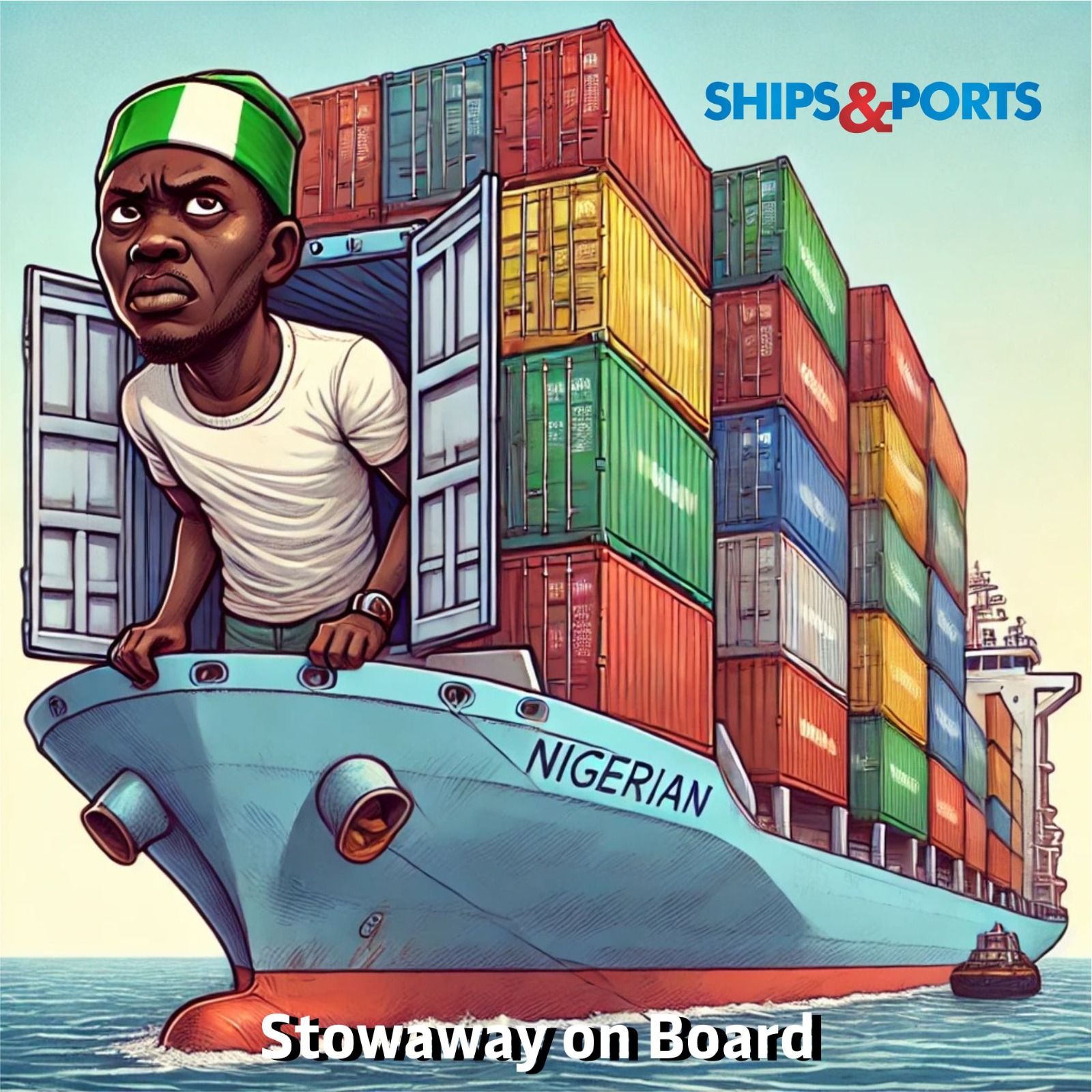
Shipping lines operating in Nigeria have condemned the imposition of a $2,000 fine for every stowaway found aboard their vessels, insisting that they are being penalised despite being the primary victims of persistent security breaches at the nation’s ports.
Their frustration comes against the backdrop of a worsening stowaway crisis which, according to the Shipping Association of Nigeria (SAN), contributed to an estimated 2,300 security infractions across Nigerian ports in 2025 alone.
Speaking at a briefing in Lagos, SAN Chairman, Boma Alabi, said the situation has reached an alarming level, especially as shipping companies continue to pay substantial fees to government agencies whose mandate is to protect vessels and secure the port environment.
She revealed that around fifteen foreign shipping lines currently operate in Nigerian waters, with each reporting two to three stowaway incidents every week. These incidents, she argued, not only expose the glaring vulnerabilities in port security but also place an unjust financial burden on innocent operators.
Alabi faulted the Nigeria Immigration Service (NIS) for levying the $2,000 fine per arrested stowaway, describing the policy as punitive and grossly unfair.
Shipping lines, she explained, are compelled not only to pay the fines but also to shoulder the cost of repatriation, all while continuing to remit payments in dollars to government agencies for vessel protection services that are evidently failing.
She urged the government to immediately review the sanction regime so that the financial consequences of stowaway activities are not borne by shipping companies who already suffer operational, reputational and financial damage from such breaches.
The SAN Chairman also highlighted the severe ripple effects of inefficient cargo clearing system at the port, noting that cargoes that should ordinarily be cleared within twenty-four hours are being delayed for two to three weeks by Customs and other authorities.
Such disruptions, she warned, have forced some manufacturing companies to suspend operations due to shortages of critical inputs.
She described the situation as untenable for a country seeking to attract investment and improve its global competitiveness.
Alabi further criticised what she described as constant and disruptive interference by the Marine Police, whom she said routinely instruct shipping lines to halt the release of cargo to consignees.
She called for a definitive protocol from Police authorities, insisting that checks should be conducted at the terminal during cargo examination rather than through arbitrary stop-orders that create confusion and delay.
While commending the Minister of Marine and Blue Economy, Dr Adegboyega Oyetola, for recent improvements at the ports, Alabi noted that much more work remains to be done.
She called for an increase in the number of functional pilot cutters, the expansion of the turning basin in Onne and the recruitment of additional mooring personnel to ensure safe handling of larger vessels and operations across various ports.
The association also urged the government to streamline regulatory oversight, arguing that excessive layers of control hinder the ease of doing business and weaken Nigeria’s competitiveness.
It appealed to the Nigeria Customs Service (NCS) to harmonise its clearing procedures and ensure all new policies are piloted before full implementation to prevent demurrage costs that importers and exporters currently face due to abrupt or unclear directives.
Alabi further requested that Customs obtain court orders before auctioning overtime cargoes, in line with due process and to safeguard the rights of importers.