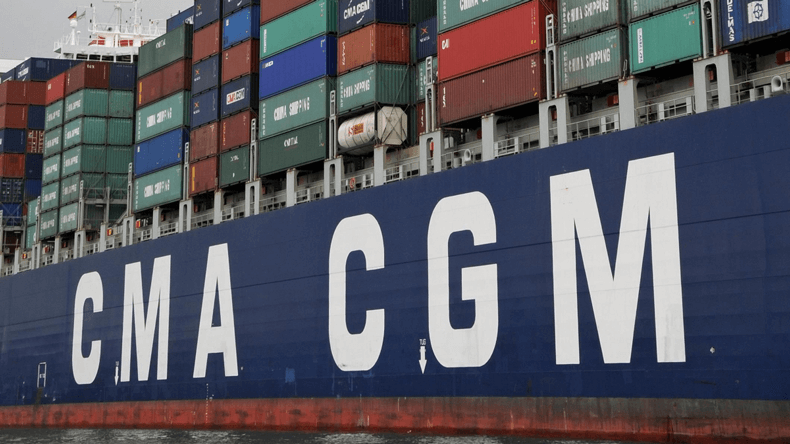
Container shipping giant CMA CGM has imposed a new Peak Season Surcharge (PSS) on cargo bound for Nigeria and other West African destinations, a move expected to raise shipping costs for importers as the busy trade season extends into early 2026.
The surcharge, which applies to cargo moving from the Far East to West Africa, will be rolled out in phases, with varying rates depending on destination range and loading date. It affects both dry and refrigerated (reefer) cargo shipped under short-term contracts.
From 1 January 2026 and until further notice, CMA CGM said it will levy a PSS of USD300 per TEU on shipments destined for the West Africa Central and South ranges.
Countries impacted include Nigeria, Côte d’Ivoire, Benin, Ghana, Togo, Equatorial Guinea, Angola, Congo, the Democratic Republic of the Congo, Namibia, Gabon and Cameroon.
Earlier, from 25 December 2025, the French carrier will introduce a PSS of USD150 per TEU on cargo from the Far East to the West Africa North range, covering Liberia, Senegal, Mauritania, Gambia, Sierra Leone, Guinea-Bissau, Cape Verde, and São Tomé & Príncipe.
However, this initial relief for West Africa North will be short-lived. CMA CGM confirmed that from 1 January 2026, a higher surcharge of USD 450 per TEU will apply to the same North range destinations, also covering dry and refrigerated cargo under short-term arrangements.
The shipping line advised customers and logistics planners to carefully factor in the applicable surcharge levels based on destination and shipment loading dates, as the additional costs could significantly impact landed prices and supply chain budgets.
Industry stakeholders say the latest PSS underscores the continuing cost pressures in global container shipping, particularly for import-dependent economies such as Nigeria, where higher freight charges often translate into increased consumer prices and business operating costs.