Nigeria closed 2025 with headline inflation at 15.15 per cent, according to fresh Consumer Price Index figures released by the National Bureau of Statistics.
The data reflect a newly rebased CPI, with 2024 now serving as the base year and 2023 as the weight reference period, offering a clearer picture of price movements across the country.
Statistician General Adeyemi Adeniran explained that year on year inflation was calculated using a twelve month reference period, with the average CPI for 2024 set at 100. He said this method provides a more reliable measure of changing prices than single month comparisons.
The December CPI climbed to 131.2, a modest rise from November. Month on month inflation eased to 0.54 per cent, down from 1.22 per cent the previous month, suggesting a gradual slowdown in price acceleration as the year came to a close.
Food and non alcoholic beverages remained the biggest driver of inflation, followed by restaurants and accommodation, and transport. Meanwhile, recreation and culture, alcohol and tobacco, and insurance and financial services made the smallest contributions.
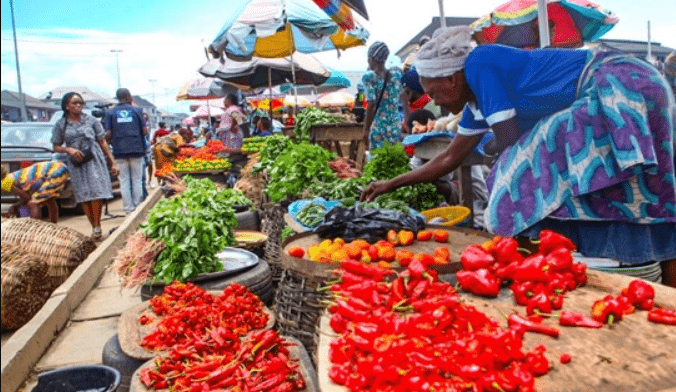
Food inflation brought some welcome relief. Year on year food inflation settled at 10.84 per cent, while month on month food prices fell by 0.36 per cent. The decline was largely linked to lower prices for staples such as tomatoes, garri, eggs, potatoes, carrots, millet, vegetables, plantain, beans, wheat grain, ground pepper and onions.
Core inflation, which strips out volatile food and energy prices, stood at 18.63 per cent year on year. Month on month it slowed to 0.58 per cent from 1.28 per cent in November.
Adeniran noted that although core inflation remains high, the monthly moderation points to easing underlying pressure.
Among key sub indices, energy recorded the sharpest monthly increase, while farm produce prices fell. Services and goods posted mild increases, reflecting uneven cost pressures across sectors.
Urban areas saw year on year inflation of 14.85 per cent and a monthly rise of 0.99 per cent. Rural inflation stood at 14.56 per cent year on year but declined month on month, showing that price pressures are evolving differently across regions.
At state level, Abia, Ogun and Katsina recorded the highest year on year headline inflation, while Sokoto, Plateau and Kaduna saw the lowest. Month on month, Cross River, Abia and Delta experienced the steepest price increases, while Ondo, Gombe and Jigawa recorded declines.
Food inflation was highest in Yobe, Ogun and Abuja, and lowest in Akwa Ibom, Sokoto and Plateau. On a monthly basis, Imo, Nasarawa and Yobe saw the largest food price increases, while Plateau, Rivers and Zamfara enjoyed falling food costs.
Adeniran cautioned that CPI weights vary by state due to different consumption patterns, warning against direct comparisons between regions.
He said the December figures show easing prices for staple foods, even as energy and transport costs continue to strain household budgets, urging policymakers, businesses and families to watch these shifting trends closely.