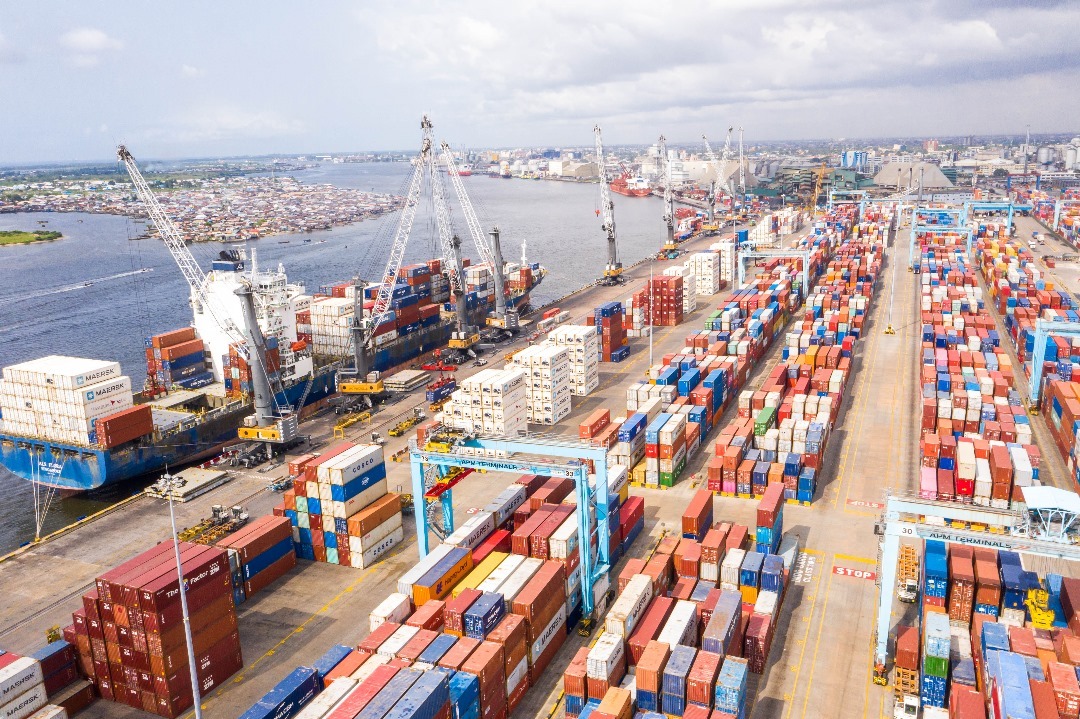
In 2025, APM Terminals Apapa delivered measurable contributions to Nigeria’s trade reform agenda, demonstrating how coordinated public–private collaboration can improve cargo flow, strengthen export capacity, and enhance port competitiveness. As federal reforms intensified — focused on trade facilitation, export expansion, and logistics efficiency — the terminal worked closely with government agencies to ensure that national policy momentum translated into real operational gains at the country’s busiest port.
Building on this momentum, the Public–Private Partnership has continued to generate substantial value for the country, with cumulative investments of over USD600 million in terminal expansion and more than USD 1.5 billion remitted to the Federal Government through concession fees and taxes.
A Year Defined by Record Trade Performance
One of the most notable milestones of 2025 was Apapa’s strongest-ever monthly export throughput. In April, the terminal handled 8,687 TEUs of export cargo, marking a 31.5% year‑on‑year increase and the highest monthly volume since operations began in 2006. This aligns with Nigeria’s broader non‑oil export growth and reflects rising exporter confidence driven by improved port predictability.
The launch of an enhanced rail service in February 2025, developed in partnership with the Nigerian Railway Corporation, played a key role in accelerating cargo movement from inland production hubs to Apapa.
Chief Executive Officer, APM Terminals Nigeria, Frederik Klinke, said, “Despite the tough macroeconomic conditions Nigeria experienced in 2025 — marked by persistent inflation, high operating costs, and continued pressure on foreign exchange — we have continued to deliver strong improvements and achieve key milestones across our business. The year 2025 was one of meaningful growth and innovation for us, particularly in the areas of service delivery, infrastructure enhancement, and strengthened stakeholder partnerships.”
Enhancing Multimodal Logistics to Reduce Congestion
To support faster cargo evacuation and reduce pressure on Lagos roads, APM Terminals Apapa strengthened multimodal evacuation channels throughout 2025. Rail operations between Apapa and Moniya were expanded to three weekly services, significantly easing road congestion and improving turnaround times for consignees and shipping lines. The rail service was further expanded with an extension to Ebutte Meta in late 2025 enabling more cargo movement from businesses in Yaba, Ikeja, Oshodi and surrounding areas.
Chief Commercial Officer for APM Terminals Nigeria, Westtar Kapito, said, “The goal is to offer convenience in import pickup and empty container returns. In this business, time is of the essence and we are constantly evolving to find better ways to move cargo along the supply chain in the shortest possible time.”
In parallel, increased investment in barge operations enabled greater use of waterways to transport containers efficiently, particularly during peak demand cycles. These efforts were complemented by structured stakeholder engagement with Customs, shipping lines, freight forwarders, and regulatory agencies — creating an ecosystem where all parties could respond more quickly to bottlenecks and coordinate solutions.
Operational Improvements Backed by Strategic Public–Private Collaboration
2025 also demonstrated the effectiveness of government‑industry coordination in advancing port infrastructure upgrades. APM Terminals Apapa, working with the Nigerian Ports Authority (NPA), completed the rehabilitation of 970 metres of quay apron, a critical project that enhances operational safety, improves sustainability, and supports faster vessel operations. Despite the high‑risk nature of the quay zone, the project was delivered within schedule and with zero safety incidents, following 12,640 man‑hours of carefully planned work.
These infrastructure upgrades were part of broader national port modernization efforts, including the Federal Government’s approval of US$1 billion for the modernization of Apapa and Tin Can Island Ports, aimed at digitizing operations, deepening berths, and expanding road‑rail connectivity.
Driving Sustainable Growth Through Clean Energy Investments
2025 marked meaningful progress in APM Terminals Nigeria’s commitment to cleaner, more resilient energy solutions. A widely referenced white paper by APM Terminals and Systemiq highlighted Nigeria’s potential to mobilise up to US$830 million in investments by 2030 through port electrification, creating skilled jobs while cutting greenhouse gas emissions by 390,000 tonnes.
APM Terminals Nigeria reaffirmed that electrification will shape the next phase of logistics modernization at Apapa and across its Nigerian terminals. The company already operates solar‑powered facilities at the West Africa Container Terminal in Onne and has emphasised the importance of embedding electrification into concession renewals and future investment cycles.
A Strong Foundation for 2026 and Beyond
The coordinated actions taken in 2025 — across export operations, multimodal logistics, infrastructure upgrades, and sustainability — position APM Terminals Apapa as a reliable anchor for Nigeria’s trade competitiveness. The year’s achievements underscore what is possible when government and private operators align objectives, share data, and jointly pursue operational excellence.
Chief Financial Officer, APM Terminals Nigeria and Acting Managing Director, APM Terminals Apapa, Courage Obadagbonyi, said, “2025 concluded on a strong and encouraging note for us, and we are committed to building on this momentum in 2026. We will continue to drive export growth through our terminal operations and deepen our partnerships across the stakeholder ecosystem. We remain proud to support the Nigerian economy and to contribute to positioning the country as a leading hub for international trade in Africa.”
Source: APM Terminals Nigeria