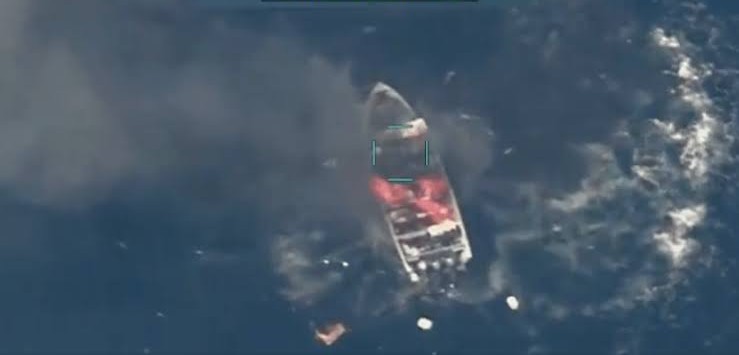
A United States military strike on a suspected drug-smuggling boat in the Caribbean Sea has killed three people, pushing the death toll in Washington’s expanding maritime campaign against alleged traffickers to at least 150 and intensifying controversy over the legality of the operations.
According to US Southern Command, the vessel was travelling along known narcotics routes and engaged in trafficking activity when it was destroyed on Monday in an explosion captured on military video.
The strike forms part of a campaign launched in early September under President Donald Trump, whose administration has framed the effort as an armed conflict with what it calls “narco-terrorists” operating across Latin America. US forces have since conducted repeated attacks on small vessels across the Caribbean and eastern Pacific, actions officials say are aimed at choking off maritime drug flows to the United States.
The attacks have drawn fierce criticism from international law specialists and human rights advocates, who note that Washington has rarely produced concrete evidence that targeted boats were carrying drugs or posed an imminent threat. Critics argue that attacking civilian craft suspected of criminal activity amounts to extrajudicial killing under international law, a charge sharpened by the growing number of fatalities and the absence of arrests or judicial process.
The naval campaign is unfolding alongside a broader US military surge across the Caribbean basin, where American forces have in recent months struck suspected smuggling boats, interdicted tankers linked to sanctioned oil trades and even mounted a dramatic raid in Caracas that led to the capture of Venezuelan leader Nicolás Maduro.
Regional governments and Caribbean leaders have increasingly voiced alarm at the escalation, warning that the strikes — many of whose victims are believed to be Caribbean nationals — risk destabilising the region while undermining legal norms at sea.
With the latest deaths, the Caribbean has become a focal point of one of the most contentious US counter-narcotics strategies in decades, leaving allies and legal observers questioning whether the campaign represents a new front in the war on drugs or a dangerous precedent for the use of lethal force far beyond traditional battlefields.