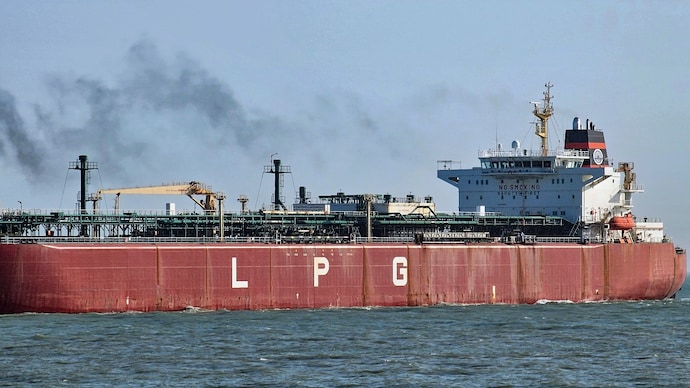
Two India-bound liquefied petroleum gas tankers carrying roughly 94,000 metric tonnes of cooking gas have successfully passed through the strategically vital Strait of Hormuz, offering reassurance over energy supplies despite heightened regional tensions.
According to India’s petroleum ministry, the vessels, BW Tyr and BW Elm, are now en route to their respective destinations, with expected arrivals in Mumbai on 31 March and New Mangalore on 1 April.
The passage comes amid severe disruption to maritime traffic caused by the ongoing conflict involving the United States, Israel and Iran. The narrow waterway, through which a significant portion of the world’s energy supplies transit, has seen shipping activity sharply curtailed. Iranian authorities, however, have indicated that vessels deemed “non-hostile” may still pass through, provided they coordinate movements in advance.
These tankers join a small but growing number of Indian-flagged ships that have managed to navigate the chokepoint in recent days. Shipping data indicates that four such vessels have already completed the crossing, while several others remain in the western section of the strait awaiting safe passage. Meanwhile, 18 Indian-flagged ships with nearly 500 crew members are still operating within the western Gulf region, underlining the scale of India’s maritime exposure in the area.
India’s dependence on imported LPG adds urgency to these developments. As the world’s second-largest importer of the fuel, the country consumed over 33 million tonnes last year, with imports meeting about 60 per cent of domestic demand. The Middle East supplies the overwhelming majority of these imports, making uninterrupted access through the Strait of Hormuz critical for energy security.
Despite the geopolitical uncertainty, Indian authorities have reported that port operations across the country remain stable, with no signs of congestion or disruption, suggesting that supply chains, for now, continue to function smoothly.