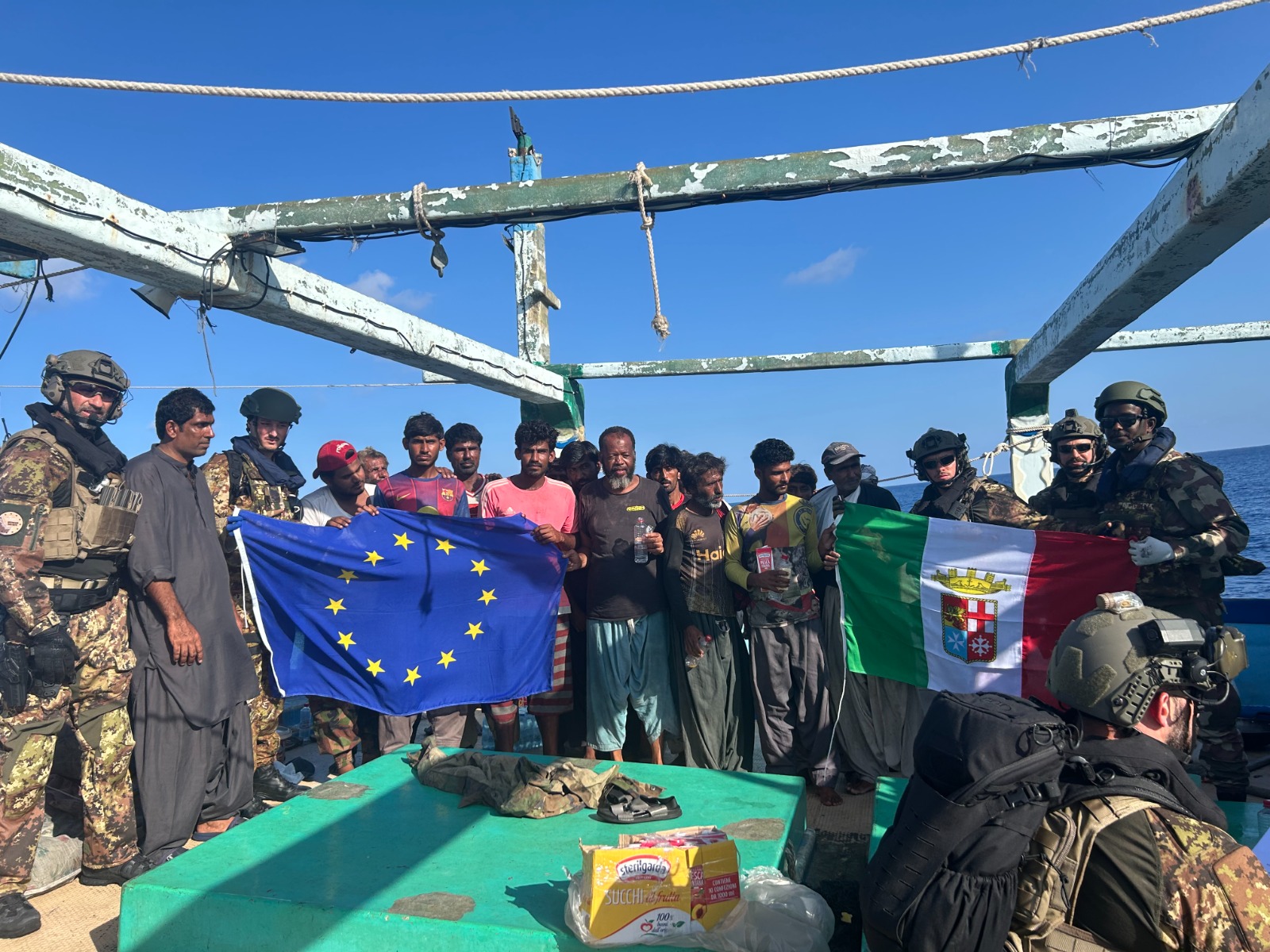
European naval forces have secured the release of a hijacked Iranian fishing dhow after nearly two weeks under pirate control in the Western Indian Ocean, in a sharp reminder that maritime piracy still lingers off the Horn of Africa.
The EU naval mission, EUNAVFOR Operation ATALANTA, confirmed that the Iranian-flagged ALWASEEMI was freed on Sunday after sustained military pressure forced the pirates to abandon the vessel.
The dhow had been seized on 24 March around 400 nautical miles east of Mogadishu by a Pirate Action Group believed to be preparing to use it as a “mothership” for attacks on larger commercial ships. Instead of launching a direct assault, naval forces adopted a calculated “concertina effect”, tightening surveillance with warships and air assets while working closely with Somali maritime police, gradually boxing the pirates in.
The pressure campaign proved decisive. Within days, the attackers disembarked along Somalia’s north-western coastline, allowing naval boarding teams to secure the vessel, confirm the crew’s safety, and deliver food, water, and medical support. Evidence was also gathered for potential prosecution.
The incident triggered swift regional alerts, with the Maritime Security Centre Indian Ocean urging vessels to keep a safe distance and heighten onboard security. By 27 March, ATALANTA forces had already tracked and isolated the dhow, preventing it from being deployed in further piracy operations.
The response drew on a wide network of international cooperation, including Somali security forces, the Combined Maritime Forces, and INTERPOL, underscoring the continued importance of coordinated maritime security in the region.
Although piracy off Somalia had declined significantly since its peak in the early 2010s, recent incidents point to a worrying resurgence, fuelled in part by wider instability affecting key shipping lanes.