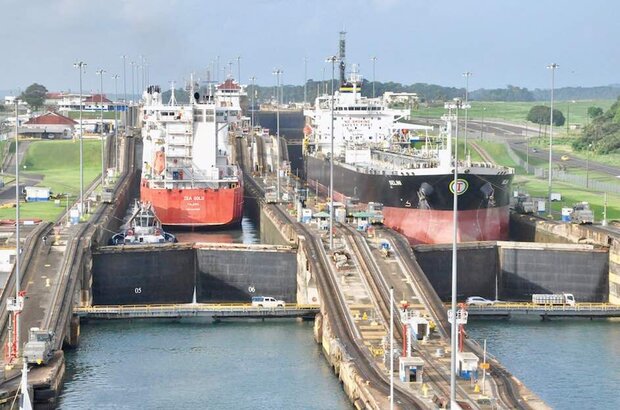
The ripple effects of the Middle East conflict and disruptions around the Strait of Hormuz are being felt far beyond the region, with the Panama Canal emerging as a major beneficiary of shifting global trade routes and surging energy shipments.
The Panama Canal Authority has reported a marked rise in cargo volumes and vessel transits for the period spanning October 2025 to March 2026, underscoring the growing role of energy products in the canal’s traffic mix as geopolitical tensions reshape maritime flows.
A total of 6,288 transits were recorded in the first half of the canal’s financial year, representing an increase of 224 compared with the same period a year earlier. Cargo volumes also climbed by around 5 per cent to reach 254 million Panama Canal Universal Measurement System tonnes.
Performance has gathered notable momentum in recent months, with daily averages reaching 34 vessels in January and 37 in March, while peak days have recently exceeded 40 transits, according to the authority.
Panama Canal Administrator Ricaurte Vásquez Morales attributed the strong showing to robust container traffic and a surge in liquefied petroleum gas shipments, noting that energy cargoes are assuming an increasingly central role in the canal’s operations.
Panama Canal Authority’s Vice President of Finance, Víctor Vial highlighted the sharp spike in transit slot auction prices, which have surpassed $1 million for some vessels, stressing that such figures reflect temporary market conditions driven by heightened demand.
Between three and five transit slots are allocated daily through the auction system, while the majority are secured in advance through reservation mechanisms. The authority emphasised that auction prices do not influence the cost or scheduling of pre-booked transits.
Vial noted that prior to the escalation of tensions in the Middle East, average auction prices ranged between $135,000 and $140,000. In the wake of the conflict, however, averages surged to approximately $385,000 between March and April, illustrating the premium placed on securing passage through the canal amid global uncertainty.
The canal’s resurgence has also been aided by improved environmental conditions. Following the severe drought that constrained operations in 2023 and 2024, water levels have returned to optimal levels, enabling full operational capacity.
Preventative conservation measures remain in place as authorities monitor the stability of an El Niño year, although unseasonably heavy rainfall has helped sustain maximum levels in Gatún and Alhajuela Lakes.
Chief Sustainability Officer Ilya Espino de Marotta said the authority does not anticipate significant disruptions in the months ahead but will continue close monitoring to preserve water levels and maintain service reliability.
Amid ongoing geopolitical volatility and shifting trade dynamics, Morales reaffirmed the canal’s strategic relevance, stating that the waterway remains open, dependable and capable of accommodating rising global demand.