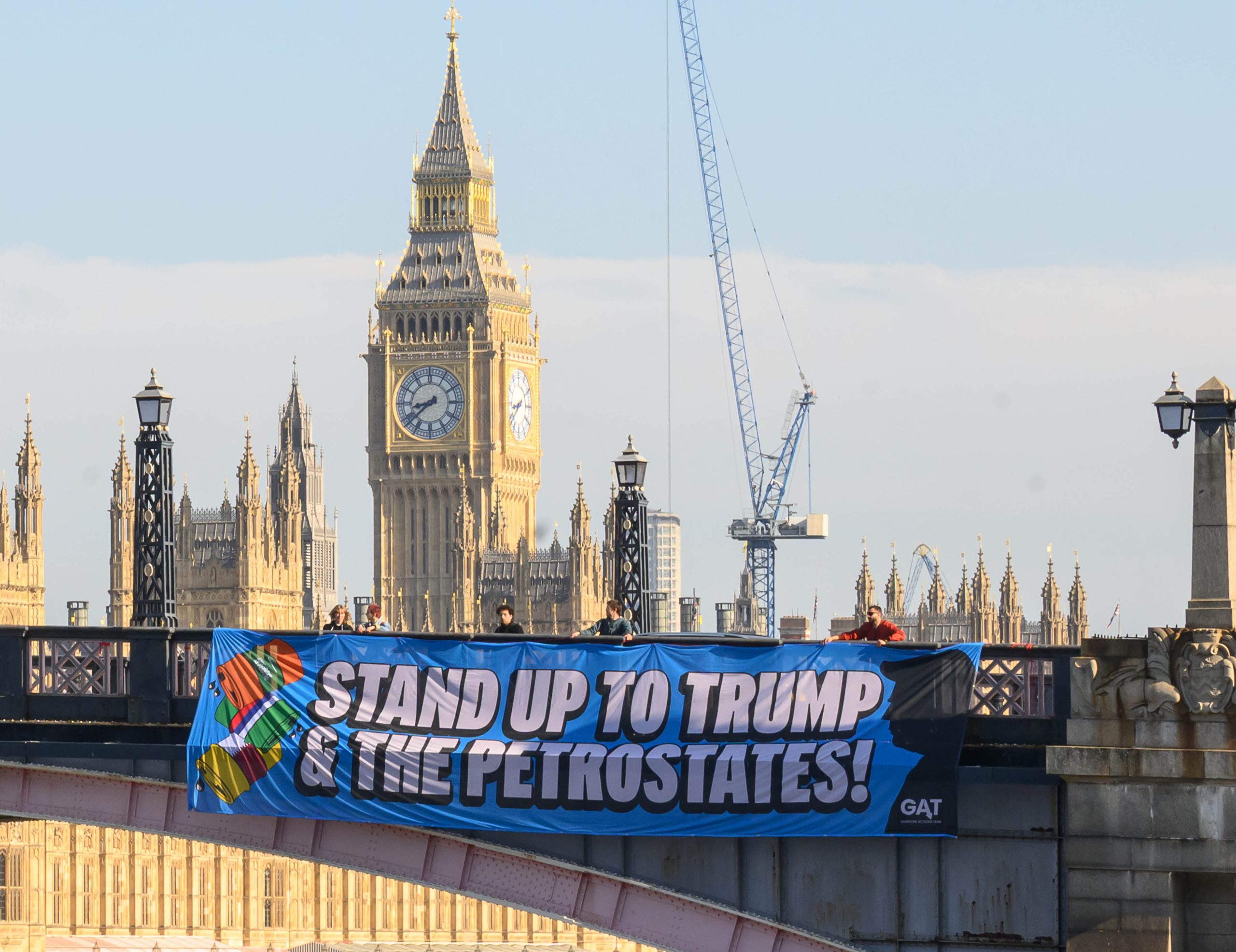
A high-stakes battle over the future of green shipping is unfolding at the International Maritime Organization, where delegates arriving for the 84th session of the Marine Environment Protection Committee are being met with a bold public protest aimed at breaking the deadlock over emissions reform.
Draped across the IMO’s Albert Embankment headquarters, giant banners urge member states to “Stand Up to Trump & the Petrostates! Green Shipping Now!”, in a direct rebuke to efforts led by United States President Donald Trump and major oil-producing nations to stall the organisation’s Net Zero Framework.
The campaign, designed to be unmissable to those approaching by road, rail or river, underscores the growing pressure on policymakers to resist what activists describe as coordinated climate scepticism.
The demonstration has been organised by the Glasgow Actions Team, formed in the run-up to the 2021 UN Climate Conference, alongside Ocean Rebellion, a group that argues the world’s oceans are being pushed to the brink by unchecked industrial exploitation and must be protected as a vital ecological lifeline.
At the heart of the dispute is the stalled Net Zero Framework, a key initiative intended to regulate greenhouse gas emissions from global shipping. MEPC 84 is widely viewed as a decisive moment for reviving the plan, though delegates will also grapple with other contentious measures, including the proposed North-East Atlantic Emission Control Area and the thorny question of introducing international carbon pricing.
The outcome carries significant implications for the shipping industry and its financial backers. Vessels ordered today, many of which will not enter service until the late 2020s, are expected to remain operational well into mid-century.
Environmental advocates argue that the sector must urgently transition away from carbon-intensive fuels and invest in cleaner, ideally carbon-neutral alternatives if it is to meet global climate targets.
Opposition, however, remains formidable. Critics of the framework, including political leaders, powerful oil interests and several petrostate governments, continue to resist sweeping reforms, downplaying environmental concerns despite mounting scientific evidence of climate degradation, from melting polar ice to worsening air quality worldwide.