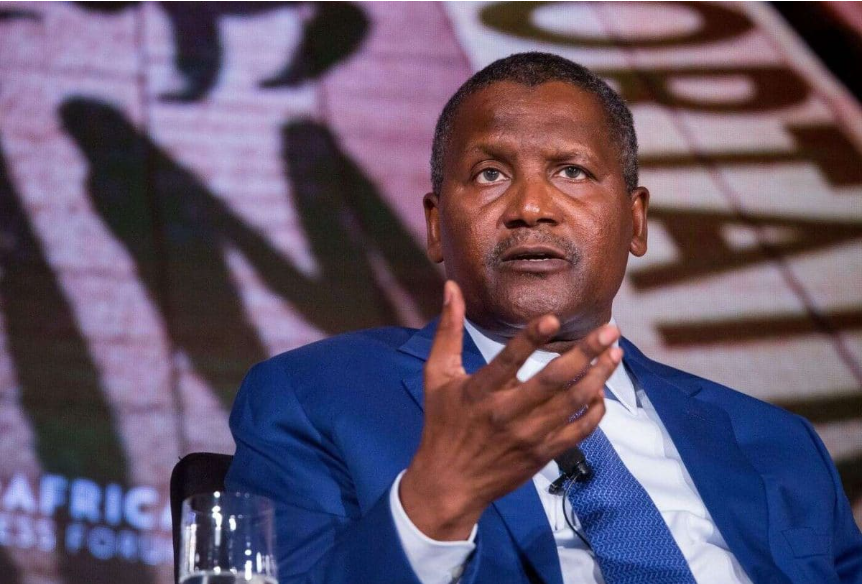
President of Dangote Group, Aliko Dangote, has said strategic private sector investment across Nigeria’s fisheries value chain could create more than 500,000 jobs, slash fish imports, conserve foreign exchange and transform the country into a leading exporter of fisheries products.
Dangote made the projection at the Second Quarter 2026 Citizens’ and Stakeholders’ Engagement organised by the Federal Ministry of Marine and Blue Economy in Lagos.
The forum, themed “From Policy to Action: Mobilising Sub-National Governments for Effective Implementation of Nigeria’s National Policy on Marine and Blue Economy,” brought together government officials, diplomats, development partners, industry leaders, academics and state government representatives to chart a path for unlocking the sector’s economic potential.
Presenting a paper titled “Driving Private Sector Investment and Industrialisation in Nigeria’s Marine and Blue Economy: Opportunities for Sustainable Economic Growth,” Dangote, who was represented by the Managing Director of Dangote Port Operations, Akin Omole, described the country’s fisheries deficit as a compelling investment opportunity rather than merely a food security challenge.
“This is not merely a food security challenge; it is an industrial and investment opportunity,” he said.
“Strategic investment across the fisheries value chain, from aquaculture and hatcheries to feed production, processing, cold-chain logistics and export infrastructure, supported by private sector leadership and an enabling government environment, can strengthen food security, reduce imports, conserve foreign exchange, create over 500,000 jobs and position Nigeria as a competitive exporter of fisheries products.”
Dangote stressed that the success of the National Policy on Marine and Blue Economy would depend largely on sustained private sector participation, noting that the policy aims to create three million jobs within its first four years, achieve annual sectoral growth of seven per cent and reserve at least half of all new jobs for young Nigerians between the ages of 18 and 35.
He identified policy consistency, modern infrastructure, access to finance and investor confidence as critical drivers of industrial transformation, while highlighting infrastructure-led industrialisation, value-chain development and stronger public-private partnerships as the three pillars required to unlock the vast potential of the marine and blue economy.
According to him, the Federal Government’s approval of new deep seaport projects across the country would stimulate the emergence of industrial clusters encompassing agro-processing, petrochemicals, shipbuilding, cold-chain logistics and maritime technology, thereby enhancing Nigeria’s competitiveness.
Dangote also noted that Nigeria continues to import fish valued at nearly one billion dollars annually despite rising domestic production, underscoring the significant supply gap and the immense opportunities available to investors.
He urged government and the private sector to deepen collaboration beyond financing, advocating strategic partnerships involving investors, research institutions and coastal communities to accelerate industrialisation.
He added that well-planned coastal industrial clusters, supported by modern ports, Special Economic Zones and digital infrastructure, would attract long-term investment, drive sustainable economic growth and position Nigeria as a regional blue economy powerhouse.