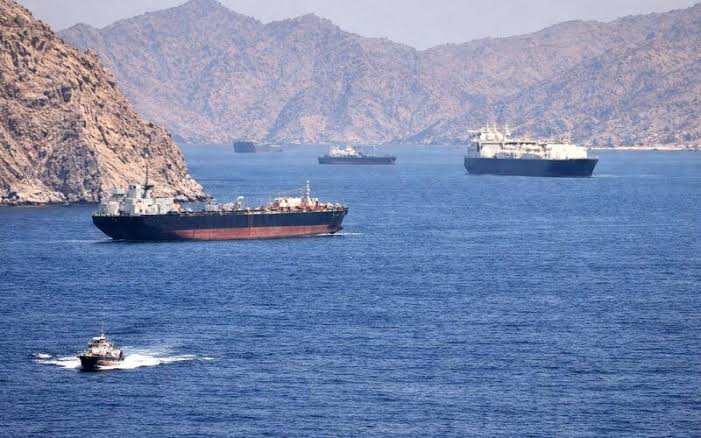
Three tankers were struck by projectiles in the Strait of Hormuz on Tuesday, the latest attacks on vessels transiting the strategic waterway and the busiest single day of such incidents since late April.
According to military sources, two other tankers were also hit, including one struck by a drone.
The vessels sustained damage but no injuries were reported, and at least one continued its voyage.
The attacks threaten shipping through the Strait of Hormuz, which in peacetime carries around a fifth of the world’s traded oil and natural gas, as efforts continue to secure a permanent end to the war between the United States and Iran.
The United Kingdom Maritime Trade Operations centre said the first tanker was struck near Limah, Oman, as it sailed south towards the Gulf of Oman.
Iranian state television, citing anonymous sources, suggested Iran carried out the attack on a tanker transporting Qatari natural gas, although Tehran made no official claim.
Qatar condemned the assault, with Foreign Ministry spokesperson Majed Al-Ansari calling it an “unacceptable attack” on international navigation and global energy security.
In a post on X, he said Doha holds Iran “fully legally responsible”.
The incidents come as Washington seeks to revive negotiations with Tehran aimed at reopening the strait, curbing Iran’s disputed nuclear programme and securing a lasting peace.
An interim agreement has come under increasing strain, while talks are expected to remain on hold until after the burial of Iran’s Supreme Leader, Ayatollah Ali Khamenei, who was killed earlier in the conflict.
Last week, Iran’s joint military command warned that all oil tankers using the strait must follow routes approved by Tehran and threatened a “rapid and decisive reaction” to any US interference.
However, the US-led Joint Maritime Information Center said on Monday that the route along Oman’s coast remained open to all shipping.
The United States and Iran had agreed under an interim arrangement to allow ships to transit the strait without charges for 60 days.
Tehran has since insisted it should eventually control shipping routes and impose transit fees, a proposal rejected by Washington and Gulf Arab states.