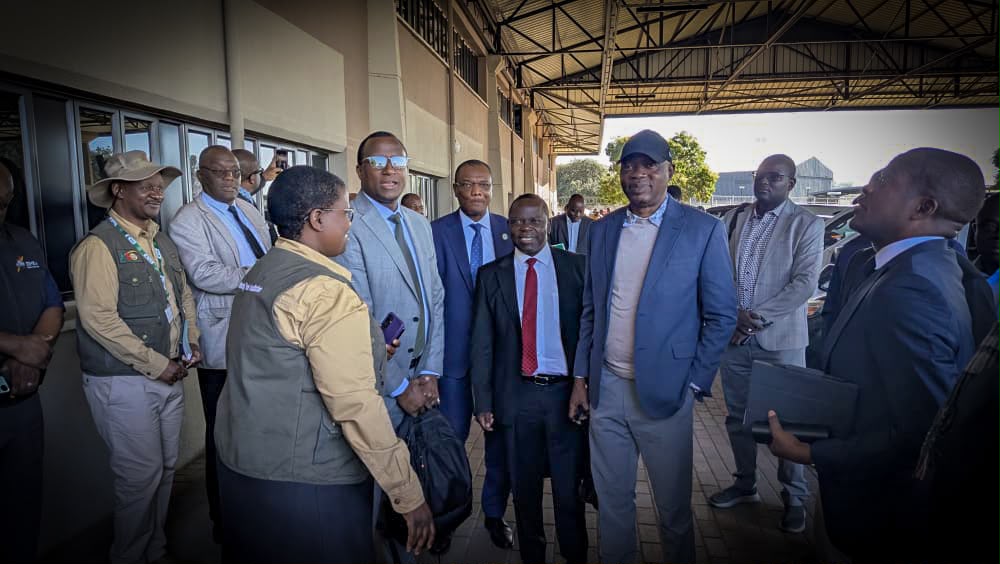
The Nigeria, Benin and Cameroon Customs have agreed to jointly overhaul their border operations after studying Africa’s most successful one-stop border post in Zimbabwe, signalling a major push to eliminate trade bottlenecks and unlock billions in regional commerce under the African Continental Free Trade Area (AfCFTA).
The three countries sealed the commitment at the end of a five-day benchmarking mission to the Beitbridge Border Post, where customs chiefs pledged to harmonise border procedures, integrate digital systems and establish a Trilateral Strategic Steering Committee to drive the reforms.
The initiative is expected to transform the busy Sèmè-Kraké border between Nigeria and Benin and the Mfum-Ekok crossing linking Nigeria and Cameroon into faster, more efficient trade corridors by reducing delays, improving cargo clearance and strengthening border security.
Comptroller-General of the Nigeria Customs Service, Adewale Adeniyi, said the visit had convinced participating countries that modern border management goes beyond physical infrastructure.
“The most important lesson for us is that sustainable reform depends on coordinated institutions, clear accountability, digital interoperability and professional human capital,” Adeniyi said.
He added that the participating customs administrations were committed to translating the lessons into practical reforms that would boost trade facilitation, security and economic growth across the region.
The benchmarking mission, supported by Afreximbank, brought together customs chiefs from Nigeria, Cameroon, Benin and Zimbabwe, who inspected Beitbridge’s freight terminals, cargo processing facilities, scanning operations, traffic management systems and integrated ICT infrastructure.
The delegation concluded that coordinated border management, harmonised procedures and technology-driven operations are critical to removing long-standing trade barriers across West and Central Africa.
Cameroon Customs Director-General Fongod Nuvaga said stronger cooperation among customs administrations was essential to eliminating procedural bottlenecks while maintaining effective border controls.
His Beninese counterpart, Raouf Malèhossou Aboudou, said the Beitbridge model provides a practical roadmap for improving border efficiency and facilitating seamless trade across the region.
Afreximbank’s Director for Trade Facilitation and Investment Promotion, Gainmore Zanamwe, said the mission focused on exposing participants to the governance structures and operational models that underpin successful border modernisation, stressing that technology, accountability and institutional coordination are the real drivers of efficient border operations.
The mission ended with the signing of a Joint Communiqué committing Nigeria, Benin and Cameroon to harmonised customs procedures, digital interoperability, coordinated risk management and sustained investment in human capacity as they intensify efforts to deepen regional economic integration under the AfCFTA.