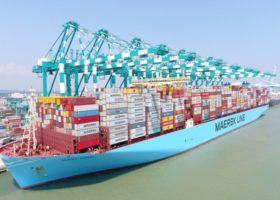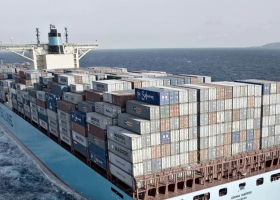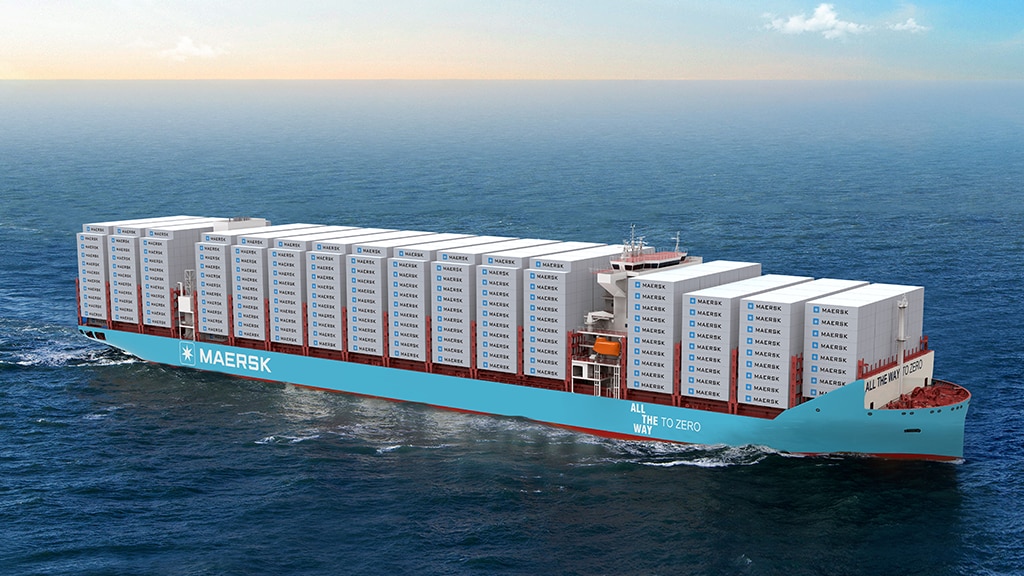
Maersk Line has confirmed an order for 12 ultra-large container ships (ULCS) with a capacity of 24,000 TEU each, putting an end to weeks of industry speculation as the Danish shipping giant moves to bolster its fleet and defend its global market position.
In a statement confirming the deal, the carrier said the newbuildings are tailored for its heaviest-volume routes and will support its ongoing fleet modernisation programme to keep the company competitive.
While Maersk declined to disclose which shipyard won the contract, it confirmed that the vessels are slated for delivery across 2030 and 2031 and will feature dual-fuel engines capable of running on either conventional bunker fuel or liquefied gas.
The dozen mega-ships are widely expected to be deployed on the flagship Asia–Europe trade lane via the Suez Canal, aligning with recent confirmation from Maersk and its Gemini Cooperation partner Hapag-Lloyd that they plan to make a full return to the Red Sea route next year.
Maersk’s latest investment swells an already bulging global containership orderbook. Earlier this month, maritime consultancy Linerlytica estimated the global orderbook at 16.78 million TEU — equivalent to 48 per cent of the active fleet on the water — while Alphaliner placed conservative projections at nearly 16 million TEU.
Beyond fleet renewal, the 24,000-TEU series represents a critical strategic play in the fierce race for global liner supremacy. While Mediterranean Shipping Company (MSC) commands a dominant 21.6 per cent market share with 1,031 active vessels totalling 7.5 million TEU, Maersk is locked in a tight battle for second place with French rival CMA CGM.
According to Alphaliner figures, Maersk currently operates 4.7 million TEU of capacity for a 13.5 per cent market share, holding a narrow lead over CMA CGM’s 4.48 million TEU, or 12.9 per cent.
However, despite Maersk boasting a larger overall orderbook, Linerlytica projects that delivery schedules will allow CMA CGM to temporarily overtake the Danish carrier in active fleet size at some point in 2027 — making Maersk’s 2030–2031 mega-ship influx vital to its longer-term standing.