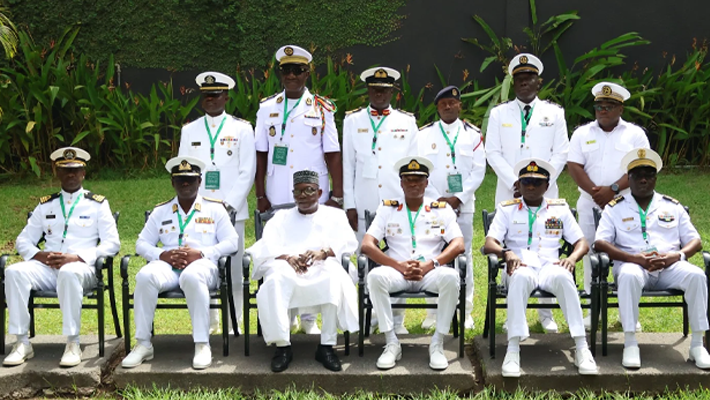
Naval chiefs from ECOWAS member states have renewed their commitment to strengthening the region’s Combined Maritime Task Force (CMTF) to counter escalating threats in the Gulf of Guinea, following high-level talks in Accra, Ghana.
The five-day meeting of the ECOWAS Sub-Committee of Chiefs of Naval Staff, held from 16 to 20 February, focused on growing maritime insecurity ranging from terrorism and drug trafficking to illegal, unreported and unregulated fishing.
According to a statement issued in Abuja by Nigerian Navy spokesman Capt. Abiodun Folorunsho, the discussions were led by Nigeria’s Chief of the Naval Staff, Vice Admiral Idi Abbas, alongside the ECOWAS Commissioner for Political Affairs, Peace and Security, Ambassador Abdel-Fatau Musah, regional maritime security directors and multinational coordination centre representatives. He said delegates also included partners from the United Nations Office on Drugs and Crime and the European Union–African Chamber of Commerce, as well as the CMTF commander.
Participants praised progress under the ECOWAS Integrated Maritime Strategy, citing ongoing regional operations and joint patrols, while calling for closer collaboration with landlocked states such as Burkina Faso, Mali and Niger to confront terrorism and organised crime spilling into coastal waters.
The meeting also highlighted environmental security risks in the Lake Chad Basin and commended Nigeria’s Falcon Eye surveillance system for improving maritime awareness across the Gulf of Guinea.
A major outcome was renewed momentum to operationalise the CMTF through a coalition of willing nations. Côte d’Ivoire, The Gambia, Ghana, Liberia and Sierra Leone formally signalled readiness to join Nigeria in the initiative, with the task force scheduled to be inaugurated in Lagos between 31 May and 1 June.
As host nation, Nigeria has pledged ships, aircraft, vehicles and operational facilities to launch the force, envisioned as a rapid-response maritime coalition drawing intelligence from the Yaoundé security architecture to confront evolving regional threats.