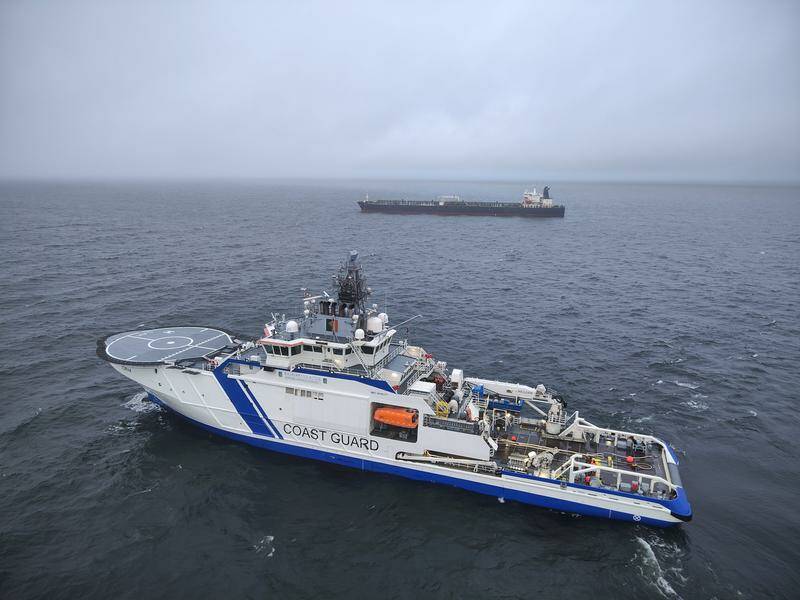
Finnish police have seized a vessel suspected of damaging a vital undersea telecommunications cable linking Helsinki and Tallinn, in the latest incident to heighten security concerns across the Baltic Sea.
The operation, carried out on Wednesday, saw Finnish authorities take control of the ship as part of a joint action with border officials, while investigators opened an inquiry into suspected aggravated criminal damage and interference with communications.
The cable runs across the Gulf of Finland, a strategically sensitive stretch of water that has seen a series of unexplained disruptions in recent years.
Police said the vessel was suspected of dragging its anchor along the seabed before being directed into Finnish territorial waters.
Officials declined to identify the ship or disclose details about its crew, citing the ongoing investigation. The damaged cable is owned by Elisa, one of Finland’s largest telecommunications groups.
The incident comes against the backdrop of heightened vigilance in the Baltic region since Russia’s full-scale invasion of Ukraine in 2022.
Eight NATO member states border the Baltic Sea, alongside Russia, and the shallow seabed is criss-crossed by critical infrastructure including power cables, gas pipelines and data links that underpin daily life and economic activity across northern Europe.
A succession of outages affecting this infrastructure has raised fears of sabotage, prompting NATO to increase its presence in the area with warships, surveillance aircraft and naval drones. The alliance declined to comment on the latest development.
Estonia added to the sense of alarm by confirming that a second telecommunications cable connecting the country to Finland also suffered an outage on the same day.
The Estonian justice ministry said it was not yet clear whether this cable, owned by Sweden’s Arelion, ran parallel to the Elisa link or whether the incidents were connected.
Estonian President Alar Karis said he was concerned by the reports but urged caution until the investigation established whether the damage was accidental or deliberate.
Finnish President Alexander Stubb said he was closely monitoring the situation, stressing that Finland was prepared to respond to a wide range of security challenges.
His comments echoed a broader regional resolve to protect critical infrastructure at a time of rising geopolitical tension.
The case has also revived memories of a high-profile incident in December 2024, when Finnish authorities boarded the Russian-linked oil tanker Eagle S after investigators said it had damaged a power cable and several telecoms links by dragging its anchor across the seabed.
However, a Finnish court later dismissed criminal charges against the ship’s captain and crew, ruling that prosecutors had failed to prove intent and that any negligence claims should be pursued by the vessel’s flag state or the crew’s home countries.
That ruling underscored the legal complexities surrounding such cases, even as governments remain on edge over the vulnerability of the Baltic Sea’s unseen but essential lifelines.