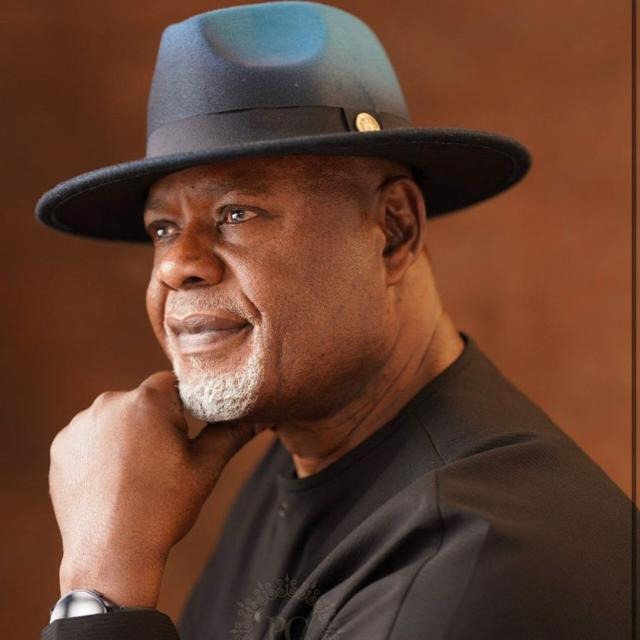
Nigeria’s continued absence from global shipping is draining the economy of billions of dollars annually, leaving the country sidelined in an industry central to its trade and development, according to Engr. Greg Ogbeifun, pioneer President of the Shipowners Association of Nigeria (SOAN) and Managing Director and Chief Executive Officer of Starzs Marine and Engineering Limited.
Speaking during an interview with SHIPS & PORTS as part of activities marking his 75th birthday in Benin last week, Ogbeifun warned that Nigeria’s failure to own and operate its own commercial vessels has reduced the country to a mere trading corridor for foreign interests, despite its massive population and the volume of cargo moving through its ports daily.
He said nearly all vessels calling at Nigerian ports are foreign-owned and foreign-crewed, a situation that continues to export freight earnings, employment opportunities and maritime expertise overseas.
Ogbeifun commended the Minister of Marine and Blue Economy, Dr Adegboyega Oyetola, for taking deliberate steps to reposition the sector, particularly Nigeria’s return to Category C at the International Maritime Organization (IMO) after twelve years. He described the development as significant but cautioned that Nigeria now has a narrow window of two years to demonstrate that it truly deserves to retain its restored status.
According to him, the path forward lies in taking Nigeria back to global shipping with vessels flying the Nigerian flag, registered in Nigeria, owned by Nigerians, carrying Nigerian cargo and crewed by Nigerian seafarers. He stressed that this is the only way to properly project the Nigerian flag within the international maritime space and secure long-term economic benefits.
Raising concerns over human capacity development, Ogbeifun described the situation as an emergency, calling for the establishment of a national global training ship to provide sea-time experience for young Nigerians.
He noted that while some companies, such as Nigerian Liquefied Natural Gas (NLNG), own ships and train seafarers, these opportunities are largely limited to their internal workforce, leaving thousands of maritime graduates without practical exposure as older professionals gradually exit the industry.
He also highlighted the urgent need for Nigeria to align with global environmental standards in shipping, explaining that modern maritime trade increasingly depends on environmentally compliant vessels.
He referenced advanced ships designed for polar operations and emission-controlled areas that rely on non-fossil fuels, low-sulphur fuels or high-efficiency scrubbers to meet strict international pollution regulations, stressing that Nigeria cannot afford to be left behind in this transition.
Ogbeifun lamented the scale of freight revenue losses at Nigerian ports, pointing out that a country of over 230 million people engaged in constant import and export activities does not own a single ship to carry its trade.
He said that about 99.9 per cent of vessels operating in Nigerian waters are foreign-owned, while Nigerian seafarers graduate from maritime institutions without access to sea-time. Using a personal example, he explained that he recently paid 8,000 dollars to ship a vehicle into Nigeria in a 40-foot container, noting that Lagos ports alone handle between 250 and 300 containers daily, with freight charges that could have remained in the local economy instead flowing abroad.
Driven by the desire to reverse this trend, Ogbeifun said he has committed significant resources to supporting government and industry players in rebuilding Nigeria’s maritime capacity. He revealed plans to expand the Starzs Shipyard, established twenty-six years ago, from handling 44-metre vessel repairs to accommodating vessels of up to 120 metres. The expansion will also increase lifting capacity from 5,000 tonnes to 10,000 tonnes and introduce a ship transfer facility expected to commence operations soon.
He disclosed that AFREXIM Bank has approved a 365 million dollar facility to support the expansion, while Lloyd’s of London has conducted an independent study on the project. He added that he has already invested 220,000 dollars personally in efforts aimed at returning Nigeria to global shipping relevance. When completed, the upgraded shipyard will be capable of repairing up to ten vessels of different sizes and specifications simultaneously.
Ogbeifun said the Federal Government is fully aware of the project and has expressed strong support, describing it as a potential game changer for the maritime industry.
He also revealed that he decided to come out of retirement following the emergence of President Bola Ahmed Tinubu, citing renewed confidence inspired by the administration’s economic reforms and renewed focus on the maritime sector.
He further disclosed that he has been developing a privately owned global trading shipping line for the past thirteen months, known as Maritime Shipping and Ocean International Resources Limited, which is designed to drive shipping activities in Nigeria and across international routes. While reaffirming the readiness of the private sector to invest, Ogbeifun stressed that government must do its part by creating an enabling environment for indigenous shipping to thrive and reclaim Nigeria’s rightful place in global maritime trade.