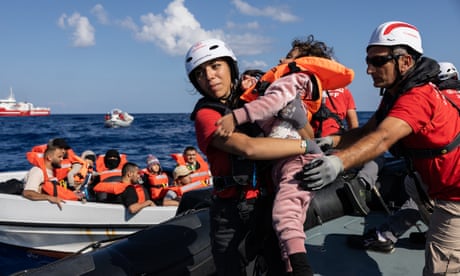
Bodies washing ashore, unanswered phone calls and abandoned camps are becoming grim markers of a growing crisis in the Mediterranean, where increasing numbers of migrants attempting the perilous crossing to Europe are disappearing without a trace in what experts describe as “invisible shipwrecks”.
According to the International Organization for Migration (IOM), the first weeks of 2026 have been the deadliest start to a year ever recorded along the migration route, with hundreds confirmed missing and many more feared lost. Yet the true scale of the tragedy remains uncertain as access to official information continues to shrink.
Julia Black of the IOM’s Missing Migrants Project said the opening months of the year had produced an alarming toll that may only reflect part of the reality unfolding at sea.
“The first two months of this year are the deadliest, January and February, we’ve ever recorded, with more than 600 deaths that we’ve been unable to verify at sea,” she said. “There are a lot more, especially surrounding the Cyclone Harry departures that we weren’t able to get any information on. We don’t know any details on where these boats were when they departed, who was on board and whether search and rescue operations were conducted by anyone in the area.”
Human rights organisations say the lack of transparency from authorities is making it increasingly difficult to track what is happening along the world’s deadliest migration corridor. Governments in countries such as Italy, Malta and Tunisia have faced accusations of restricting the release of information on rescues and shipwrecks, leaving families, researchers and journalists struggling to piece together the fate of those who vanish.
Matteo Villa, a researcher at the Institute for International Political Studies, said the growing silence surrounding incidents at sea had become a troubling pattern.
“We’ve been recording an increase in this kind of strategy of silence, where authorities in Italy and Malta deprive the public of information in order not to talk that much about what’s been going on in the central Mediterranean, even as the Italian coast guard continues to actively carry out search and rescue operations there,” he said.
For migrants and their communities, the consequences are devastating. In the coastal town of El-Amra in Tunisia, residents say they have witnessed a surge in disappearances following waves of departures earlier this year.
Josephus Thomas, a migrant and community leader in the area, described a growing sense of dread as friends and fellow travellers vanish without explanation.
“Since the 15th of January 2026 to date, each day we discover friends and comrades we met along different kilometres around this area who are missing,” he said. “Every day people write ‘RIP’ because they are worried. There is no response from them, even if we try to reach them their phones are unreachable. They are neither in the desert, nor in prison or Libya. Since January 15 to now, it’s more than 1,000 people who have gone missing at the Mediterranean Sea.”
As families search desperately for answers, humanitarian organisations warn that without greater transparency and coordinated reporting, many deaths along the Mediterranean Sea may never be formally recorded, leaving a mounting humanitarian catastrophe largely hidden from view.