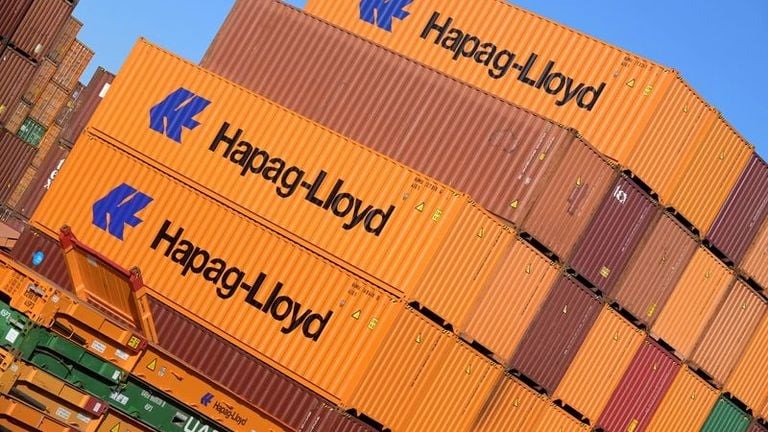
German shipping giant Hapag-Lloyd has announced the introduction of a War Risk Surcharge on cargo moving to and from the Upper Gulf, Arabian Gulf and Persian Gulf, citing the continuing security challenges around the Strait of Hormuz and the operational disruptions affecting global shipping lanes.
The carrier stated that the evolving and unpredictable conditions in the region, coupled with necessary routing adjustments, are exerting pressure on vessel schedules and equipment availability across its international network. These developments, it noted, have compelled the company to take precautionary commercial measures in order to maintain service reliability and mitigate escalating risk exposure.
The surcharge came into effect on 2 March 2026 and will remain in place until further notice. Under the new structure, the War Risk Surcharge will be set at USD 1,500 per TEU for standard containers, while reefer units and special equipment will attract a charge of USD 3,500 per container. The cost will be borne by the booking party.
According to the company, the measure applies to all bookings issued on or after 2 March 2026 that have not yet shipped. It will also extend to cargo already on the water that has not been discharged or loaded to or from ports within the Upper Gulf, Persian Gulf and Arabian Gulf.
Industry analysts suggest that the move reflects broader concerns within the maritime sector about heightened geopolitical tensions and their implications for trade flows through one of the world’s most strategically significant waterways. The Strait of Hormuz remains a critical artery for global commerce, particularly for energy exports, and any instability in the corridor has immediate ripple effects across supply chains.
Hapag-Lloyd’s decision underscores the delicate balance shipping lines must strike between maintaining operational continuity and responding to security realities in high-risk regions. Shippers and freight forwarders operating in the Gulf trade lanes are now expected to factor the additional cost into their logistics planning as the industry continues to navigate an increasingly complex geopolitical landscape.