The Nigerian Maritime Administration and Safety Agency (NIMASA) has confirmed receipt of over 60 applications for the Cabotage Vessel Financing Fund (CVFF), signalling renewed momentum in efforts to empower indigenous shipping operators. The agency has also given firm assurances that the disbursement process will be transparent, closely monitored, and anchored on strict accountability standards.
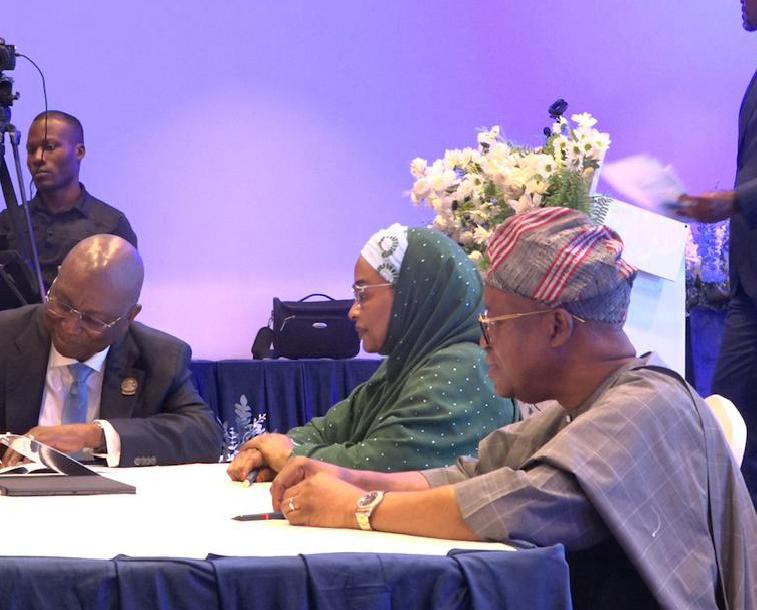
This development comes as the agency’s Director-General, Dr. Dayo Mobereola, signed the 2026 Performance Bond with the Minister of Marine and Blue Economy, Dr. Adegboyega Oyetola in Lagos on Thursday.
The Minister issued a firm warning to heads of agencies under his Ministry, including NIMASA, insisting on strict accountability and the delivery of tangible results.
“Let me emphasise that all Departments and Agencies under the Ministry must remain firmly focused on delivering tangible results,” Dr. Oyetola said.
He noted that the performance bonds are binding commitments that will be closely monitored and rigorously evaluated.
“These are not ceremonial documents. They are binding commitments. Accountability will not be optional,” the Minister declared.
Speaking after the signing of the bonds, Mobereola said ongoing reforms within the agency are being driven by deliberate leadership and strong ministerial backing, noting that NIMASA remains fully committed to advancing its mandate in line with the Federal Government’s Renewed Hope Agenda.
Highlighting progress in maritime security, he revealed that Nigeria has recorded zero piracy incidents in its territorial waters over the past four years, a feat credited to enhanced surveillance capabilities and stronger inter-agency collaboration.
He added that NIMASA is nearing completion of the automation of its ship registry processes, a move expected to eliminate bottlenecks, improve turnaround times, and strengthen Nigeria’s position in the global maritime space.
Mobereola said Nigeria has deposited three conventions with the International Maritime Organization, with three more awaiting Federal Executive Council approval, reinforcing the country’s commitment to global maritime standards. He also pointed to Nigeria’s successful re-election into Category C of the IMO Council in November 2025 as a restoration of its influence in global maritime governance and a boost to its leadership role across Africa.