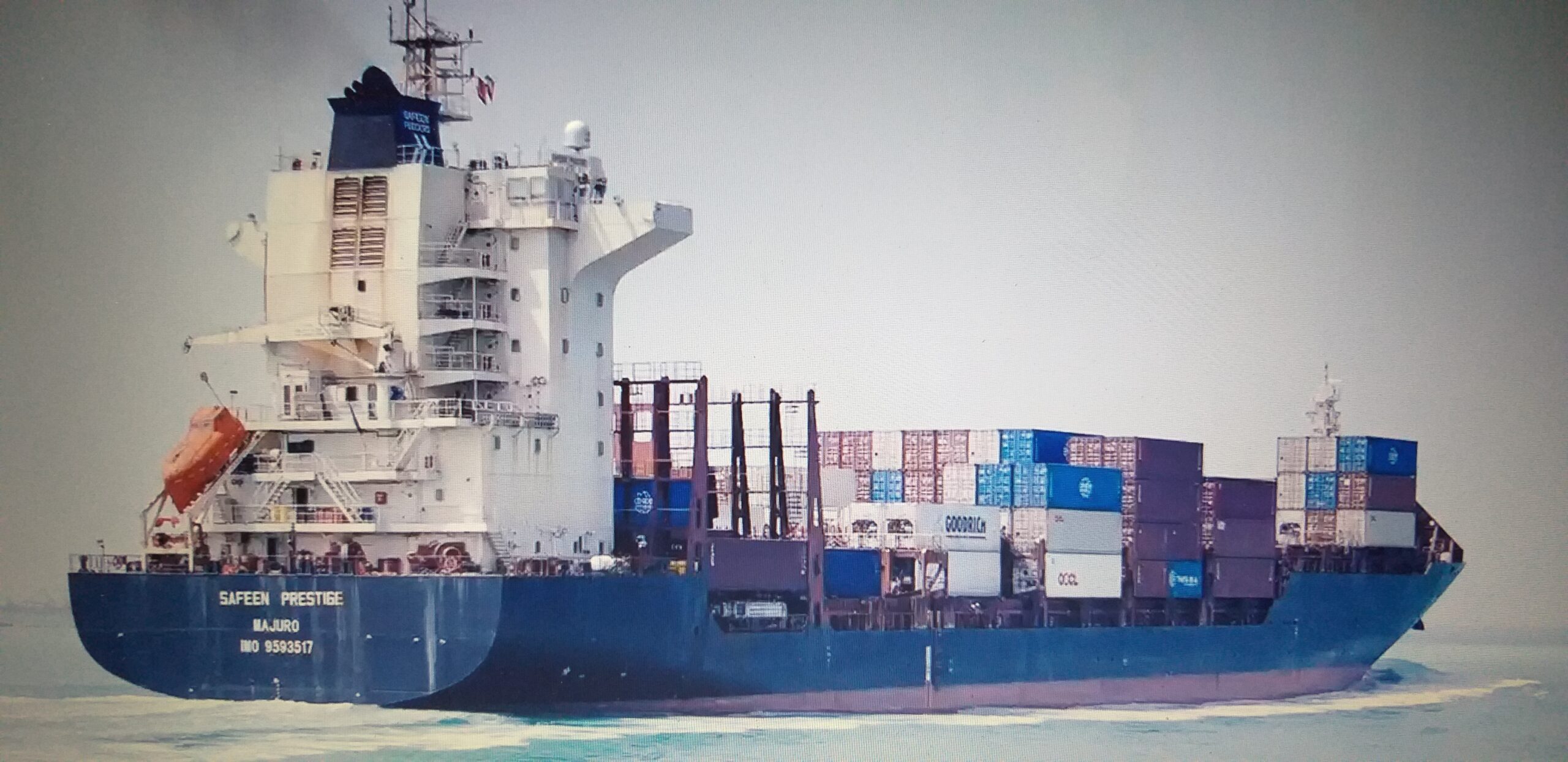
A containership has been struck by a projectile while transiting the Strait of Hormuz, forcing its crew to abandon ship in a dramatic escalation of attacks on commercial vessels in one of the world’s most vital energy corridors.
The Maltese-flagged Safeen Prestige was hit at about 1109 GMT, two nautical miles north of Oman, as it sailed eastbound through the narrow chokepoint. Maritime security firm Vanguard confirmed the strike, saying the projectile hit just above the waterline, sparking a fire in the engine room. The crew evacuated the vessel. The extent of the damage remains unclear.
The incident tallies with an earlier alert from the United Kingdom Maritime Trade Operations, which reported a container ship struck by an “unknown projectile” in the same area. No environmental impact has been reported and investigations are under way.
The 1,740-TEU vessel is owned by Safeen Feeders, part of AD Ports Group. The company said most of its 122-vessel fleet is operating outside the immediate conflict zone and expects limited overall impact.
The strike is one of several reported across Gulf waters in recent days. A Panama-flagged bulk carrier, MV Gold Oak, was damaged by a projectile east of Fujairah, while other vessels reported explosions or near misses off the coasts of Oman and the UAE. A containership west of Dubai also reported a projectile splash nearby without sustaining damage.
The surge in incidents follows the outbreak of direct military confrontation between the United States, Israel and Iran on Saturday, sharply heightening risks to merchant shipping. The Joint Maritime Information Center has raised the regional threat level to “critical”, signalling that further attacks are considered highly likely.
The Strait of Hormuz, which carries roughly a fifth of the world’s oil supply, has long been regarded as one of the most strategically sensitive shipping lanes on the planet. Insurers and security analysts warn that continued strikes could further choke traffic through the waterway, as operators weigh the mounting dangers.