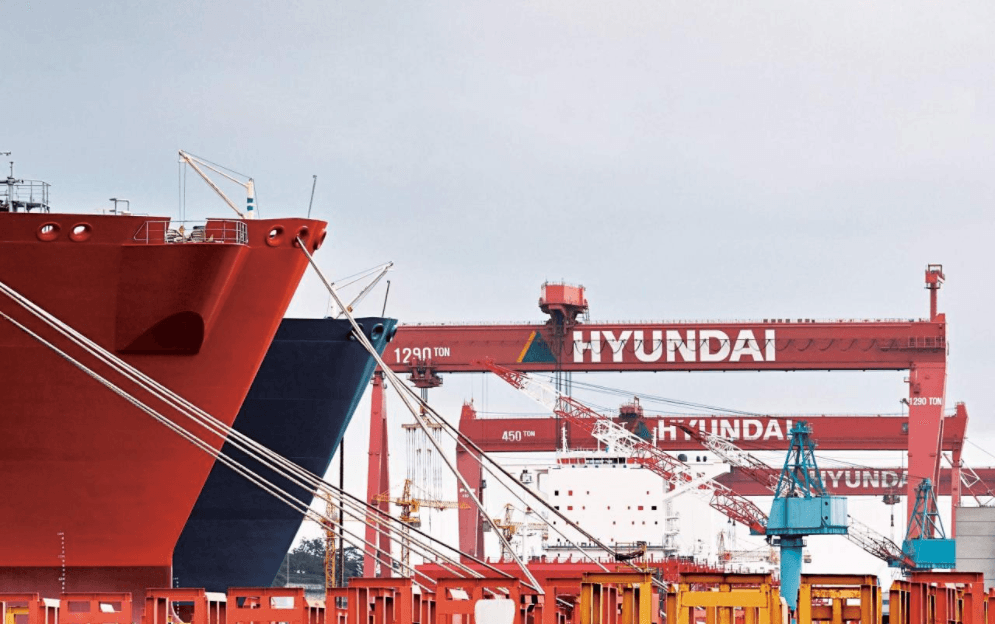
South Korean shipbuilder HD Hyundai Heavy Industries has said unauthorised changes made to the M/V Dali after its delivery undermined critical safety systems and triggered the second power failure that led to the ship’s fatal collision with Baltimore’s Francis Scott Key Bridge in March 2024.
The container vessel struck the bridge after losing propulsion and steering, causing the structure to collapse and killing six highway workers who were carrying out overnight repairs.
The disaster prompted a wide-ranging investigation by the US National Transportation Safety Board into the ship’s design, maintenance and operation.
In its findings, the NTSB concluded that the immediate cause of the collision was a loss of electrical power linked to a loose signal wire in the transformer system, the result of improper wire-labelling installation.
The agency also recommended that HD Hyundai formally incorporate correct wire-labelling methods into its electrical procedures.
Responding to the report, HD Hyundai strongly defended the Dali’s original design, stressing that the vessel was delivered with extensive redundancies intended to prevent total power loss.
The company described large container ships as “floating cities”, built with multiple layers of protection to manage the complexity and harsh conditions of marine operations.
According to the shipbuilder, the Dali was equipped with four independent diesel generators, dual transformers and automatic fuel supply pumps capable of restarting without crew intervention after a blackout, all in line with classification society requirements.
However, HD Hyundai claims that the ship’s owner and operator later bypassed these safeguards by replacing the automatic fuel pumps with a single electrical flushing pump intended only for cleaning purposes.
The company said this modification eliminated both redundancy and automation, violated classification rules and created a single point of failure.
On the day of the incident, the vessel suffered an initial blackout when a wire disconnected in the transformer system. Because the system was being operated in manual mode, the crew had to switch to a backup transformer.
During that process, the flushing pump supplying fuel to the generators was not restarted, starving them of fuel and causing a second, more critical blackout moments before the bridge impact.
HD Hyundai argued that if the ship’s systems had been operated as designed, power would have been restored within seconds and the second blackout would not have occurred.
The NTSB largely supported this assessment, finding that the use of the flushing pump as a service fuel pump was inappropriate and that it could not automatically re-establish fuel pressure after a blackout.
The agency also criticised the vessel’s operator, Synergy, for inadequate operational oversight.
The investigation further noted that routine inspections over the past decade should have detected the loose wire, while HD Hyundai emphasised that ongoing inspection and maintenance were the responsibility of the ship’s owner and operator.
Beyond the vessel itself, the NTSB identified wider systemic failures, including the absence of bridge protection measures and ineffective communication to warn workers to evacuate in time, and issued urgent safety recommendations to bridge owners and federal agencies across the United States.
In closing, HD Hyundai said the tragedy resulted from improper use of the ship’s systems and neglected maintenance obligations, expressing condolences to the families of the victims and pledging continued cooperation with authorities to help prevent similar disasters in the future.