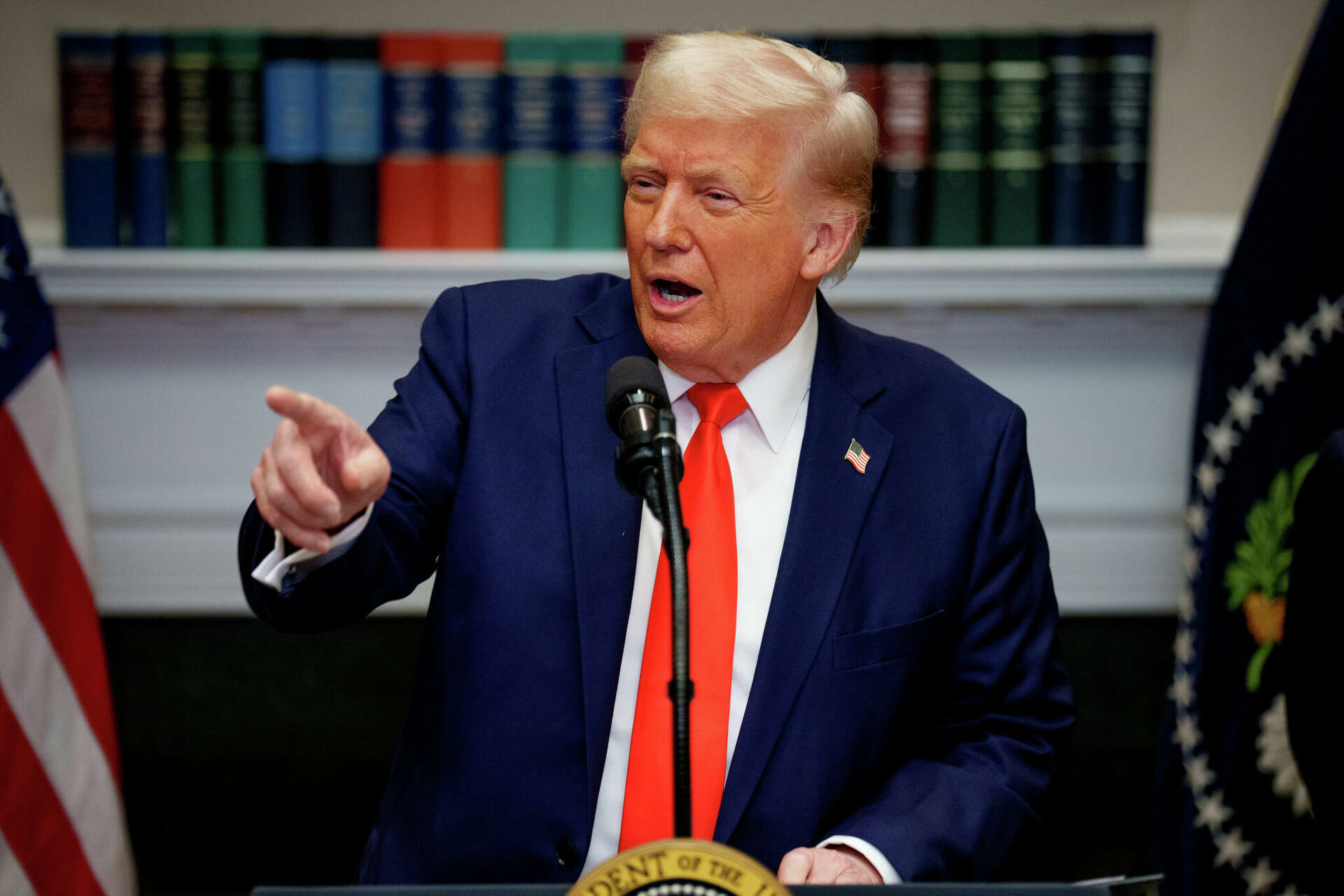
U.S. President Donald Trump has declared that any country supplying military weapons to Iran will face an immediate 50% tariff on all goods exported to the United States, issuing the warning in a dramatic social media post just hours after agreeing to a two-week ceasefire with Tehran.
Posting on Truth Social, Trump outlined the policy in stark terms, insisting there would be no exclusions or exemptions. The announcement, however, left unanswered questions about how such sweeping tariffs would be enforced, particularly after the Supreme Court of the United States ruled earlier this year that he had exceeded his authority by using emergency powers to impose global trade tariffs.
That February ruling struck down Trump’s reliance on the International Emergency Economic Powers Act, a 1977 law traditionally used to underpin financial sanctions against nations such as Iran, Russia, and North Korea. The court found that applying it to broad tariff measures went beyond its intended scope, prompting a lower court to order refunds totalling roughly $166 billion collected over the previous year.
Despite the legal uncertainty, Trump’s latest warning signals a renewed push to pressure Iran by targeting its military backers. While he did not name specific countries, attention is likely to fall on China and Russia, both of which have previously supported Iran’s defence capabilities with missile systems, air defence technology, and other military assistance aimed at countering pressure from the United States and Israel.
Recent conflicts, however, suggest that such support may have limits. During the latest round of U.S.-Israeli strikes on Iran, both Beijing and Moscow denied providing weapons, though accusations — particularly against Russia — have continued to surface.
Trump’s latest move adds another layer of tension to an already fragile ceasefire, raising the prospect of economic retaliation even as diplomatic efforts attempt to hold the peace.