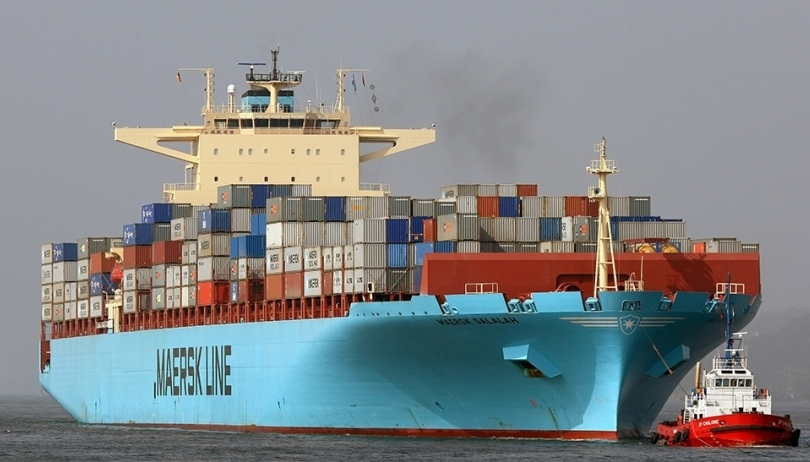
Maersk has announced that one of its major services will return to the Red Sea and Suez Canal this month, a move that signals the first real step towards restoring a vital global trade route disrupted for more than two years by attacks from Yemeni Houthi rebels.
The world’s largest container shipping group said its weekly service linking the Middle East and India with the United States east coast will be the first to resume Suez Canal transits.
The MECL service is scheduled to restart the route on 26 January, with a vessel departing from the Omani port of Salalah.
Maersk said the decision follows a stabilisation of security conditions in the Red Sea region and improving reliability along the Suez corridor.
The announcement comes after shipping lines were forced in late 2023 to divert vessels around the Cape of Good Hope, adding significant time and cost to Asia–Europe and global supply routes. The Houthi attacks on commercial shipping were launched in response to the war in Gaza, triggering one of the most serious disruptions to maritime trade in recent years.
Maersk confirmed that one of its ships had already tested the route in recent weeks, and another made a Suez transit in December, as hopes grew that a ceasefire in Gaza could allow safer passage.
The company said its return would be gradual, aimed at restoring faster transit times for customers, with the Suez route cutting roughly a week off journeys compared with the lengthy detour around Africa.
Before the attacks, the Suez Canal carried about ten per cent of global seaborne trade, making it one of the most important chokepoints in the world economy.
A sustained reopening would ease pressure on supply chains and could help lower shipping costs that rose sharply during the crisis.
Maersk cautioned that contingency plans remain in place should security deteriorate again, including the option to revert services back to the Cape of Good Hope route.
Rival carrier CMA CGM has already been sending vessels through the Red Sea when conditions permit, while Germany’s Hapag-Lloyd said it is closely monitoring developments following Maersk’s decision.
The fragile ceasefire in Gaza, in place since October 2025, has raised expectations of a broader return to normal shipping activity in the region, despite continued reports of violations on both sides.
For global trade, Maersk’s move is being seen as a crucial signal that one of the world’s most important maritime highways may finally be reopening.