The Comptroller-General of Customs, Adewale Adeniyi, has warned that the future strength of the Nigeria Customs Service (NCS) will depend less on technical expertise and more on the character and judgement of its emerging leaders, as the Service intensifies preparations for a major leadership transition.
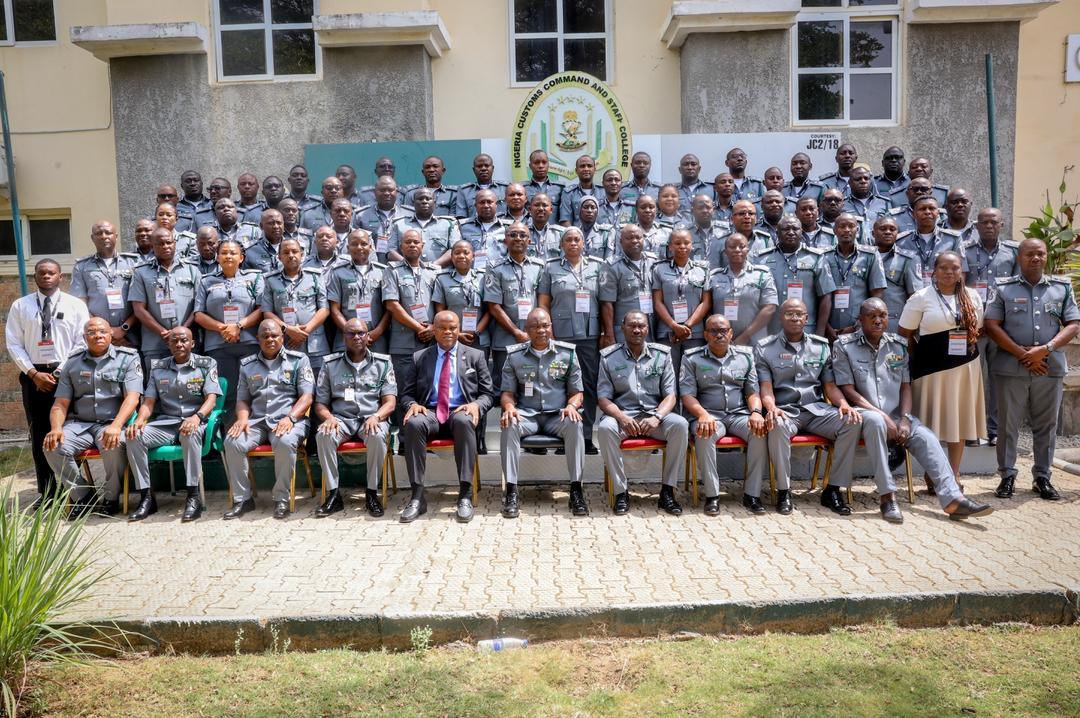
Adeniyi delivered the message at the opening of the Senior Customs Command and Leadership Course at the Nigeria Customs Command and Staff College, Gwagwalada — a high-level programme designed to groom senior officers for greater command responsibilities at a time of mounting operational, security and trade facilitation pressures.
According to a statement by the National Public Relations Officer of Customs, Deputy Comptroller Abdullahi Maiwada. The course, which commenced on Monday, 3 February 2026, forms part of the Service’s strategic effort to reinforce leadership capacity as experienced senior officers gradually exit the system,
Describing the programme as a “defining investment in the Service’s future”, Adeniyi stressed that leadership within the NCS is exercised at every level and cautioned against the erosion of institutional standards, culture and accountability during periods of transition.
“At this level, your success is determined less by what you know and more by who you are,” he told participants.
“The authority you wield amplifies character. It exposes strength, but it also reveals weakness. Growth does not occur in comfort zones, and this course is deliberately designed to challenge your judgement, discipline, values and behaviour under pressure.”
Adeniyi noted that leadership exposes personal weaknesses as much as professional strengths, urging officers to resist the temptation to personalise authority, undermine teamwork or lose sight of the Service’s collective mission.
The intensive programme features sessions on leadership essentials such as emotional intelligence, effective communication, strategic thinking, business acumen and stakeholder management — skills increasingly critical as Customs operations intersect with national security, international trade and public accountability.
In a practical leadership exercise, participants examined the 4×100-metre relay race as a case study, drawing lessons on teamwork, timing, synergy and collective responsibility. Discussions also explored how leadership failures and poor collaboration can breed hostile and counter-productive work environments.
Officers identified the core elements of high-performing teams as mindset, mission, methods, movement, message and leadership by example.
Adeniyi challenged participants to justify the Service’s investment by translating lessons into tangible results, building resilient teams and deliberately mentoring future leaders.
He congratulated the officers on reaching a critical career milestone and urged them to approach the programme with honesty, reflection and a long-term commitment to strengthening the Nigeria Customs Service.