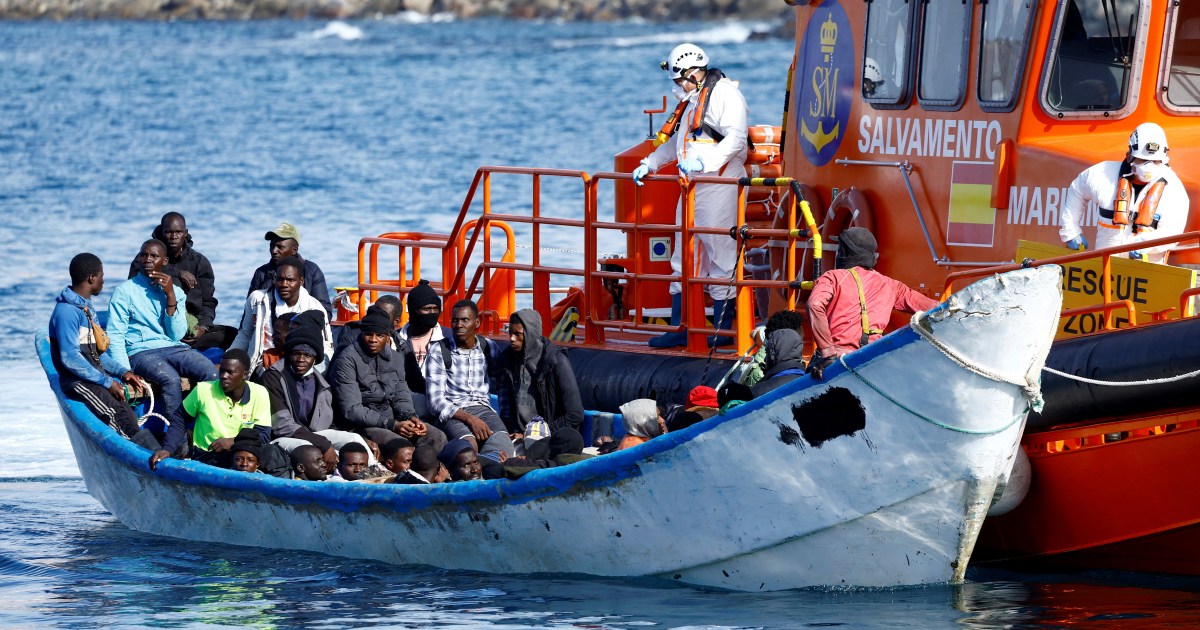
At least 606 migrants have died or been reported missing in the Mediterranean since the start of 2026, marking the deadliest opening to a year since the International Organization for Migration began tracking such tragedies in 2014.
The United Nations migration agency warned on Monday that the rising toll underscores the escalating dangers faced by people attempting the perilous sea crossing to Europe.
The grim figure has been compounded by a weekend disaster off the Greek island of Crete, where at least 30 people were reported missing after a migrant vessel capsized in rough weather as it approached Greece.
Greek authorities confirmed that four bodies — three men and one woman — had been recovered, while search operations involving patrol boats continued in the hope of finding survivors. Among those on board were several minors, with reports indicating that at least four of the mainly Sudanese and Egyptian passengers were children.
Officials said a commercial vessel had initially been directed to assist the stricken boat near the southern Cretan port of Kaloi Limenes. According to the migration agency, the vessel had departed from Tobruk in eastern Libya on 19 February and travelled roughly 150 nautical miles before overturning around 20 nautical miles from the Greek coast.
The route from Libya towards Crete has in recent months seen a steady rise in departures, reflecting shifting smuggling patterns as traffickers adapt to enforcement pressures elsewhere in the central Mediterranean. The Mediterranean remains the world’s most lethal migration corridor, where overcrowded and unseaworthy boats routinely attempt long crossings in hazardous conditions.
The IOM has repeatedly warned that human traffickers are exploiting desperation and conflict-driven displacement, pushing migrants onto ever more dangerous routes. The agency renewed its call for stronger regional cooperation and expanded search-and-rescue capabilities, arguing that the current level of maritime response is insufficient to stem the mounting loss of life.
IOM emphasised that the only sustainable way to reduce fatalities is through the creation of safe and regular migration pathways. Without legal alternatives, it cautioned, vulnerable people will continue to entrust their lives to smugglers and undertake journeys that too often end in disaster.