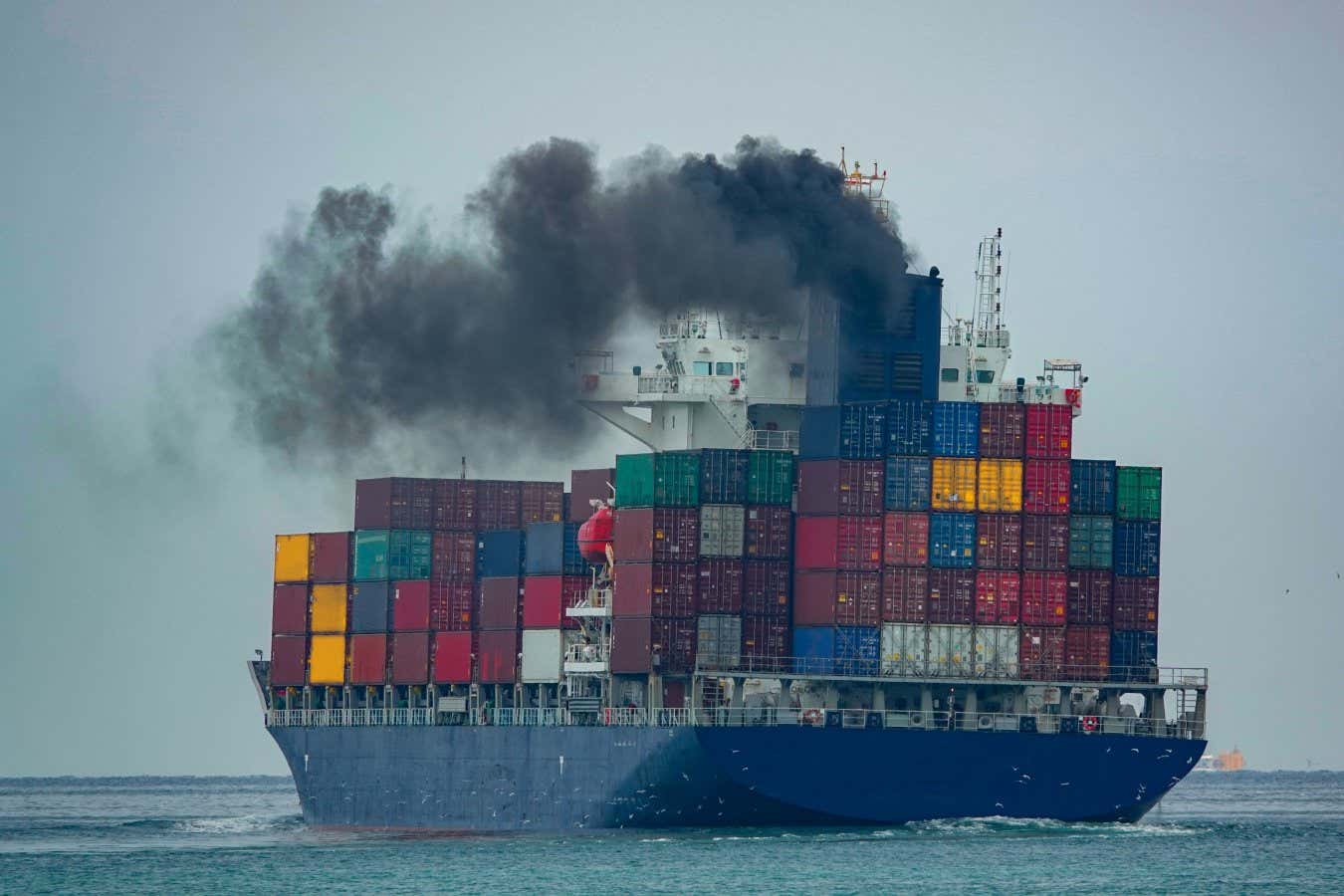
The United States has stepped up its challenge to the International Maritime Organization’s (IMO) flagship decarbonisation plan, urging the UN maritime body to abandon its proposed Net Zero Framework (NZF) and halt further discussion of the stalled negotiations.
In a submission to the 84th session of the Marine Environment Protection Committee (MEPC84), the US delegation argued that the current framework lacks broad support among member states and suffers from what it described as “serious shortcomings”. Washington has called for the IMO to end consideration of the Net Zero Framework altogether and not reconvene the MEPC’s Extraordinary Session 2, which was adjourned last year for a 12-month period.
The US intervention aligns with a separate submission led by Algeria and backed by Bahrain, Iraq, Kuwait, the Russian Federation, Saudi Arabia, Somalia and the United Arab Emirates. That group argued the framework, as presented in October 2025, does not command the level of consensus required to ensure successful implementation across the global shipping industry.
Supporting that position, the US delegation said the current proposal risks closing down meaningful debate rather than encouraging it.
“The Net Zero Framework would stifle ongoing debate and detract from constructive Member State-led discussions,” the submission stated. The delegation added that the most appropriate path forward would be to discontinue the framework entirely and abandon plans to resume the extraordinary MEPC session, currently scheduled to remain adjourned until November 2026.
Opposition to the framework is not limited to those states. Another submission, filed by Argentina, Liberia and Panama, argues that resistance to the NZF stems from a mix of geopolitical tensions, economic concerns and procedural disputes within the IMO process.
Their paper also raises concerns about the proposed greenhouse gas fuel intensity measure, warning that it could prove overly restrictive. According to the submission, penalties linked to greenhouse gas emissions could reach as much as $300 billion by 2035, a burden the group says would fall disproportionately on small and medium-sized companies as well as tramp shipping operators.
The submission further warns that the system risks functioning more as a penalty regime than a catalyst for innovation. It highlights reduced operational flexibility caused by the expiry of surplus units and points to several unresolved elements within the framework, including the reward mechanism, default life-cycle assessment values and the governance structure of the proposed IMO Fund. These gaps, the group argues, continue to create uncertainty and could complicate implementation if the framework proceeds in its current form.