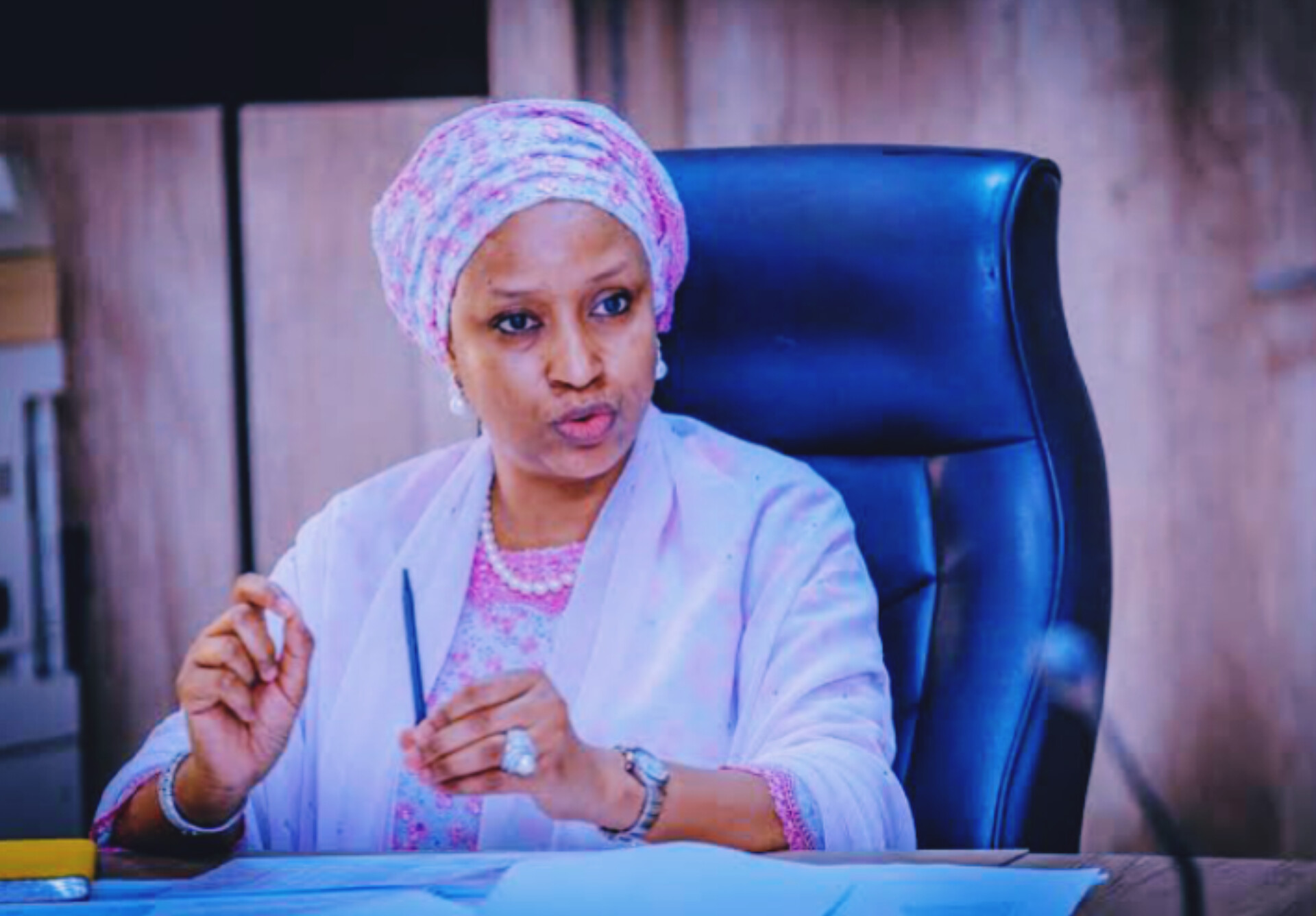
Hadiza Bala-Usman has criticised what she described as a “ridiculous” policy once operated by the Nigerian Ports Authority that denied maternity leave to unmarried women, using the revelation to call on women in leadership to challenge discrimination and assert their rights.
Speaking as keynote speaker at an International Women’s Day event in Abuja, the Special Adviser to the President on Policy and Coordination recounted her experience as the first female Managing Director of the NPA, where she said she confronted outdated rules that undermined women.
“I remember when I worked at the Nigerian Ports Authority. They had a ridiculous policy that did not give women maternity leave if they were not married. And I found that so silly. What has childbearing got to do with your marital status?” she said.
“It’s not your marriage that keeps you up at night to breastfeed your child. It is the baby you gave birth to. So we have to abolish such archaic policies that do not make sense. These are policies that seek to reduce women under the control of a man, meaning that for you to be recognised as a mother in your workplace, you have to have a man to refer to as your husband.
“Bearing a child has nothing to do with marital status. It’s not marriage that gives a child that. So these are the little things that you may find in your organisation that you need to change.”
Bala-Usman used the example to underscore a broader message about gender equity, urging women in public office and leadership positions not to wait for acceptance but to actively claim their space.
“We are equal stakeholders. You are not doing me a favour by letting me in. I’ve paid my dues. I’ve done what you likely haven’t even done. And I believe that I have the right to be in this space and I will pull my weight and ensure that you give it to me,” she said.
She added that leadership is rarely handed over easily, recalling advice she received from President Bola Tinubu. “Mr President used to tell us that leadership power is not served a la carte. It’s not served in a very nice environment. You go and collect it. My dad did not pay less school fees for me, and I remember being more outspoken than a lot of the boys. So I do not accept taking a backseat to a male, except if the male is better than me.”
She also challenged the notion that gender advocacy is confrontational, insisting that it should instead be seen as a call for fairness and inclusion.
“Quite often, issues of gender, equity, and women’s empowerment are seen as a we-against-them term, but it is not. So you all should go and collect your director role, your deputy director role, write that exam and ensure they give you.”
Her remarks highlighted the persistence of structural barriers facing women in the workplace, while reinforcing the need for institutional reform driven by those willing to question long-standing norms.