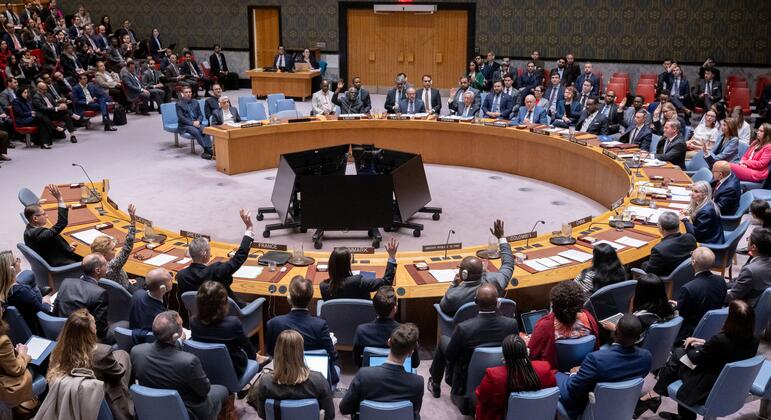
A high-stakes bid to restore freedom of navigation through the Strait of Hormuz has collapsed at the United Nations after China and Russia vetoed a draft Security Council resolution, exposing deep global divisions over the escalating crisis in the Gulf.
The resolution, tabled on 7 April by Bahrain and Gulf Cooperation Council nations, sought to pressure Iran to reopen one of the world’s most critical shipping lanes. It secured broad backing, with countries including the UK, US and France voting in favour, but was ultimately blocked by the two permanent members, while Colombia and Pakistan abstained.
Moscow and Beijing dismissed the text as one-sided, arguing it ignored what they described as the root causes of the crisis, particularly US and Israeli military actions against Iran.
Russia’s Permanent Representative to the United Nations, Vassily Nebenzia warned the resolution risked setting a dangerous precedent in international law and could open the door to further military escalation under the guise of protecting navigation.
China’s UN Permanent Representative, Fu Cong, struck a similar tone, insisting that while Beijing does not support Iran’s blockade or attacks, the only sustainable solution lies in ending hostilities. He directly blamed Washington and Tel Aviv for triggering the current instability, while also urging Tehran to consider the concerns of Gulf states and refrain from targeting regional infrastructure.
Western powers pushed back strongly. The United Kingdom argued that no nation should be allowed to hold the global economy hostage, warning that traffic through the Strait had already plummeted from around 150 vessels a day to just nine. The humanitarian stakes are mounting, with estimates suggesting that prolonged disruption could push tens of millions more people into extreme hunger within months.
Iran, however, rejected the resolution outright. Its ambassador, Amir Saeid Iravani, accused its backers of attempting to punish Tehran for defending its sovereignty while providing cover for further aggression. The United States, represented by Michael Waltz, argued the issue transcends any single conflict, warning that failure to act risks normalising the weaponisation of global trade routes.
With tensions rising and shipping flows severely disrupted, Russia and China have now submitted an alternative draft, setting the stage for further diplomatic confrontation as the world watches one of its most vital maritime arteries remain under threat.