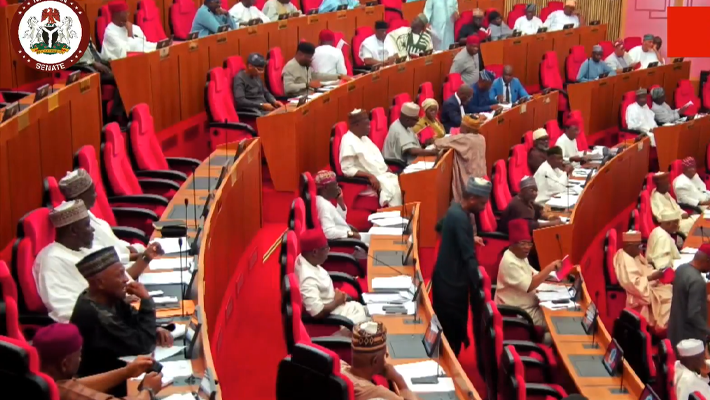
The Senate on Tuesday repassed the Nigerian Port Economic Regulatory Agency Bill, 2026, in a major move to address legal and structural concerns that earlier stalled the legislation at the Presidency.
The bill, designed to establish an independent economic regulator for Nigeria’s port sector, was initially passed by the National Assembly in July 2024 and subsequently transmitted to Bola Ahmed Tinubu for assent.
However, in October 2025, the President declined to sign the bill into law, citing critical issues identified during a detailed review by the Ministry of Justice.
That decision forced lawmakers back to the legislative table, culminating in Tuesday’s reconsideration and passage during plenary in Abuja.
The renewed effort followed a motion moved by the Senate Leader, Opeyemi Bamidele, and seconded by the Minority Leader, Abba Moro.
In a rare procedural move, the Senate first rescinded its earlier passage of the bill, effectively reopening it for amendment in line with the executive’s observations.
Presenting the case on the floor, Bamidele said the Ministry of Justice had uncovered “fundamental issues” requiring urgent legislative correction, prompting the formation of a high-level technical committee.
He explained that the committee, comprising members of both chambers of the National Assembly alongside legal drafting experts from the Directorate of Legal Services, was mandated to resolve the identified gaps and strengthen the bill.
“This process underscores our determination to ensure that this legislation meets the highest legal and regulatory standards,” Bamidele said. “The corrections made are not cosmetic; they go to the heart of ensuring clarity, effectiveness and enforceability.”
Relying on Orders 1(b) and 52(6) of the Senate Standing Orders, lawmakers formally set aside their previous decision and recommitted the bill to the Committee of the Whole for fresh consideration.
The revised bill was then subjected to detailed clause-by-clause scrutiny, with senators engaging in extensive deliberations before approving it in its amended form.
The repassage marks a significant step towards creating a dedicated economic regulator expected to drive transparency, fair pricing and efficiency across Nigeria’s port system, while reflecting closer alignment between the legislature and the executive after the initial setback.