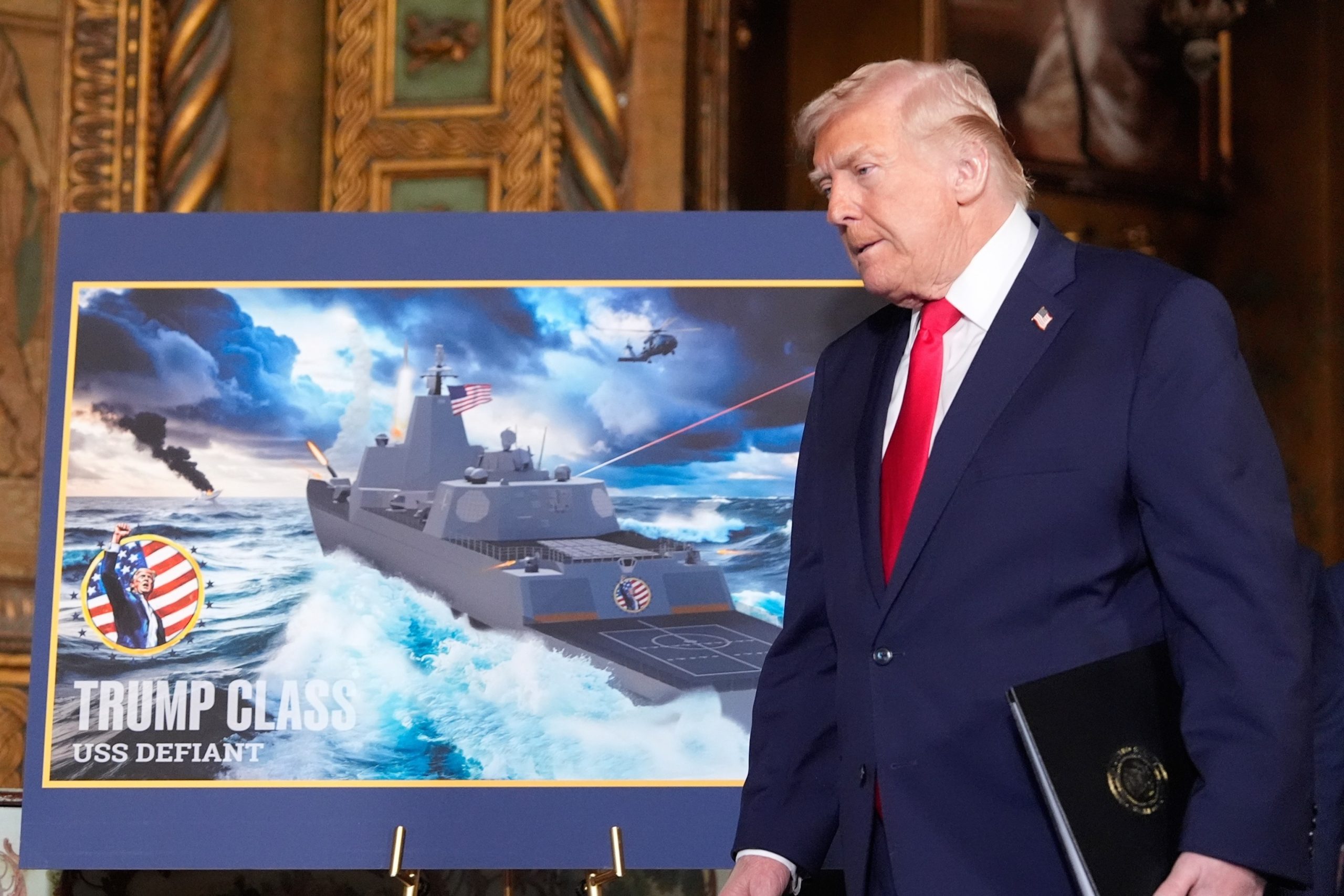
The United States Navy has unveiled an ambitious 30-year shipbuilding strategy aimed at dramatically expanding its fleet, reforming naval procurement and reviving America’s maritime industrial base under the Trump administration’s “Golden Fleet” initiative.
At the heart of the Fiscal Year 2027 Shipbuilding Plan is a proposed $65.8 billion investment in shipbuilding, including funding for 34 manned ships and five unmanned platforms in FY2027 alone.
Over the next five years, the Navy plans to acquire 122 ships and 63 unmanned platforms in what is shaping up to be one of the most aggressive naval expansion drives in modern American history.
Acting Secretary of the Navy, Hung Cao, described the programme as a critical response to mounting global security pressures and declining American maritime strength.
He said the United States was at a strategic turning point and needed urgent action to restore its dominance at sea.
The plan is built around three central goals: overhauling the way the Navy procures ships, strengthening maritime superiority through a mix of high-end and lower-cost vessels, and rebuilding the country’s industrial shipbuilding capacity.
Officials have framed the “Golden Fleet” as a modern-day successor to Theodore Roosevelt’s famed Great White Fleet, intended to reassert the United States as the world’s leading naval power.
The Navy currently operates 291 battle force ships, significantly below the long-standing target of 355 vessels. The report delivers a stark assessment of the Navy’s recent shipbuilding record, noting that while shipbuilding budgets have doubled over the past two decades, the fleet has failed to grow beyond its 2003 size.
A major pillar of the strategy is industrial reform. The Navy says only around 10 per cent of shipbuilding work is currently carried out through distributed production networks, but it aims to increase that figure to 50 per cent by expanding modular construction, digital ship design and nationwide supplier participation.
The FY2027–FY2031 procurement plan includes five Columbia-class ballistic missile submarines, 10 Virginia-class attack submarines, seven Arleigh Burke-class destroyers, four frigates, two amphibious assault ships, five San Antonio-class amphibious transport docks, 23 Medium Landing Ships, seven fleet oilers and five ocean surveillance vessels.
The Navy also plans to accelerate procurement of the future CVN 82 aircraft carrier by moving its acquisition timeline forward from FY2030 to FY2029.
Perhaps the most striking feature of the plan is the proposal for a new nuclear-powered battleship, designated BBGN. The vessel is expected to provide long-range strike capability, survivable command-and-control functions, enhanced power generation and expanded capacity for advanced weapons systems.
The Navy insists the battleship is not intended to replace destroyers, but rather to serve as a new class of high-end surface combatant capable of adding greater combat mass to the fleet.
Alongside these high-capability platforms, the Navy is also shifting attention towards a new generation of frigates designed to take over missions currently handled by destroyers, including convoy escort, anti-submarine warfare, maritime interdiction, homeland defence and counter-narcotics operations.
The plan also places growing emphasis on unmanned systems. The FY2027 budget includes three Medium Unmanned Surface Vessels, while the broader five-year programme seeks 47 such vessels alongside 16 Extra Large Unmanned Underwater Vehicles.