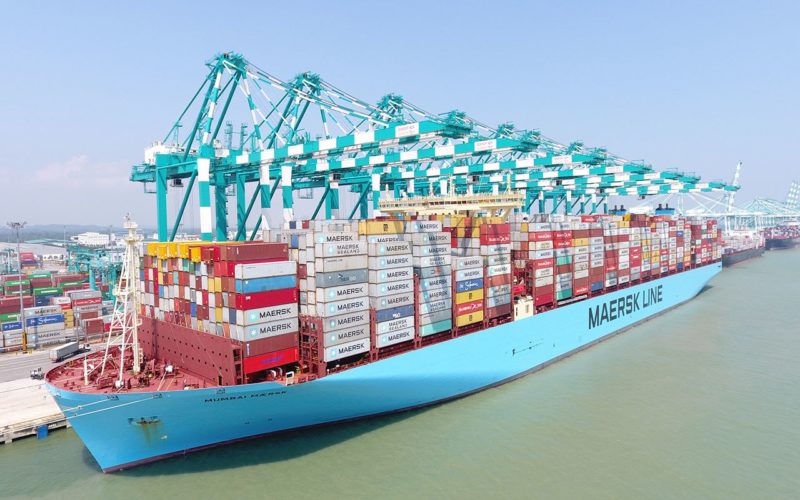
Maersk is set to overhaul its Europe–West Africa service network from this month, with new rotations and transshipment arrangements aimed at improving connectivity and schedule reliability across the region, while placing Nigeria’s Apapa and Onne firmly within the revised network.
Under the new structure, Maersk will introduce additional coverage through Port Said, Lomé and Pointe-Noire, while reshaping connections through key maritime hubs in West and Central Africa.
Apapa will feature on both the WAF 3 and WAF 6 services. The WAF 3 rotation will run from Port Said through Algeciras, Tangier and Lomé before calling at Abidjan, Tema and Apapa, while WAF 6 will link Port Said, Tangier and Algeciras with Tema, Apapa and Pointe-Noire.
Maersk said the Tema and Apapa calls on WAF 3 will handle exports from West Africa only, making the service an important part of the carrier’s revised export network for the region.
The wider WAF network will see WAF 2 operate between Algeciras, Tangier and Dakar, while WAF 7 will connect Tangier and Conakry.
WAF 9B/C will serve Algeciras, Leixões, Lisbon, Praia and Mindelo, while WAF 10 will connect Tangier with Nouakchott and Nouadhibou. WAF 12 will link Tangier and Banjul.
Maersk will also maintain direct links to Liberia and Sierra Leone, with Monrovia served through WAF 5X and Freetown through WAF 7X directly from Tangier until further notice.
The changes extend beyond the mainline rotations, with Maersk reorganising the transshipment network used to connect European cargo with destinations across West and Central Africa.
Abidjan will serve as a key gateway, with WAF 8 connecting cargo to San Pedro and WAF 5 providing onward connections to Onne and Takoradi. Lomé will connect with Cotonou through the MW 2 service, while Tema will provide a connection to Douala through 23N.
Pointe-Noire is set to emerge as another major hub in the revised structure, with multiple services providing onward links to Central and Southern African destinations.
WAF 13 will connect Pointe-Noire with Luanda and Walvis Bay, while services 23F, 23D and 23E will provide connections to Malabo, Bata and Libreville; Matadi; and Cabinda respectively.
The FEW 6 service will also connect Pointe-Noire with Kribi.
The reshuffle effectively concentrates Maersk’s European cargo connections through four principal regional hubs — Abidjan, Lomé, Pointe-Noire and Tema — while strengthening direct and connecting links to key Nigerian gateways, including Apapa and Onne.
For shippers moving cargo between Europe and West and Central Africa, the revised network will mean changes to established transshipment routes as Maersk implements its new service structure from October 2026.