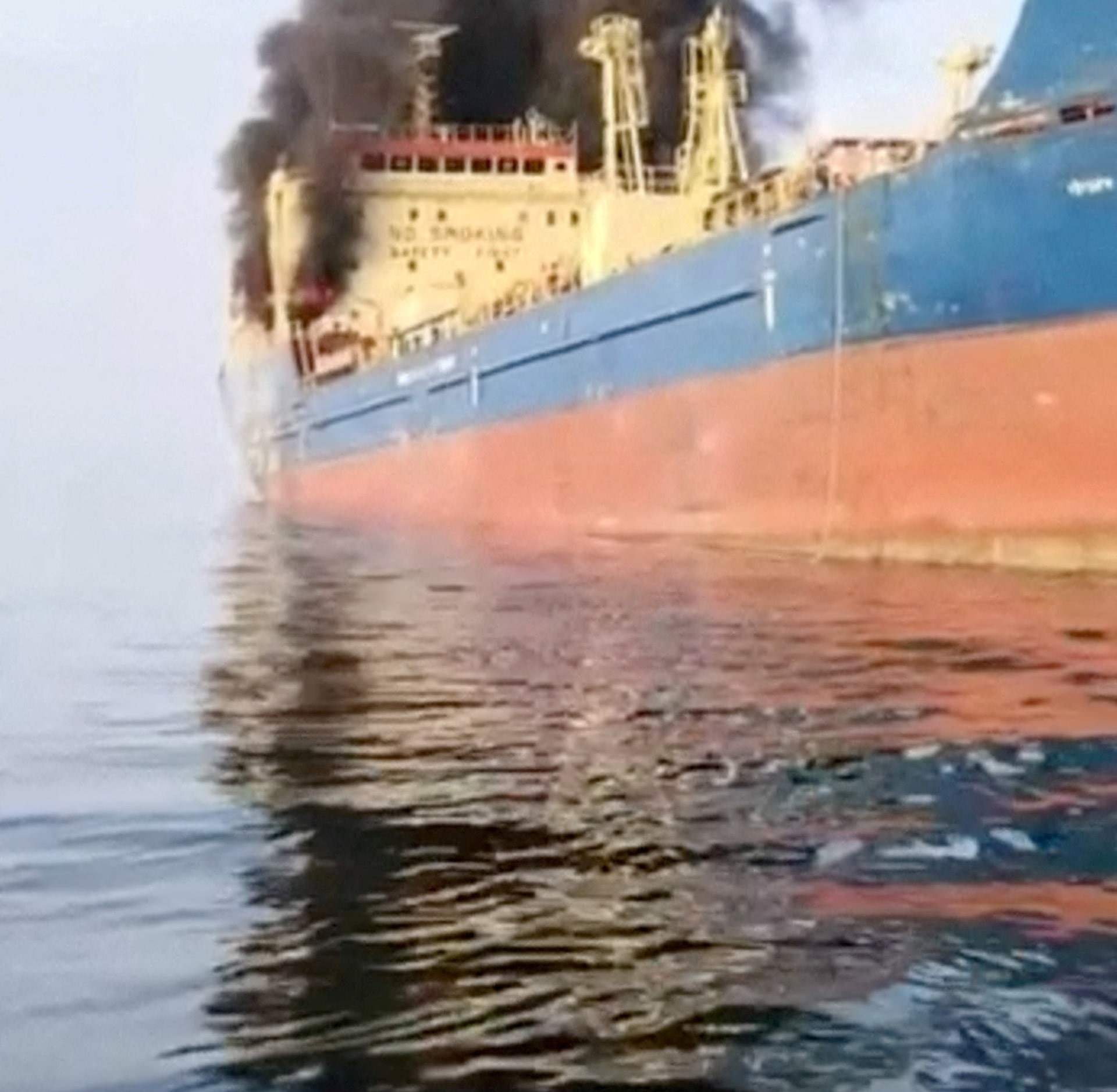
Commercial shipping has come under mounting fire in the eight-month war between the US, Israel and Iran, with 121 attacks recorded across the Strait of Hormuz, Arabian Gulf and Gulf of Oman, leaving 24 seafarers dead.
With 34 confirmed attacks in the past month alone, the threat to merchant vessels and their crews is intensifying, despite US President Donald Trump’s initial promise that the conflict would last just a few weeks.
The first attacks on merchant shipping came on 1 March, just a day after the war began. Since then, commercial vessels have remained in the firing line, with the frequency of attacks rising sharply in recent weeks.
The prospect of Iran closing the Strait of Hormuz and effectively blockading the Arabian Gulf had long been a focus of military simulations and strategic planning.
Those fears quickly materialised as Iran’s Islamic Revolutionary Guard Corps (IRGC) attacked vessels in and around the strait, warning other ships attempting to pass through to turn back.
Figures from the International Maritime Organization (IMO), covering incidents up to 27 October, confirm 121 attacks in the Strait of Hormuz, Arabian Gulf and Gulf of Oman, with 24 seafarers killed.
The tally includes attacks attributed to Iran, as well as US blockade enforcement actions, including the 9 June strike on the tanker Settobello, which killed three crew members.
The true scale of the attacks, however, remains difficult to establish, with reported figures varying between sources. Shipowners are also becoming increasingly reluctant to report incidents voluntarily to organisations such as UK Maritime Trade Operations (UKMTO), which provides maritime security alerts and intelligence to shipowners, operators and seafarers.
The initial wave of attacks brought traffic through the Strait of Hormuz to a near standstill, a situation that persisted for the first two months of the conflict. Around 1,000 vessels and 20,000 crew members were left stranded in the Gulf, with transit attempts largely limited to ships seeking to escape through the strait.
Traffic began to recover following the signing of a short-lived memorandum of understanding (MoU) between the US and Iran on 18 June.
However, Tehran was also seeking to formalise its control over the waterway through the creation of the Persian Gulf Strait Authority (PGSA), which would approve transits through a northern corridor running through Iranian waters.
Meanwhile, US forces increasingly facilitated escorted transits through a southern corridor in Omani waters.
The security situation remained volatile. An IMO evacuation plan for vessels stranded in the Gulf operated for less than 48 hours before being suspended following an attack on the Singapore-flagged container ship Ever Lovely on 25 June.
Within a month of its signing, the MoU had effectively collapsed, prompting Washington to reinstate its blockade of Iranian ports on 14 July. Since then, the battle for control of the Strait of Hormuz has intensified, leaving commercial shipping increasingly exposed to attacks.
The past month has brought a particularly sharp escalation. IMO figures record 34 confirmed attacks on vessels between 28 September and 27 October, most of them in the Strait of Hormuz. Iran has also widened its targeting of commercial shipping across the surrounding region in recent weeks, raising further concerns over the safety of seafarers and the security of vital maritime trade routes.