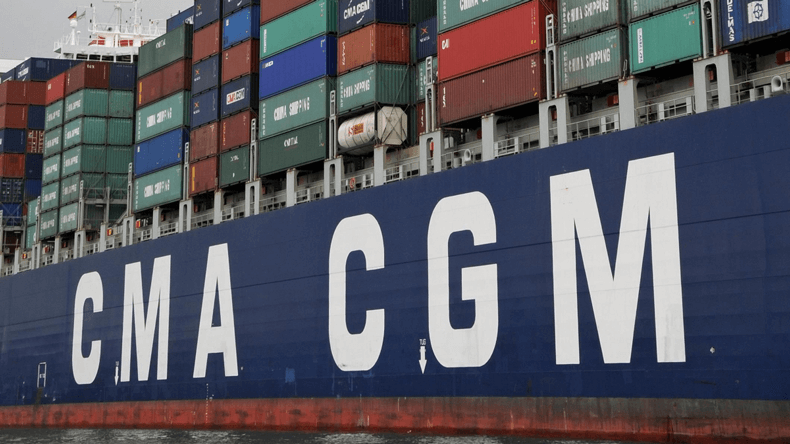
Global shipping giant CMA CGM has imposed a fresh Peak Season Surcharge (PSS) of US$750 per twenty-foot equivalent unit (TEU) on cargo destined for Nigeria from China, marking the latest in a series of freight cost increases that are expected to pile additional pressure on businesses and consumers in Africa’s largest economy.
The new surcharge, which took effect from 15 June 2026, applies to both dry and refrigerated cargo moving under short-term contracts from China to Nigeria and several other West African countries.
Under the new tariff regime, Nigeria, Côte d’Ivoire, Benin and Equatorial Guinea will attract a surcharge of US$750 per TEU, while shipments to Togo will be charged US$850 per TEU. Cargo destined for Ghana will attract US$650 per TEU, while countries in the West Africa North range, including Liberia, Senegal, Mauritania, Sierra Leone, Guinea-Bissau, Cape Verde and Sao Tome & Principe, will face a lower surcharge of US$350 per TEU. Shipments to Gambia will attract US$600 per TEU, while Guinea has been exempted from the latest surcharge.
CMA CGM said the Peak Season Surcharge is aimed at supporting “reliable and efficient services” across the trade corridor, a justification the French shipping line has consistently advanced when introducing temporary freight surcharges.
However, the latest charge is likely to reignite concerns among Nigerian importers, manufacturers and trade stakeholders, coming against the backdrop of rising logistics costs, persistent foreign exchange challenges, elevated inflation and weakening consumer purchasing power.
The new US$750 per TEU surcharge represents a sharp escalation from the levels imposed over the past 15 months. In April 2025, CMA CGM introduced a Peak Season Surcharge of US$250 per TEU on cargo moving from the Far East to West Africa Central destinations, including Nigeria. By March 2026, the surcharge had climbed to US$700 per TEU before being adjusted to between US$500 and US$600 per TEU in subsequent notices issued in April.
The carrier again announced a surcharge of US$600 per TEU effective from 1 June 2026, only to raise the figure to US$750 per TEU barely two weeks later, highlighting the volatility that has characterised freight pricing on the China-West Africa trade route.
Industry analysts note that the latest surcharge is three times higher than the US$250 per TEU imposed in April 2025, underscoring the growing burden being placed on import-dependent economies such as Nigeria.
For Nigerian businesses, the implications could be significant. As freight costs rise, importers are often compelled to pass the additional expenses on to manufacturers, distributors and ultimately consumers. The result is higher landed costs for imported raw materials, industrial equipment, machinery, pharmaceuticals, electronics, household goods and other essential products.
Manufacturers that rely heavily on imported inputs may also face increased production costs, potentially reducing competitiveness and forcing further price adjustments at a time when many businesses are already struggling with high energy costs, elevated borrowing rates and exchange rate volatility.
Trade experts warn that sustained increases in shipping costs could further complicate efforts to curb inflation and stimulate economic growth. With Nigeria remaining heavily reliant on imports for industrial production and consumer goods, freight surcharges imposed by international shipping lines have a direct impact on the cost of doing business and the prices ultimately paid by consumers.
The latest surcharge also comes as stakeholders continue to advocate for measures that would reduce the overall cost of trade in Nigeria, including lower logistics expenses and enhanced export competitiveness.