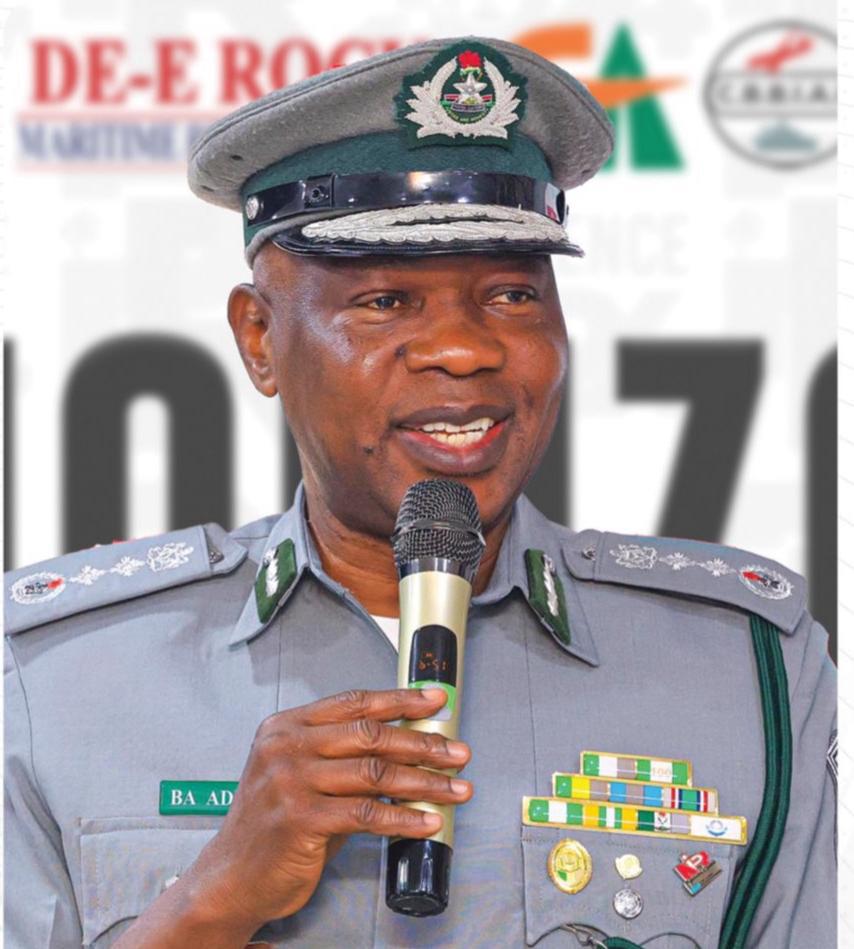
Nigeria’s Customs Service is embracing artificial intelligence to tighten revenue collection, enforce fiscal discipline and bring new transparency to public accounting.
Comptroller-General of Customs, Bashir Adeniyi, revealed the shift in Abuja during a three-day capacity-building workshop, describing a bold move towards a fully technology-driven system designed to plug leakages and sharpen the accuracy of remittances to the federation account. He said the Service is “flipping the script” on oversight by inviting lawmakers to see, first-hand, how emerging technologies are being deployed to strengthen accountability.
“We are united in the best way possible to ensure transparency in public accounts,” Adeniyi said. “Our shared goal is fiscal discipline and a stronger grip on revenue generation.”
He disclosed that AI is already being integrated into non-intrusive inspection processes, with smart cameras capable of analysing images and flagging suspicious or prohibited items. The training programme, he added, will prepare officers for an AI-powered environment and, crucially, reduce the need for parliamentary summons by improving record-keeping and compliance.
The workshop has drawn members of the National Assembly’s Public Accounts Committees alongside key fiscal stakeholders, with a clear aim of aligning all parties and strengthening inter-agency collaboration.
Deputy Comptroller-General for Finance, Administration and Technical Services, Kikelomo Adeola, underscored the urgency of the transition, stressing that AI is no longer a futuristic concept but a present-day necessity. She said the technology offers powerful tools to optimise revenue processes, curb leakages, enhance remittance accuracy and enable seamless reconciliation.
As global trade grows more complex, she argued, reliance on manual systems is no longer viable. Automated data analysis, predictive intelligence and real-time reconciliation, she noted, can fundamentally transform how public funds are managed and protected.
The initiative reflects a broader partnership between the executive and oversight bodies, including the Revenue Mobilisation Allocation and Fiscal Commission and the Federation Account Allocation Committee. Officials say the fusion of technology and legislative scrutiny could usher in a new era of transparency across Nigeria’s revenue chain.