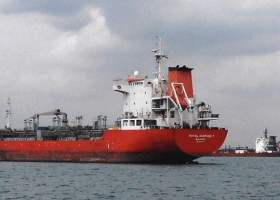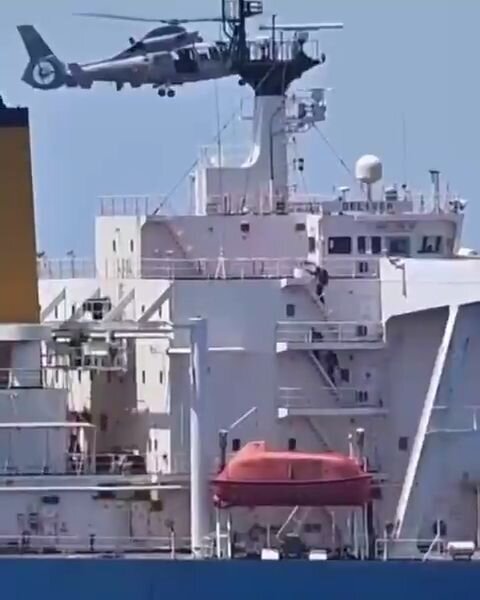
France’s navy has seized another tanker allegedly linked to Russia’s so-called shadow fleet, marking the latest escalation in Europe’s campaign to enforce sanctions and choke off one of the Kremlin’s most lucrative sources of revenue.
The seizure of the tanker named Deliver on Thursday brings the number of suspected shadow fleet tankers detained across Europe since the start of 2026 to nine, including four intercepted by France.
Britain also seized an oil tanker in the English Channel on 14 June, while three other suspected shadow fleet vessels have been inspected as part of a European naval mission in the Mediterranean, according to a Western military source.
Moscow has condemned the actions as illegal.
“We will not let the shadow fleet circumvent sanctions and finance the Russian war effort,” French President Emmanuel Macron said on social media after announcing the seizure. “Europe is determined.”
The ship had departed Primorsk, one of Russia’s principal oil export terminals, before being intercepted near Sicily as it sailed towards the Suez Canal en route to Singapore.
European Union member states are currently negotiating a 21st package of sanctions against Russia. Although Moscow has adapted to many existing restrictions and continues to export millions of barrels of oil to countries including India and China, often at discounted prices, much of the trade relies on a shadow fleet operating outside the Western maritime industry.
The military source said the Deliver was sailing under a Cameroonian flag despite having been removed from Cameroon’s shipping registry weeks earlier.
As a result, the vessel was effectively navigating without nationality, placing it in breach of international maritime law and allowing French authorities to board and detain it.
Cameroonian authorities have repeatedly warned about the growing misuse of the country’s flag by sanctioned vessels and ships linked to Russia’s shadow fleet, which frequently relies on ageing tankers and opaque ownership structures to evade international oversight.
Since the beginning of the year, European nations have significantly stepped up inspections and detentions along key maritime corridors, including the Baltic Sea, the English Channel and the Mediterranean, all of which are vital routes for Russian oil exports to Asian markets.