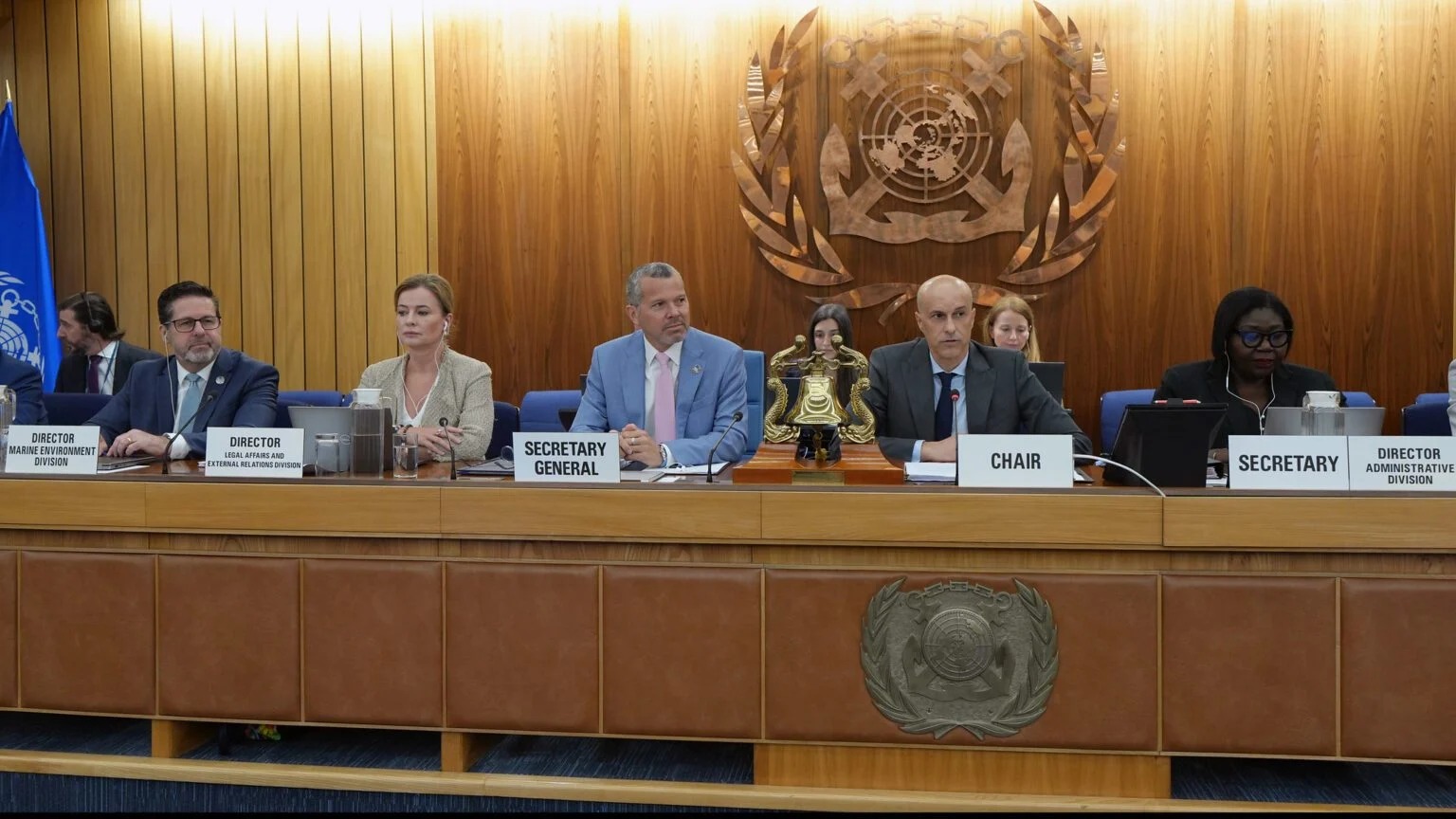
The International Maritime Organization (IMO) Council has adopted a resolution reaffirming the right of unhindered transit through international straits, condemning attacks on commercial shipping, and calling for the restoration of safe navigation through the Strait of Hormuz amid renewed tensions in the Middle East.
The resolution, adopted at the conclusion of the IMO Council’s 137th session last week, states that the right of transit passage through straits used for international navigation “should not be threatened, impeded, denied, hampered, impaired or suspended”.
It further emphasises that any measures adopted by coastal states to regulate maritime traffic must comply with international law and relevant IMO conventions.
The Council’s action comes as commercial shipping faces mounting security risks in and around the Strait of Hormuz following the collapse of the US-Iran memorandum of understanding and a fresh wave of attacks on merchant vessels that has significantly reduced traffic through the strategic waterway.
Addressing the Strait of Hormuz directly, the Council condemned attacks on civilian commercial vessels and called for an immediate de-escalation of regional tensions. It stressed that any arrangements agreed by the region’s littoral states must preserve the non-discriminatory and unimpeded right of transit passage for all ships using the IMO-recognised Traffic Separation Scheme established in 1968.
The IMO Council also reaffirmed that transit through the Strait should remain free of tolls and other charges under international law, a position that comes amid growing debate over proposals for transit fees and permit requirements in one of the world’s most important maritime trade corridors.
To strengthen maritime safety in the region, the Council requested IMO Secretary-General Arsenio Dominguez to explore practical measures in consultation with coastal states, IMO member governments and industry stakeholders to support a coordinated return to normal shipping operations through the Strait.
Beyond the Middle East, the Council highlighted the long-standing cooperative management framework for the Straits of Malacca and Singapore as a successful model of regional collaboration. It encouraged governments and industry partners to continue supporting the mechanism through financial and in-kind contributions to its navigation and trust funds.
The Council also approved the IMO’s 2025 Annual Report and Financial Statements, noting that assessed contributions from member states remain the Organisation’s principal source of funding.
The IMO recorded total revenue of £77.96 million in 2025, an increase of nearly 3% over the previous year, while maintaining an impressive member-state contribution collection rate of 99.1%.
Among its other decisions, the Council approved an updated risk management policy incorporating a new fraud risk annex, reviewed progress under the IMO Member State Audit Scheme, and granted consultative status to several non-governmental organisations, including the Mærsk Mc-Kinney Møller Center for Zero Carbon Shipping, SEA-LNG, the International Electric Marine Association and, on a provisional basis, The Ocean Foundation.