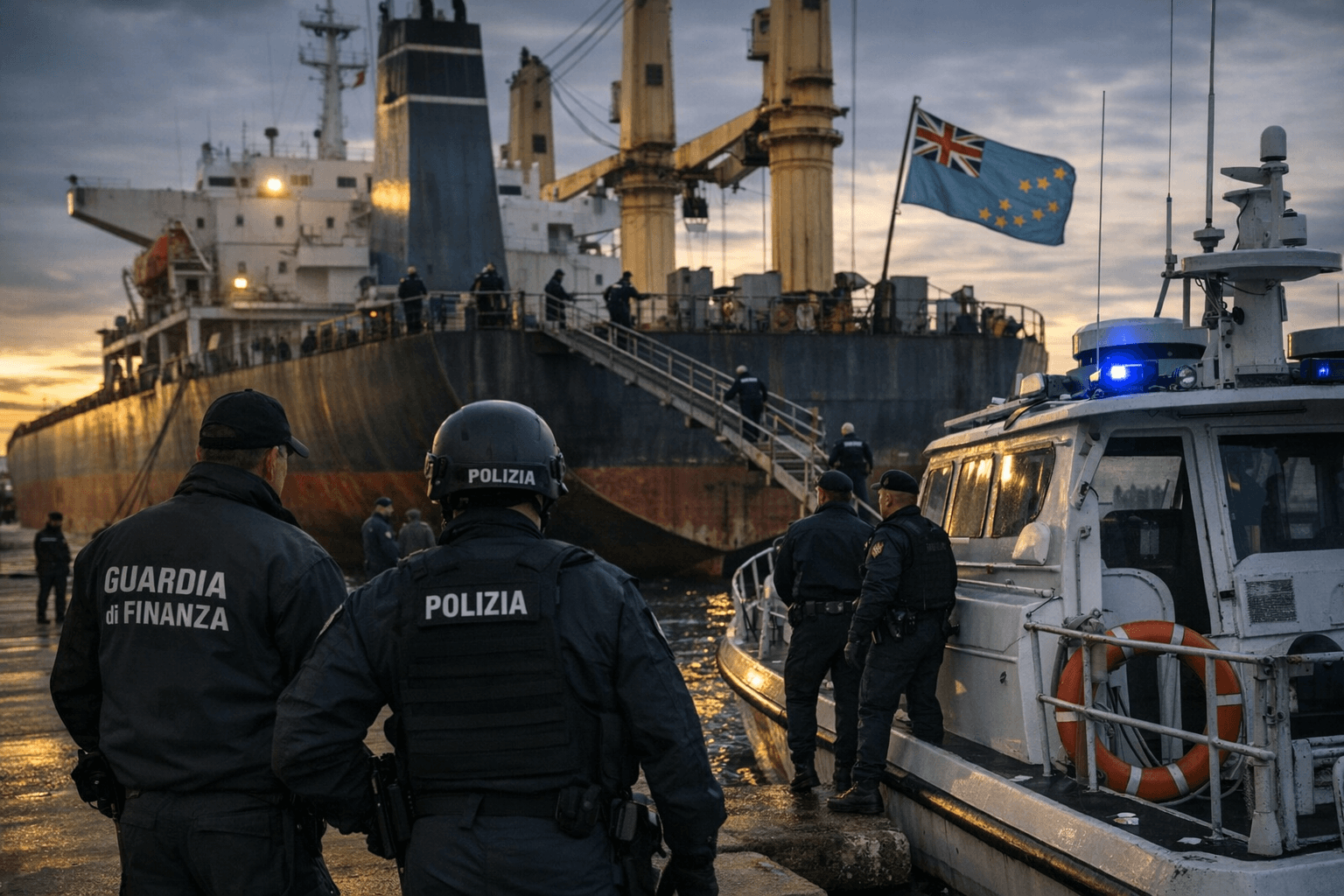
Italian authorities have seized a Tuvalu-flagged cargo vessel carrying 33,000 tonnes of Russian iron in the port of Brindisi, signalling a sharper European push against ships accused of dodging sanctions.
The vessel, Hizir Reis, was detained on 17 January after investigators uncovered falsified documents and concealed port calls allegedly designed to mask its movements in Russian waters.
Italy’s Guardia di Finanza said the ship arrived from the Black Sea with paperwork omitting a crucial stop at Novorossiysk, a Russian port under EU restrictions.
A forensic examination of the vessel’s electronic navigation system revealed it had in fact operated there between 13 and 16 November 2025, when the iron cargo was loaded.
Investigators also found evidence that the ship’s AIS tracking transponder had been deliberately switched off near the port, a conclusion supported by commercial tracking data showing Novorossiysk as its last true port of call.
The seizure was carried out under EU Regulation 833/2014, which bans commercial activity in designated Russian ports and prohibits imports of specific goods including ferrous materials.
Italian prosecutors have opened investigations into the importer, shipowner and several crew members for suspected sanctions evasion, while stressing that all are presumed innocent.
The action follows Germany’s recent decision to block the tanker Tavian from entering the Baltic Sea over suspected forged identifiers and opaque ownership records.
After an inspection by federal police helicopter, the ship turned away towards the Norwegian Sea in an incident widely seen as a turning point in European enforcement.
Together, the cases highlight a new phase in the EU’s response to Russia’s shadow fleet. While earlier sanctions relied on blacklists and financial restrictions, authorities are now employing operational measures including tighter insurance checks, refusal of passage for suspect vessels and scrutiny of shipowners, managers and brokers.
Nearly 600 ships linked to the shadow fleet are now barred from EU ports and services.
Maritime security analysts warn that these vessels present risks beyond sanctions evasion, noting links to poor documentation, defective navigation systems and incidents involving critical undersea infrastructure.
The Hizir Reis seizure underlines that Europe is moving from paper rules to active maritime enforcement, dramatically raising the stakes for those attempting to sidestep international restrictions.