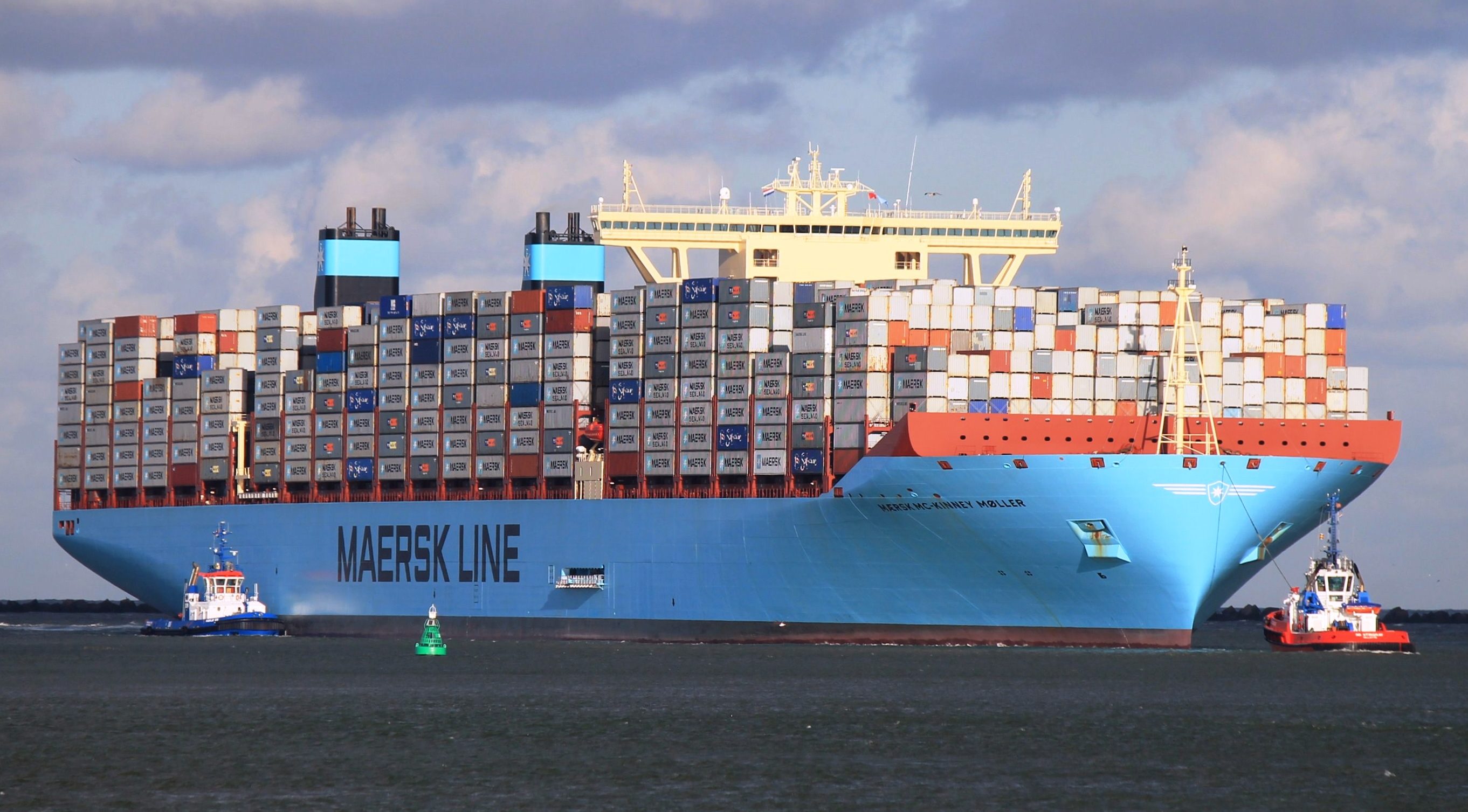
Maersk is maintaining sweeping cargo restrictions and emergency surcharges across the Persian Gulf, underscoring how far commercial shipping remains from normal despite recent announcements of a US-Iran agreement aimed at reopening the Strait of Hormuz.
In an operational update issued on Tuesday, the Danish shipping giant described the situation in the Middle East as “highly volatile”, warning customers that conditions remain unpredictable and could change at short notice.
The company continues to suspend or restrict bookings for a broad range of cargoes moving through Iraq, Kuwait, Qatar, Bahrain, parts of Saudi Arabia and the United Arab Emirates.
Limits remain in place for refrigerated cargo, dangerous goods and oversized shipments, while dry cargo bookings are also constrained in several markets.
At the same time, Maersk has introduced a new Strait of Hormuz Emergency Freight surcharge to offset the costs of rerouting cargo, temporary storage and other contingency measures.
The fee has been set at US$1,800 for a 20-foot container, US$3,000 for a 40-foot container and US$3,800 for reefer, special and dangerous goods containers.
The advisory highlights a supply chain still operating under crisis conditions, even as diplomatic efforts raise hopes of restoring access through one of the world’s most critical maritime chokepoints.
“Due to the volatility of the ongoing situation, there is a need for alternative solutions to bringing your cargo to final destination, including finding alternative routing and storage in transit,” Maersk said.
Rather than reverting to established shipping patterns, the carrier is continuing to rely on contingency networks developed during the disruption.
Cargo bound for Kuwait, Iraq, Qatar, Bahrain and parts of the UAE is being routed through Salalah and Khor Fakkan before moving overland and reconnecting with regional feeder services.
Maersk said cargo already in transit may be placed in temporary storage until onward transportation is considered safe and practical.
The company also warned that it reserves the right to declare an “abandonment of carriage” in certain circumstances should disruptions persist.
The uncertainty is also weighing on insurance markets. While Maersk Cargo Insurance remains available, the company noted that some insurers have reduced or withdrawn cover for shipments moving through the Red Sea, Gulf of Oman and Persian Gulf, particularly for vessels operating in the region.
The latest update reinforces a message repeatedly voiced by shipping executives and maritime organisations in recent days that reopening the Strait of Hormuz is not the same as restoring normal trade flows.