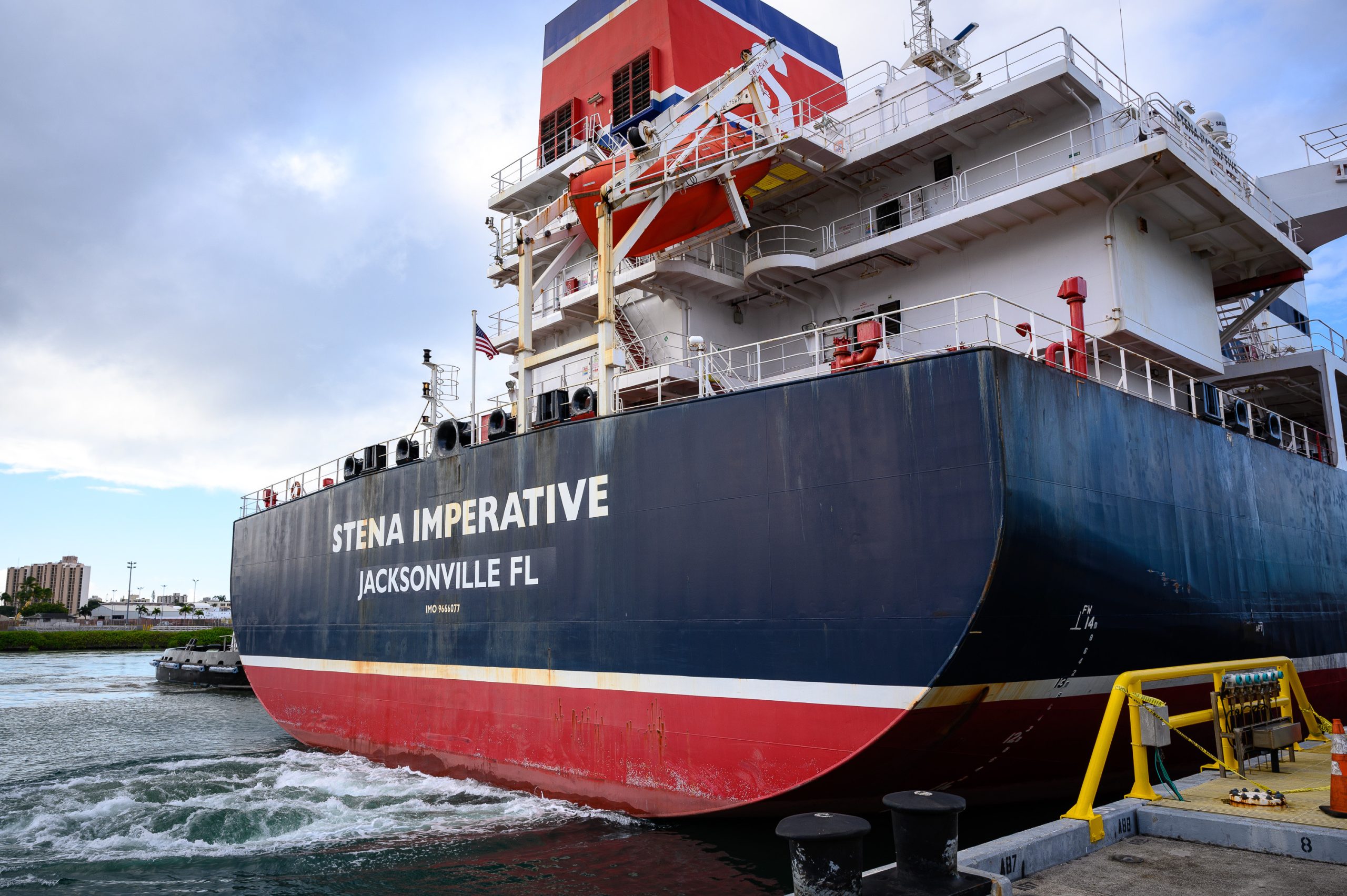
The US-flagged tanker Stena Imperative was struck by two missiles on 2 March while berthed at the Port of Bahrain, in a dramatic escalation of attacks on commercial shipping in the Gulf region.
The vessel, which operates under the United States Maritime Administration’s Tanker Security Program, was reportedly hit in an attack that triggered a fire onboard. Security sources confirmed that the blaze has since been extinguished and that all crew members are safe. The seafarers were evacuated from the vessel as a precautionary measure.
Initial reports indicate that the tanker sustained damage, although the full extent remains unclear. Neither Crowley nor Stena Bulk, the companies associated with the vessel’s management and ownership, immediately responded to requests for comment following the incident.
The attack forms part of a broader pattern of strikes on commercial ships in the Middle East, as tensions intensify between Iran, the United States and Israel. Iran has been targeting vessels linked to US allies in apparent retaliation for ongoing military operations within its territory.
On Saturday, Tehran warned that the Strait of Hormuz, one of the world’s most critical maritime corridors for oil transportation, was closed to traffic. At least four vessels have reportedly been attacked in the region in recent days, including one incident that resulted in the death of a seafarer aboard the tanker MKD Vyom.
The Stena Imperative had previously experienced direct pressure from Iranian forces. Early last month, while transiting the Strait of Hormuz Traffic Separation Scheme, the tanker was approached by Iranian gunboats and instructed to halt engines and prepare for boarding. Instead, the vessel increased speed and continued its voyage. According to AIS tracking data from Pole Star, the tanker sailed from Fujairah to Bahrain in early February and has remained in Bahrain since 5 February, including a period in dock prior to the missile strike.
Industry observers suggest the tanker may have been singled out because of its strategic role within the US Maritime Administration’s Tanker Security Program. The programme charters commercial vessels for potential use by the US Department of Defense, integrating them into national defence and security logistics. In effect, the Stena Imperative forms part of the broader supply chain supporting US naval operations. In 2025, the vessel was certified by the US Military Sealift Command to conduct ship-to-ship refuelling while underway, further underlining its operational significance.
The security climate in the region continues to deteriorate. By Monday, the United Kingdom Maritime Trade Operations had already issued four warnings and two advisories for the month, representing the bulk of the six total warnings and five advisories recorded so far in 2026.
The Stena Imperative is managed by Crowley under the Crowley Stena Marine Solutions joint venture, an arrangement that facilitates the deployment of Swedish-owned tonnage into the US market under the Tanker Security Program. The latest attack highlights the vulnerability of even strategically affiliated vessels as geopolitical tensions in the Gulf spill increasingly into commercial shipping lanes.
The strike is likely to intensify concerns among shipowners, charterers and insurers operating in the Gulf, raising further questions about navigational safety and the resilience of global energy supply chains in an increasingly volatile region.