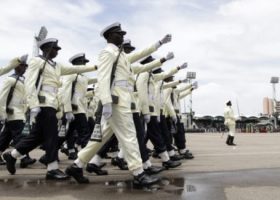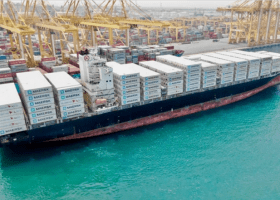
The Nigerian Navy has stepped up strategic partnerships with the South African Navy and Denmark’s Ministry of Defence, intensifying efforts to tackle maritime threats in the Gulf of Guinea and across Africa.
The push follows the inaugural Nigerian–South African Naval Staff Talks held from 12 to 18 April at Naval Base Simon’s Town in Cape Town, alongside a separate visit by a Danish defence delegation to the Western Naval Command headquarters in Apapa, Lagos.
Discussions in South Africa centred on strengthening maritime domain awareness, joint training, operational cooperation and capacity building to counter piracy, illegal fishing and transnational organised crime.
The Nigerian delegation was led by the Flag Officer Commanding Western Naval Command, Rear Admiral Abubakar Abdullahi Mustapha, while Rear Admiral S. Makhanya headed the South African side.
The talks, endorsed by the Chief of the Naval Staff, Vice Admiral Idi Abbas, and his South African counterpart, Vice Admiral Monde Lobese, are expected to yield practical measures to reinforce bilateral cooperation and regional maritime stability.
During the visit, Nigerian officials toured the Institute of Maritime Technology and the South African Naval Museum, exploring opportunities in innovation, research and heritage collaboration. The South African Navy is also expected to participate in the Nigerian Navy’s 70th anniversary celebrations in June.
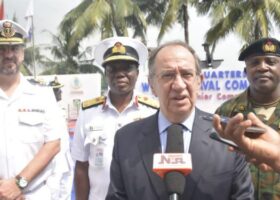
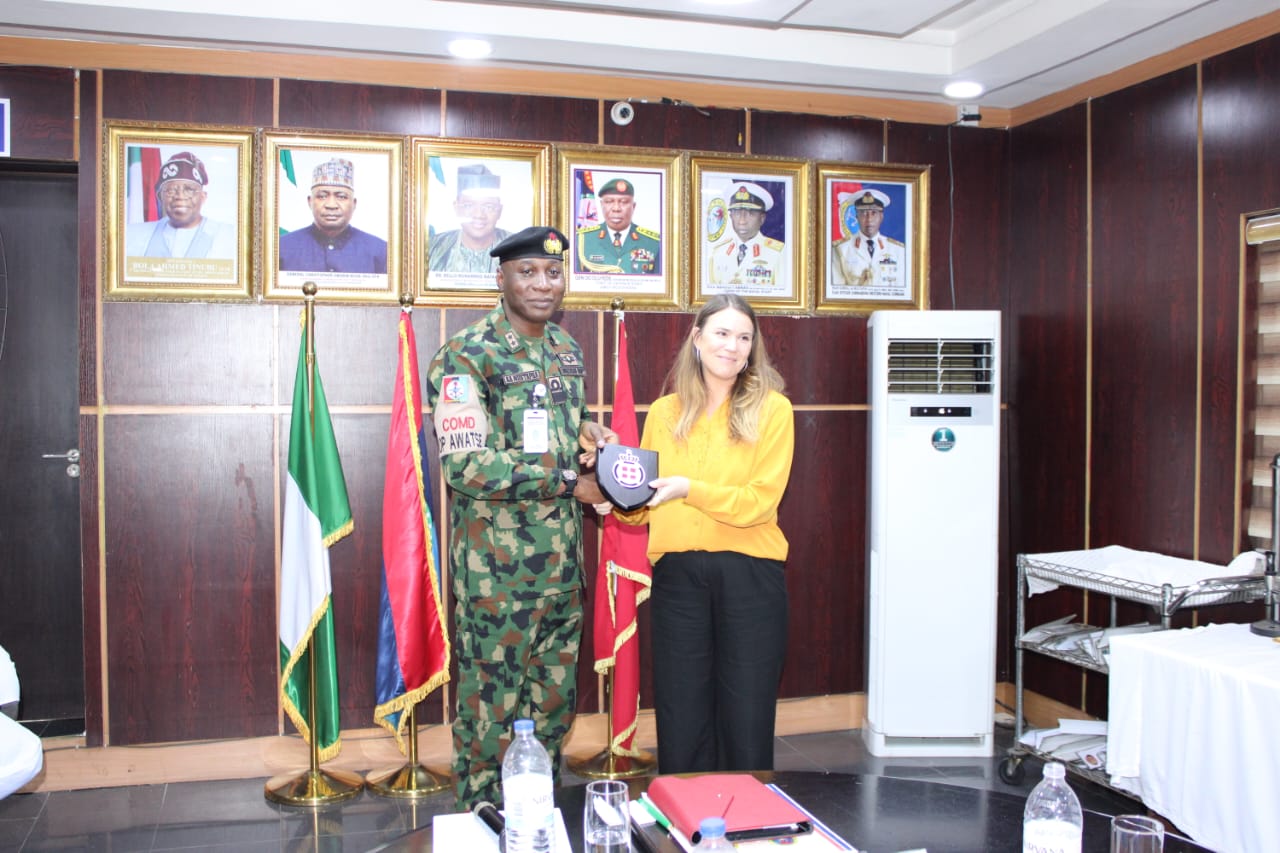
In Lagos, a Danish delegation led by Marie van der Heijden held talks with the Western Naval Command aimed at expanding cooperation on maritime security in the Gulf of Guinea. Discussions focused on capacity building, operational support and intelligence sharing to combat piracy, crude oil theft and other cross-border crimes.
Denmark reaffirmed its commitment to supporting regional security through training, technical assistance and advisory support. Speaking on behalf of the naval chief, Rear Admiral Mustapha stressed that stronger partnerships, enhanced surveillance systems and coordinated operations remain vital to safeguarding key sea lanes.