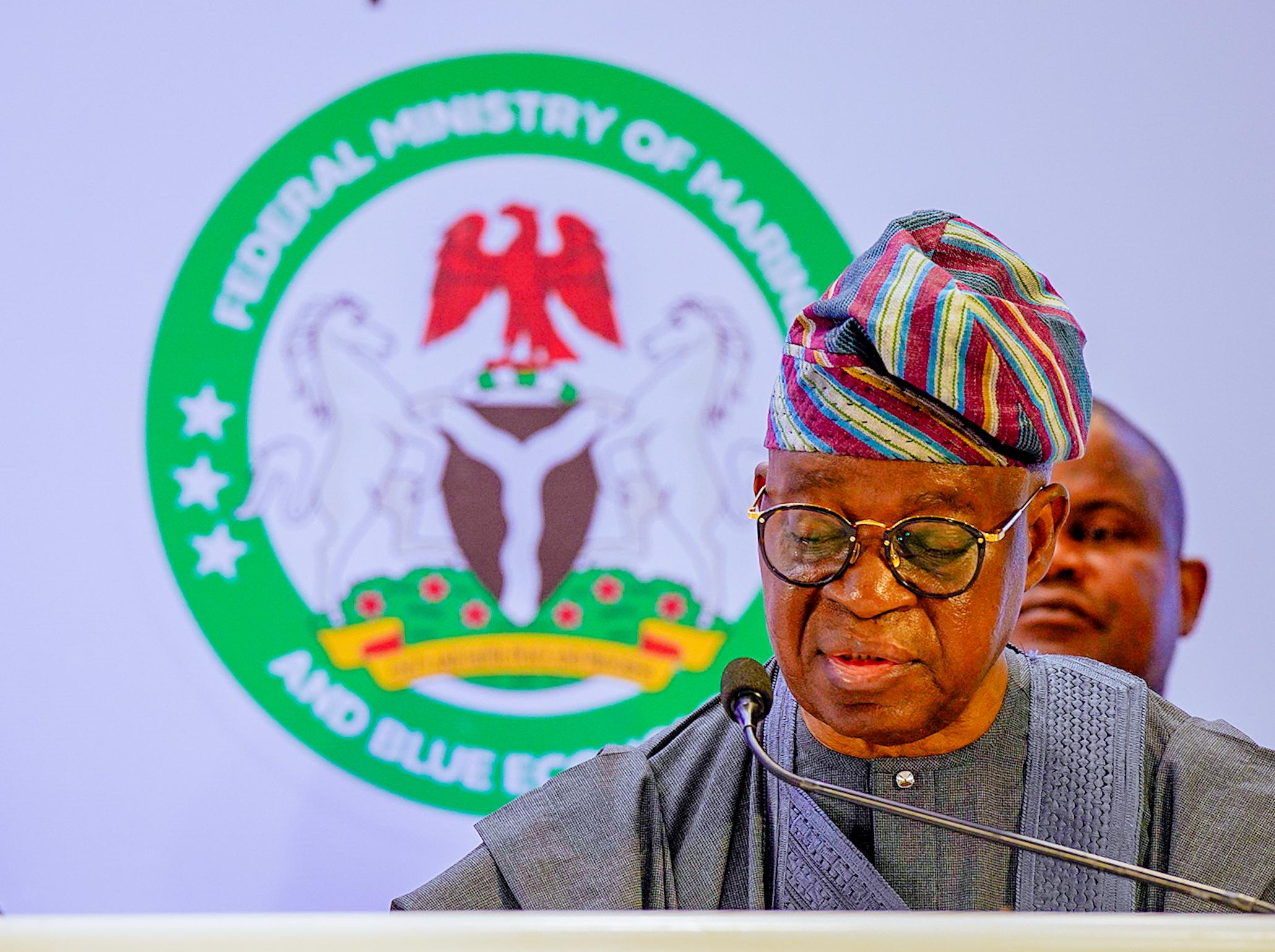
The Federal Ministry of Marine and Blue Economy has stepped up efforts to unlock the vast potential of Nigeria’s maritime sector, with projections that ongoing investments could generate as many as 50,000 jobs across the industry’s value chain.
The Minister of Marine and Blue Economy, Dr. Adegboyega Oyetola, made the disclosure on Thursday while commissioning the Institute of Maritime Studies Multipurpose Building at the University of Lagos, describing the initiative as part of a broader push to position the blue economy as a central pillar of national growth, employment and economic diversification.
Oyetola characterised the project as a significant milestone in the Federal Government’s commitment to human capital development, stressing that the long-term success of the maritime industry will hinge on the quality of skilled professionals produced by institutions such as the University of Lagos.
“With over 90 per cent of Nigeria’s trade conducted through maritime channels, this sector remains indispensable to our economic future,” he said. “It is not only about moving goods; it is about unlocking opportunities, improving efficiency and creating sustainable livelihoods for thousands of Nigerians.”
The minister highlighted a series of strategic interventions aimed at revitalising the sector, including the long-anticipated disbursement of the Cabotage Vessel Financing Fund (CVFF), which he said is expected to boost indigenous shipping capacity and create approximately 30,000 jobs. He added that ongoing port modernisation projects are projected to generate a further 20,000 jobs, while significantly enhancing operational efficiency and strengthening Nigeria’s position as a competitive regional maritime hub.
He also underscored the government’s investment in workforce development through the Nigerian Seafarers Development Programme, revealing that 2,459 Nigerians have received training in maritime institutions across countries such as the United Kingdom, Egypt, the Philippines, India and Romania. Of that number, 1,088 have obtained their Certificates of Competency, positioning them for active participation in the global shipping industry.
Beyond shipping and port operations, Oyetola pointed to the immense, largely untapped potential within fisheries and aquaculture. He noted that Nigeria’s annual fish demand, estimated at 3.6 million metric tonnes, presents a substantial opportunity for food security, wealth creation and employment generation if properly harnessed.
Speaking on the role of the Institute of Maritime Studies, the minister called for stronger collaboration across maritime and research institutions, warning against fragmented efforts.
“I must emphasise that institutions such as this cannot afford to operate in isolation,” he said. “Collaboration is the currency of real progress. The Institute must actively build strong partnerships with sister institutions under the Ministry, including the Maritime Academy of Nigeria, Oron; the Nigerian Institute for Oceanography and Marine Research; the Federal College of Fisheries and Marine Technology; the National Institute for Freshwater Fisheries Research in New Bussa; as well as the Federal Colleges of Freshwater Fisheries Technology in New Bussa and Baga. Together, they must function as a unified ecosystem that drives manpower development, research excellence and innovation across the maritime space.”
The commissioning ceremony drew key stakeholders from across the maritime industry and academia, reflecting growing confidence in the Ministry’s agenda to drive job creation and accelerate economic transformation through Nigeria’s marine and blue economy.