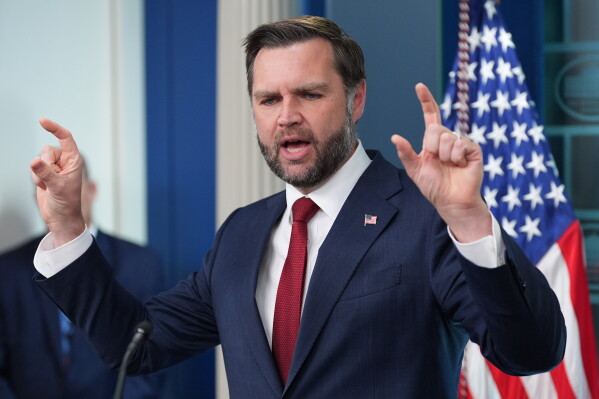
US Vice-President JD Vance has blamed the Trump administration’s eight-month war with Iran for the Republicans’ losses in the midterm elections, as mounting energy costs, disruptions to global trade and persistent threats to commercial shipping through the Strait of Hormuz fuel growing public discontent.
US Vice-President JD Vance has attributed the Republican Party’s losses in the midterm elections to the Trump administration’s prolonged war with Iran, acknowledging that the conflict’s economic consequences have become a major political liability for the White House.
In a post on X on Wednesday, Vance said the war was the principal reason Republicans suffered electoral setbacks, a day after Democrats secured control of both chambers of Congress.
“The reason we lost is the war. The president himself said so last night,” Vance wrote.
He rejected suggestions that the results were simply a consequence of poor voter mobilisation by Republicans, arguing instead that the outcome reflected growing public frustration with the administration’s military campaign and its impact on the American economy.
Citing internal polling, the vice-president identified four major concerns among voters: ending the war with Iran, inflation and the rising cost of living, putting America first, and the United States’ relationship with Israel.
Vance’s admission is particularly significant given his position in an administration that launched the military campaign in February and has repeatedly defended its decision to confront Tehran.
His latest remarks also contrast with his earlier attempts to play down the scale of the conflict. In September, during a White House briefing, Vance resisted describing the confrontation as a war, insisting that major combat operations had already ended.
“I wouldn’t call it a war,” he told reporters at the time.
The vice-president had also maintained that Washington would not return to negotiations with Tehran until Iran stopped attacking commercial vessels transiting the Strait of Hormuz.
President Donald Trump has similarly acknowledged that the conflict contributed to the Republicans’ electoral losses, although he has remained unapologetic about ordering the military campaign.
“I did the right thing. I would have done it again,” Trump told The Wall Street Journal.
The political fallout comes as the administration faces mounting pressure over the war’s economic consequences, particularly soaring fuel prices, higher transportation costs and continuing disruption to one of the world’s most important maritime trade routes.
The Strait of Hormuz, a critical artery for global oil and gas shipments, has remained at the centre of the military and economic confrontation since the United States and Israel launched their campaign against Iran on February 28.
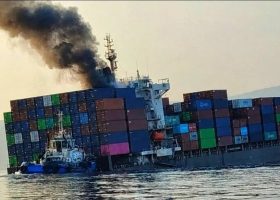
Washington has maintained a blockade targeting Iranian maritime commerce, while Tehran has continued attacks on merchant vessels operating in the Strait of Hormuz and the wider Persian Gulf.
Although tanker movements have recovered considerably from the initial months of the conflict, the security situation remains precarious, with commercial shipping operators continuing to contend with the threat of attacks, heightened insurance premiums and operational uncertainty.
Several fresh maritime incidents were reported over the weekend, involving tankers and other commercial vessels. The United Kingdom Maritime Trade Operations (UKMTO) also issued additional security warnings this week, underscoring the persistent risks facing merchant shipping despite US efforts to secure the waterway.
The prolonged disruption has driven up tanker freight rates and war-risk insurance premiums, while keeping global energy markets under considerable pressure.
Brent crude has remained above $100 a barrel, adding to concerns over the cost of fuel, transport and essential commodities. Higher petrol and diesel prices have also intensified the cost-of-living pressures confronting American households.
The election outcome is expected to complicate the administration’s handling of the conflict, with Democrats preparing to assume control of Congress in January.
The change in political balance could expose the White House to tougher scrutiny over its military strategy, the continuation of the blockade against Iranian shipping and the financial implications of the conflict.
Congress controls federal spending, including defence appropriations, and could pursue legislative measures aimed at restricting or influencing military operations. However, Trump retains significant executive authority and could veto legislation passed by lawmakers.
For the international shipping industry, the political developments raise fresh questions about the future of the confrontation and its implications for maritime security.
Shipowners, tanker operators, charterers and energy traders will be watching closely to determine whether Washington intends to sustain its current pressure on Tehran, resume large-scale military operations or pursue a diplomatic settlement capable of restoring confidence in the Strait of Hormuz.
Any reduction in hostilities could provide much-needed relief to commercial shipping, potentially easing security concerns, insurance costs and freight market pressures.
Conversely, a prolonged confrontation could keep vessels exposed to heightened risks and sustain uncertainty across global energy supply chains.