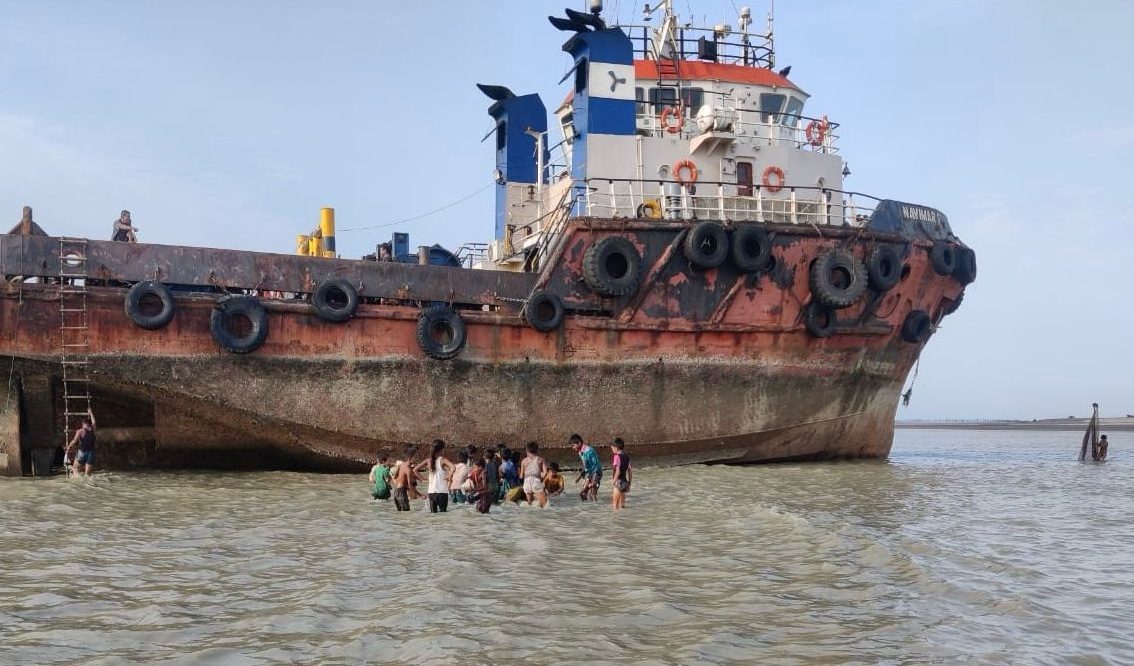
Seafarer abandonment surged to its highest level on record in 2025, leaving thousands of maritime workers stranded without pay, support or a way home, according to stark new figures released by the International Transport Workers’ Federation.
The data paints a grim picture of a crisis deepening across the global shipping industry, with both the number of affected vessels and abandoned crew members reaching unprecedented levels.
The ITF recorded 6,223 abandoned seafarers across 410 vessels in 2025, making it the worst year ever documented for abandonment cases.
Compared with the previous year, the number of ships involved rose by 31 per cent, while the number of seafarers left in limbo climbed by 32 per cent. It marked the sixth consecutive year in which vessel abandonment cases hit a new record, and the fourth year in a row that the total number of abandoned seafarers exceeded all previous highs.
Indian seafarers bore the brunt of the crisis, with more than 1,100 abandoned during the year, continuing a troubling pattern seen in 2024.
The scale of the problem has prompted the Indian government to act, announcing blacklisting measures late last year aimed at protecting seafarers from vessels with a history of repeated abandonments and other abusive practices.
Filipino seafarers were the second most affected, with 539 abandoned, followed by Syrians, who accounted for 309 cases.
Geographically, the Middle East emerged as the worst region for seafarer abandonment, followed by Europe. Türkiye and the United Arab Emirates recorded the highest number of vessels involved, with 61 and 54 respectively, underscoring the concentration of cases in key maritime hubs.
Beyond the human cost, the financial toll was severe. The ITF reported that abandoned seafarers were owed a total of US$25.8 million in unpaid wages and entitlements during 2025.
Through interventions and legal action, the federation has so far recovered US$16.5 million and returned it to affected workers, though millions remain outstanding.
David Heindel, chair of the ITF Seafarers’ Section, described the situation as nothing short of a disgrace, saying seafarers around the world continue to suffer gross violations of their human and labour rights so that unscrupulous operators can maximise profits.
He warned that the persistence and scale of the problem point to a systemic failure within the industry, arguing that only collective action by governments, shipowners, unions and regulators can bring the crisis to an end.
Under International Maritime Organization (IMO) definitions, a seafarer is deemed abandoned when a shipowner fails to pay wages for at least two months, does not cover repatriation costs, leaves the seafarer without maintenance and support, or unilaterally severs ties altogether.
Of the 410 abandonment cases recorded in 2025, the ITF itself reported 400, accounting for 98 per cent of all cases logged in the joint IMO–ILO abandonment database.
The figures also highlight the outsized role of flags of convenience. In 2025, 337 vessels involved in abandonment cases, representing 82 per cent of the total, were flying FOC flags, despite such flags accounting for only around 30 per cent of the global merchant fleet.
Panama remained the flag state most frequently associated with abandonment, while cases involving vessels with unknown flags more than doubled, further complicating accountability.
In response, the ITF is urging stronger measures to protect seafarers, including compelling flag states to record and disclose a ship’s beneficial owner as a condition of registration, expanding national blacklisting of repeat offender vessels, and launching government investigations into the use of flags of convenience, similar to those already underway in the United States.