Nigeria’s fish import bill fell by 14.8 per cent to N167.91 billion in the second quarter of 2026, from N197.17 billion recorded in the corresponding quarter of 2025.
Data from the National Bureau of Statistics’ (NBS) Foreign Trade in Goods Statistics report show that Nigeria imported six major categories of fish during the two quarters, including blue whiting, herrings, mackerel, jack and horse mackerel, yellowfin tuna and other unclassified frozen fish.
Blue whiting remained the country’s largest fish import in both quarters, although its import value declined from N116.13 billion in Q2 2025 to N96.93 billion in Q2 2026.
Jack and horse mackerel imports, which were valued at N64.58 billion in Q2 2025, were sourced mainly from Chile, South Korea, Peru, Germany and the Netherlands. By Q2 2026, however, the fish was sourced solely from Mauritania, according to the NBS data.
Mackerel imports also declined sharply, falling from N6.32 billion in Q2 2025 to N2.20 billion in Q2 2026.
Herrings bucked the broader downward trend, with import value soaring from N9.84 billion in Q2 2025 to N62.74 billion in Q2 2026.
The fish imported into Nigeria during the period were sourced from a range of countries, including the Netherlands, Faroe Islands, Ireland, Poland, Germany, Chile, South Korea, Peru, Russia, China and Mauritania.
Blue whiting and jack and horse mackerel were among Nigeria’s five largest food-related imports in Q2 2025, ranking second and third with import values of N116.13 billion and N64.58 billion respectively, behind durum wheat.
In Q2 2026, blue whiting retained its second-place position among the country’s top food-related imports, with imports valued at N96.93 billion, while herrings ranked third at N62.74 billion.
Frozen crustaceans, sourced mainly from China, also featured among Nigeria’s top five food-related imports in Q2 2026.
Nigeria recorded a 27 per cent increase in domestic fish production in 2025, with output rising from 1.1 million metric tonnes to 1.4 million metric tonnes.
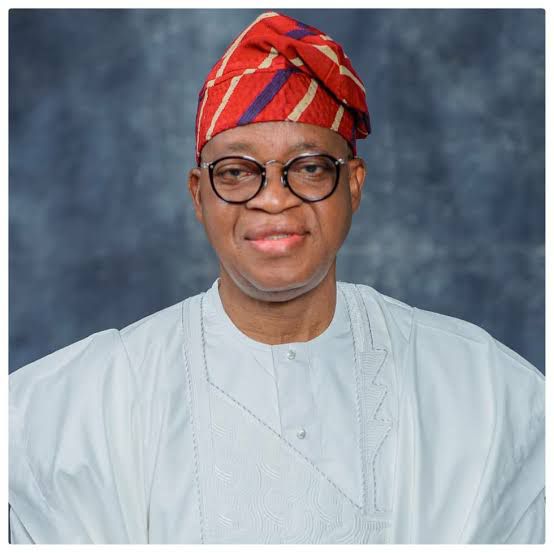
The Minister of Marine and Blue Economy, Dr Adegboyega Oyetola, who disclosed this in December 2025 in Abuja while speaking at the ministry’s 4th Quarter 2025 Citizens/Stakeholders’ Engagement Meeting, said the growth reflected the impact of targeted interventions by the Federal Government to strengthen domestic capacity and unlock the potential of Nigeria’s fisheries and aquaculture subsector.
According to the minister, the interventions focused on improving coordination across the sector, deploying appropriate technologies, strengthening sectoral planning and creating an enabling environment for increased productivity.
He said the government’s efforts were aimed at building a more productive and sustainable fisheries and aquaculture industry capable of contributing significantly to national food security, employment creation and economic development.