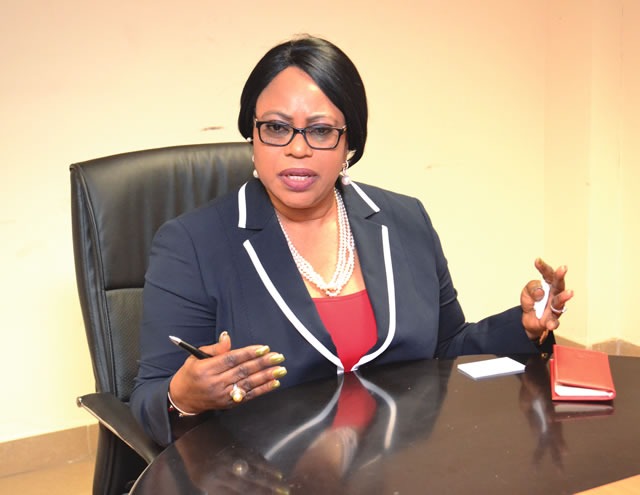
The Chairman of the Seaport Terminal Operators Association of Nigeria (STOAN), Olori Vicky Haastrup, has called for stronger collaboration among government agencies and maritime stakeholders to improve cargo efficiency, reduce delays and enhance the competitiveness of Nigeria’s ports.
Olori Haastrup made the call during a panel session titled “Shipping Through Uncertainty: Trade, Energy Transition and Emerging Maritime Risks” at a one-day Maritime Law Seminar organised by the Nigerian Maritime Law Association (NMLA).
Represented by the Managing Director of ENL Consortium, Mark Walsh, the STOAN Chairman said stronger coordination among regulatory agencies was essential to streamlining port operations and improving the movement of vessels and cargo.
She acknowledged the important statutory responsibilities of the various agencies operating in the ports, but stressed the need for them to work more closely towards shared national and economic objectives.
“There is a need for greater coordination among government agencies. They should stop working in silos and begin working together for the good of the government and the economy,” she said.
Haastrup said improving port efficiency required a collaborative effort involving government agencies, terminal operators, shipping companies, cargo owners and other industry stakeholders.
She urged cargo owners to ensure proper documentation before shipment, engage experienced customs brokers and freight forwarders, and work closely with professionals who understand Nigeria’s regulatory environment.
According to her, better preparation and compliance by cargo owners could help prevent many avoidable delays in the shipping process.
The STOAN Chairman also encouraged businesses to diversify their logistics strategies rather than rely on a single port, transport corridor or logistics provider, particularly as trade opportunities expand under the African Continental Free Trade Area (AfCFTA).
“They should be flexible in their supply chains and spread their operations across different areas so they can become more resilient,” she said.
Olori Haastrup identified digitalisation as a key driver of more efficient port operations, highlighting electronic documentation, cargo tracking, advance manifest submission and digital payment systems as important tools for reducing delays and improving cargo visibility.
She also urged businesses to ensure that shipping contracts clearly define responsibilities for delays arising from customs inspections, port congestion and other regulatory interventions.
According to her, well-drafted force majeure, indemnity and dispute resolution provisions have become increasingly important in modern shipping contracts as businesses navigate changing regulations and emerging geopolitical risks.
Haastrup further advocated the full implementation of the National Single Window, describing it as a proven solution capable of improving cargo clearance, reducing costs and strengthening Nigeria’s trade competitiveness.
“You cannot eliminate every risk in shipping, but with proper planning, technology, sound contracts and regulatory reforms, those risks can be significantly reduced. We have the expertise, the financial capacity and the legal infrastructure. Let’s implement the Single Window instead of merely discussing it,” she said.
Also speaking during the session, Principal Legal Officer at the Nigerian Maritime Administration and Safety Agency (NIMASA), Mark Mailumo, said Nigeria had made appreciable progress in implementing International Maritime Organization (IMO) standards.
Mailumo said the proposed IMO Net Zero Framework, which was deferred last year for further consultations, was expected to return for consideration later this year.
He explained that while the IMO had already introduced mandatory short-term decarbonisation measures in force since 2023, the Net Zero Framework would provide the long-term global architecture for decarbonising international shipping.