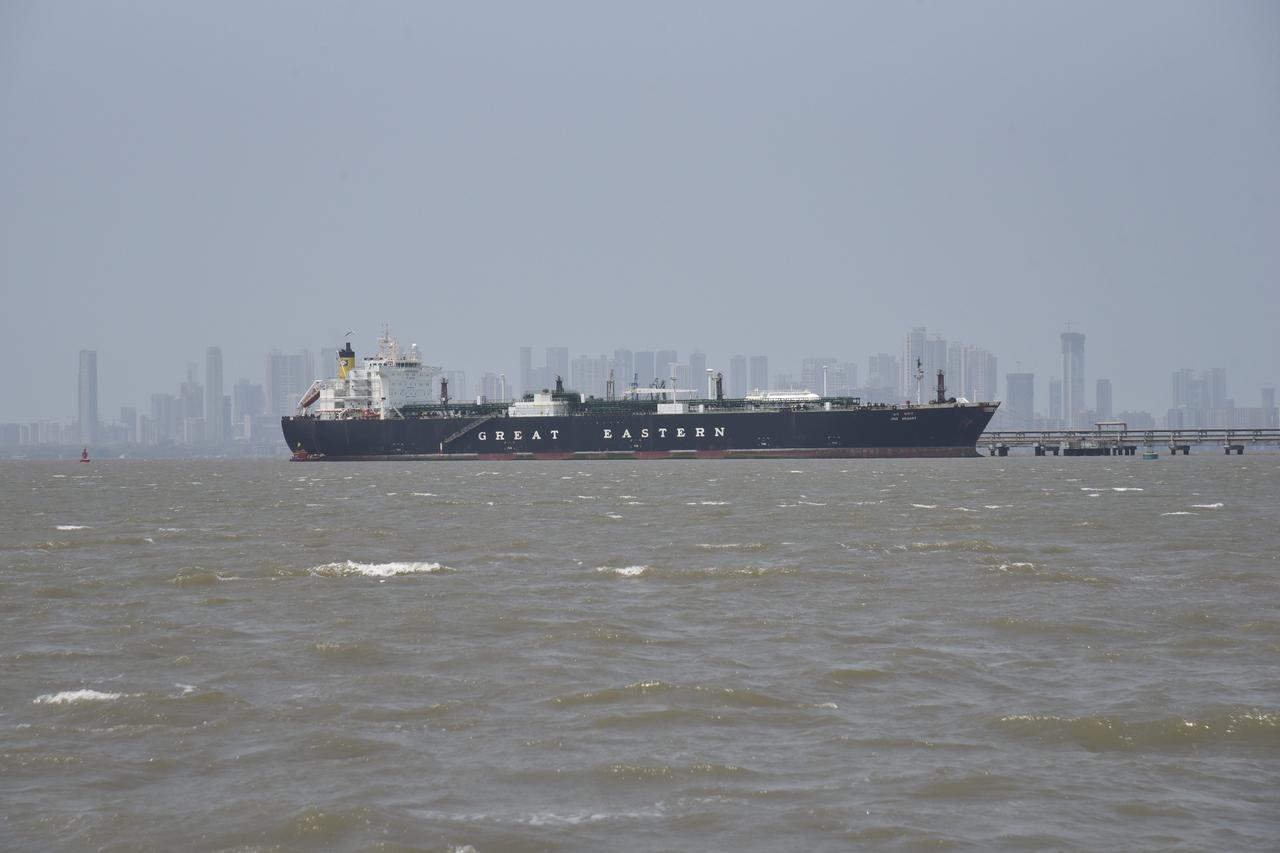
Shipping through the Strait of Hormuz has ground to a near standstill, with Iran’s Islamic Revolutionary Guard Corps (IRGC) urging vessels to hug its territorial waters around Larak Island to avoid suspected naval mines.
Under the directive, ships must enter north of Larak and exit just south of it, coordinating directly with IRGC naval forces. The impact is stark: only six vessels crossed the strait in the past 24 hours, compared with roughly 140 on a normal day. Most were bulk carriers, alongside a single oil products tanker, while others queued in limbo.
More than 180 tankers holding an estimated 172 million barrels of crude and refined fuels remain stranded across the Gulf, intensifying fears of a prolonged energy squeeze. Some vessels, including LPG carriers, have already diverted along the unusual Larak route.
Speculation is swirling that Tehran may impose transit fees — reportedly as high as $2 million per ship — though Western leaders have rejected the idea outright.
The disruption is rippling worldwide. India, a major LPG importer, is battling its worst gas shortage in decades and has begun rationing, even granting special waivers to receive Iranian cargoes. Meanwhile, a temporary export waiver from the United States — due to expire on 19 April — has offered only brief relief.
Since the conflict erupted on 28 February, oil prices have surged by around 50%, pushing fuel costs sharply higher and underscoring just how critical Hormuz remains to global energy flows.