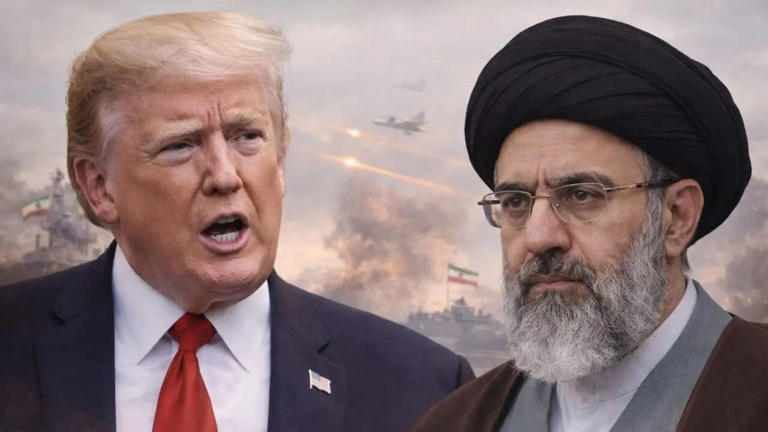
Iran declared on Monday that it remained firmly in control of the Strait of Hormuz and had not sought to resume peace talks with the United States, despite President Donald Trump’s decision to halt a two-week bombing campaign against the country.
The pause followed 13 consecutive nights of escalating US air strikes, which prompted Iranian retaliation against American military bases in the region.
Tehran said it would suspend further attacks for as long as Washington refrained from renewed bombing.
According to multiple American media reports, Trump suspended the campaign after senior military commanders advised that the operation had reached the limits of its effectiveness.
Officials said commanders were running out of viable targets, while Chairman of the Joint Chiefs of Staff, General Dan Caine, reportedly raised concerns about dwindling air defence stockpiles protecting US bases in the region.
US Ambassador to the United Nations Mike Waltz said on Sunday that the pause was intended to create an opportunity for diplomacy.
However, Iran’s Foreign Ministry spokesperson, Esmail Baghaei, dismissed suggestions that Tehran had requested a return to negotiations, insisting during a televised press briefing that no such request had been made.
The announcement eased fears of a prolonged disruption to global energy supplies, sending oil prices sharply lower.
Brent crude, which briefly climbed above $100 a barrel last week for the first time since May, fell about 7.8 per cent on Monday to below $90.
Tehran also sought to reinforce its claim that the US campaign had failed to weaken its authority over the strategic waterway.
Several Iranian state media outlets, citing an unnamed informed source, reported that Iranian authorities had turned back six vessels attempting to transit the Strait of Hormuz without permission.
One of the ships was also said to have been involved in an accident.
Iran maintained that vessels must use the shipping channel designated by Tehran, arguing that alternative routes are unsafe.
The dispute centres on competing interpretations of navigation rights through the strait, a vital corridor for global oil shipments.
The latest conflict began after the United States accused Iran of targeting ships using a route near Oman’s coast that Washington had recommended for commercial traffic.
Iran insists vessels must instead use a channel closer to its own coastline, where it says it has the authority to regulate passage and impose transit fees.
The renewed US bombing campaign reportedly killed scores of people in Iran and damaged military installations, bridges and tunnels across the country’s south.
Iran’s retaliatory strikes killed four US service members stationed at bases in neighbouring Arab states, while Tehran also targeted civilian infrastructure in Gulf countries, describing the attacks as retaliation for US strikes on civilian sites.
The regional tensions intensified further last week when Yemen’s Iran-aligned Houthi movement threatened to blockade Saudi Arabia’s oil exports through the Red Sea, fuelling fresh concerns over global energy supplies.
Despite the pause in hostilities, the path to a diplomatic resolution remains uncertain.
Washington and Tehran had agreed in June to a framework for negotiations on Iran’s nuclear programme, with talks expected before the end of August.
However, both sides remain divided over the agreement’s provisions on navigation through the Strait of Hormuz, with Washington insisting it guarantees freedom of passage while Tehran argues it affirms Iran’s authority to supervise transit through the waterway.