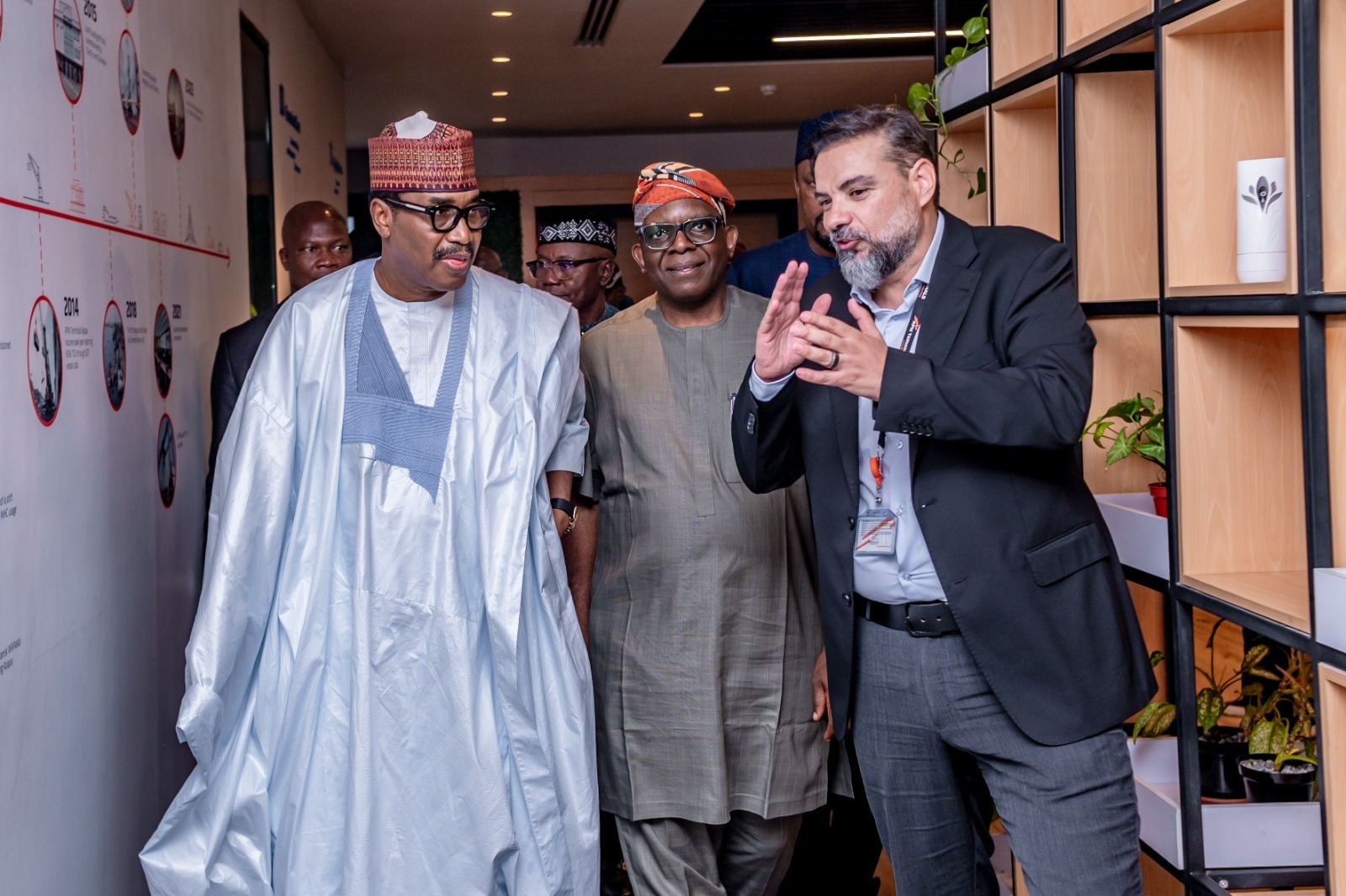
The Governing Board of the Nigerian Shippers’ Council (NSC) recently paid a familiarisation visit to APM Terminals Apapa, lauding the terminal operator for sustaining high operational standards and maintaining its position as a benchmark for port operations in Nigeria.
Speaking during the visit, the Chairman of the NSC Board, Dr Ibrahim Shehu Shema, reaffirmed the Council’s commitment to its statutory role as the nation’s port economic regulator, noting that collaboration across the maritime value chain remains essential to achieving efficiency and competitiveness.
He said the Council would continue to work with key stakeholders to enhance service delivery and position Nigeria as a maritime hub for West and Central Africa, in alignment with the Renewed Hope Agenda of President Bola Ahmed Tinubu. He urged shippers, shipping lines and terminal operators to deepen cooperation in pursuit of this objective.
“Most of what I have seen on this visit is quite impressive. The way the organisations involve their stakeholders is commendable,” Shema said. “It shows that government is very serious about generating revenue for this country through this sector, and there is no doubt that foreign investors are interested in committing even more resources.”
He added that the Board was encouraged by indications of prospective investments by the terminal operator.
Also speaking, the Executive Secretary and Chief Executive Officer of the Council, Dr Pius Akutah, emphasised the regulator’s ongoing oversight of operators within the sector to ensure compliance, innovation and improved performance.
“We are monitoring the various entities operating within the sector to assess their performance and determine how best to enhance it,” Akutah said. “Many of them are already aligning with our directives to modernise their facilities, innovate and adopt technology in their operations. We are witnessing this progress at an encouraging pace, consistent with the vision of the Honourable Minister of Marine and Blue Economy, His Excellency Dr. Adegboyega Oyetola, CON.”
He commended APM Terminals for its strides in operational development, particularly in export growth.
“At APM Terminals, we were informed that export cargo volumes are rising significantly, with growth already at about 30 per cent. This gives us optimism that, in the coming years, Nigeria will achieve a more balanced trade position,” he said. “For too long, the country has operated largely as an importing nation, resulting in persistent deficits in the balance of payments.”
Akutah noted that while exports remain largely commodity-driven, there are emerging opportunities to diversify.
“It is encouraging to see increased export activity, even if it is still largely raw materials. With the Dangote Refinery now exporting petroleum products, we expect further progress. In addition, the manufacturing sector holds strong potential, particularly under the African Continental Free Trade Area, which provides a unified platform for trade across the continent. We are confident that Nigeria will soon expand its footprint in exporting manufactured goods across Africa.”
He also welcomed the proposed $600 million investment by APM Terminals, describing it as a strong vote of confidence in the Nigerian economy.
“APM Terminals has already presented a proposal to invest additional $600 million in the sector. This is highly encouraging,” he said. “At a time when the Federal Government is actively seeking foreign direct investment, it is reassuring to see companies already operating in Nigeria reinvesting and expanding their commitments. It is truly heartening and signals a promising period for the country.”
Earlier, the Managing Director of APM Terminals Apapa, Kamal Alhraishat, highlighted the terminal’s deployment of electronic data interchange systems, replacing manual, paper-based processes with digital solutions that facilitate the seamless exchange of standardised business documents such as invoices, bills of lading and cargo status updates.
“This transition to electronic data interchange represents a significant leap in how we manage operations,” Alhraishat said. “By eliminating paper-based processes, we have enhanced both efficiency and accuracy, while ensuring faster and more transparent communication between the terminal, shipping lines and shippers.”
He added that the company remains committed to continuous innovation and investment in infrastructure and technology to improve service delivery and support Nigeria’s trade ambitions.